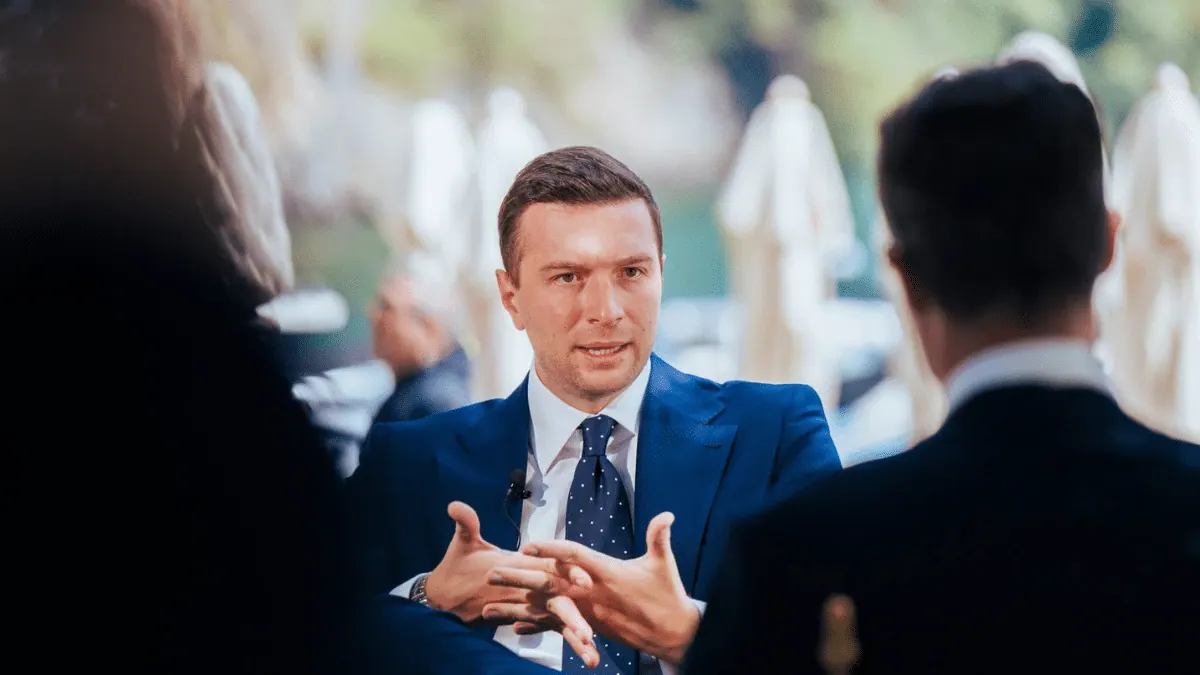
Jordan Bardella, the president of France's far-right National Rally party, is embroiled in a scandal over alleged antisemitic remarks made early in his political career. According to Mediapart, a French news outlet known for its rigorous investigations, Bardella made comments that recall Nazi rhetoric from 1930s Germany. Although Bardella has denied the allegations and announced plans to take legal action, the scandal has raised concerns about his ambitions and the credibility of his party.
The controversy has sparked debate in France, with some defending Bardella and others condemning his alleged remarks. Yonathan Arfi, president of the Representative Council of Jewish Institutions of France, has criticized the National Rally party, stating that it remains a refuge for identitarian and extremist elements. Arfi's comments suggest that the party has not sufficiently distanced itself from its founder, Jean-Marie Le Pen, who has been accused of antisemitism.
The response from pro-Israeli groups and individuals in France has been seen as inconsistent and lenient. While some have called for Bardella to be given the benefit of the doubt, others have pointed out that similar remarks made by left-wing politicians and supporters of Palestine have been met with swift condemnation. Paul Amar, a pro-Israeli journalist, has argued that Bardella's alleged comments were private and that he has not publicly expressed antisemitic views.
The Israeli government has weighed in on the controversy, with Amichaï Chikli, the minister for diaspora affairs and combating antisemitism, expressing support for Bardella due to his stance against Hamas. This has been seen as a pragmatic approach, prioritizing support for Israel over concerns about antisemitism in France. Critics argue that this approach instrumentalizes the fight against antisemitism to justify policies that harm Palestinians.
The scandal has also highlighted concerns about double standards in France, where comments targeting Muslims and Islam have become increasingly common and accepted. Aymeric Caron, a deputy from Paris and supporter of La France Insoumise, has criticized the hypocrisy of some pro-Israeli groups, arguing that they have ignored or downplayed antisemitic remarks when made by supporters of Israel.
The controversy surrounding Bardella has sparked a broader debate about antisemitism, islamophobia, and double standards in France. While some have called for greater scrutiny of far-right politicians, others have pointed out that similar concerns about racism and extremism have been ignored or dismissed. The scandal has also raised questions about the credibility of the National Rally party and its ability to shed its extremist image.
As the scandal continues to unfold, it remains to be seen how Bardella and the National Rally party will navigate the fallout. The controversy has already had significant repercussions, with some questioning the party's viability as a governing force in France. The debate over antisemitism, islamophobia, and double standards is likely to continue, with implications for French politics and society as a whole.
Key points
- The controversy surrounding Jordan Bardella has highlighted concerns about double standards in France, where comments targeting Muslims and Islam have become increasingly common and accepted.
- The Israeli government's support for Bardella has been seen as a pragmatic approach, prioritizing support for Israel over concerns about antisemitism in France.
- The scandal has raised questions about the credibility of the National Rally party and its ability to shed its extremist image.