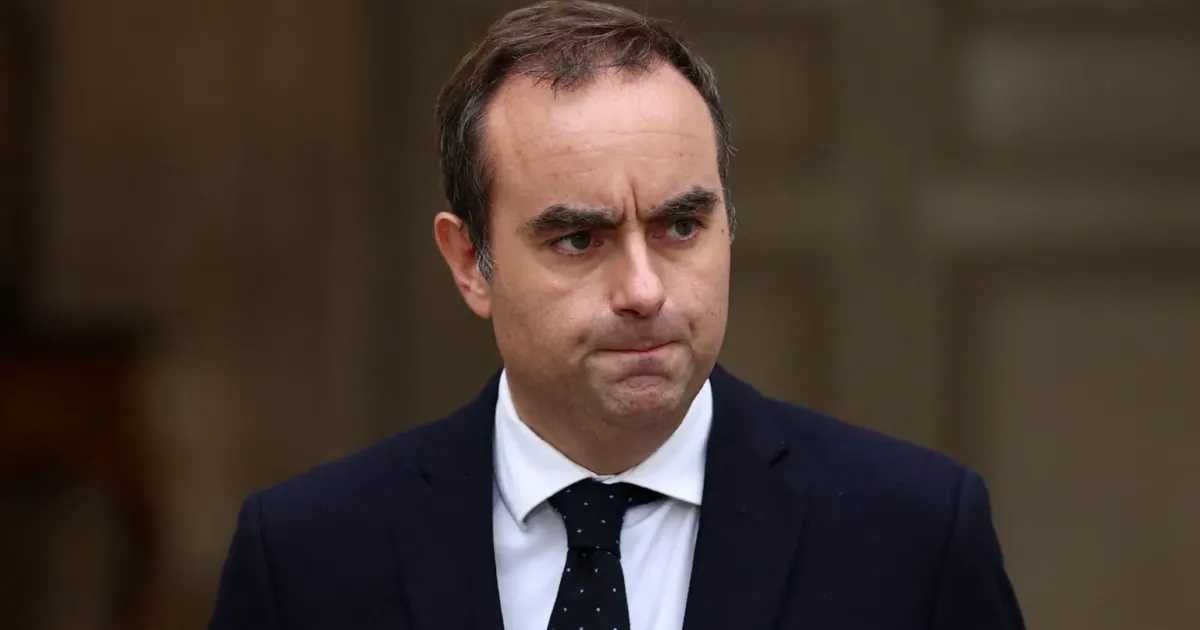
France's Prime Minister Sébastien Lecornu has warned that any escalation in the country's current wave of student protests would be "irresponsible". The demonstrations, which began in Paris and have seen teenagers blockading their schools for days, stem from issues including overcrowded classes and teacher shortages. Lecornu cited reported incidents at protests, saying that violence, fireworks, and fires near high schools are unjustifiable.
The protests have spread to various regions in France, with incidents of vandalism and fireworks being aimed at police. According to the AFP news agency, four high schools were reported to have been blockaded in the southern regions of Alpes-Maritimes and Var. Protests have also been reported in Marseille, the northern Lille area, and Sedan in the north-eastern Ardennes. The movement began last week in the Île-de-France region around Paris.
A French union that defends the interests of high school students, the Union Syndicale Lycéenne, said the protests were a "legitimate response" to the conditions they face. The union cited issues such as lack of teachers and staff, dilapidated schools, overcrowded schedules and classes, and stress caused by Parcoursup. They called on students to blockade schools in defence of "their rights and against budget austerity".
Interior Minister Laurent Nuñez said 12 members of the security forces, 12 students, and three school staff were injured on Monday, while 180 schools were affected. He did not provide further details on those who had been arrested. Lecornu accused the far-left France Unbowed (LFI) party of urging students to expand the movement. LFI's leader, Jean-Luc Mélenchon, blamed the government for having "ordered the crackdown" on the protest.
Nuñez described the demonstrations and blockades as "not very typical protest movements", but rather "urban violence" with masked individuals equipped with fireworks and projectiles. Since the protests began, several incidents involving violence between students and police officers have been reported. Investigations have been launched into these incidents.
In response to the student movement, Lecornu said "the difficulties of high schools must be heard and addressed", but that "violence must be condemned unequivocally, and its perpetrators must answer for their actions". The prime minister's comments come as unions representing teachers, hospital staff, and civil servants also called for a day of walkouts to protest against issues including low wages and working conditions.
The protests and incidents have resulted in 164 arrests, with the government facing criticism for its handling of the situation. The student protests highlight the ongoing challenges facing France's education system, with students and unions demanding improved conditions and resources. The government will need to address these concerns to prevent further escalation of the protests.
Key points
- 164 people were arrested during the protests.
- The protests were sparked by issues including overcrowded classes and teacher shortages.
- The government has condemned violence during the protests, while students and unions demand improved conditions and resources.