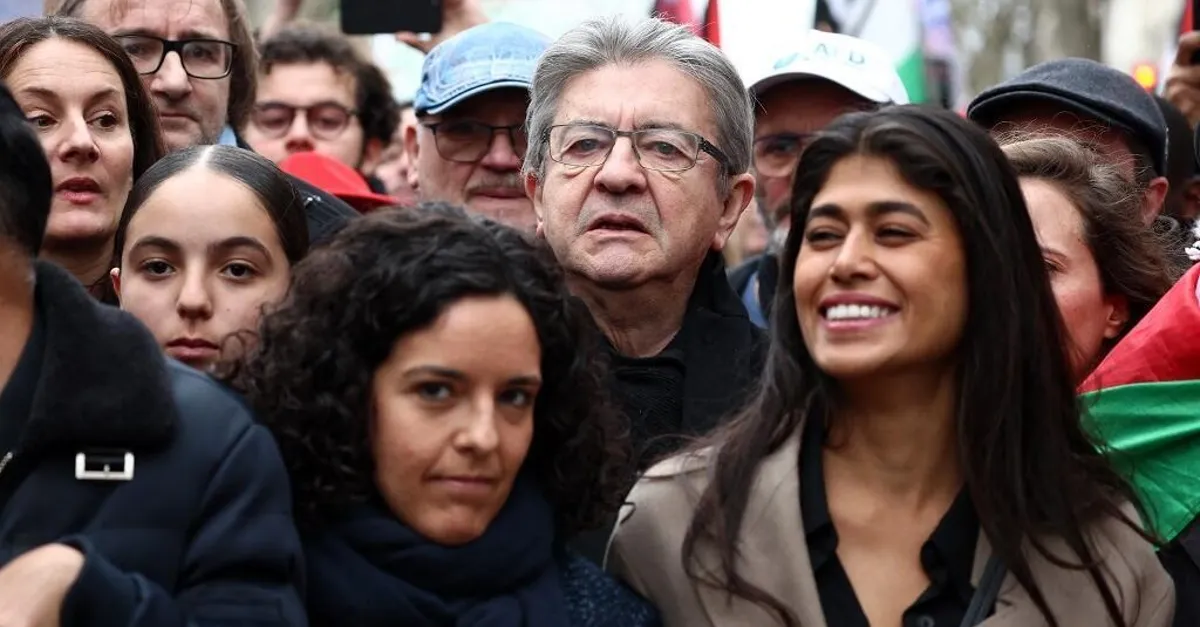
French leftist candidate Jean-Luc Mélenchon is taking an unconventional approach to the 2027 presidential election, focusing on attracting young, urban voters who have never voted before. Mélenchon, leader of the La France Insoumise movement, is counting on the support of young people from working-class neighborhoods and immigrant communities to propel him to the second round. This strategy is in contrast to most European leaders, who are trying to prove their toughness on immigration.
Mélenchon's approach is centered on embracing diversity and rejecting exclusionary rhetoric. He has accused the French state of practicing systemic racism and Islamophobia, and has spoken out against police violence. He has also been a vocal critic of Israel, setting him apart from other politicians in France. Mélenchon's environmental program is also ambitious, calling for a complete transition to renewable energy.
Mélenchon's strategy has been met with skepticism by his opponents, who accuse him of practicing identity politics and targeting minority groups, particularly Muslims. However, recent polls suggest that Mélenchon is gaining traction, particularly among young voters. A survey by Cluster17 found that 47% of voters under the age of 35 support Mélenchon, more than double the support of far-right candidate Marine Le Pen.
The La France Insoumise movement has drawn inspiration from its success in the Parisian suburb of Saint-Denis, one of the poorest areas of the capital. In the first round of the 2022 election, Mélenchon won nearly 50% of the vote in Saint-Denis, despite a relatively low turnout of 61.2%. The movement's strategists believe that there is still untapped voting potential in areas like Saint-Denis.
Mélenchon's popularity is also growing in other areas, with a recent local election seeing a La France Insoumise candidate win a landslide victory in the Parisian suburb of Villepinte. However, Mélenchon remains a polarizing figure, with 73% of voters saying they would never vote for him. This compares to 62% of voters who said they would never vote for Le Pen.
Despite the challenges ahead, Mélenchon's team is optimistic about his chances. The movement's strategists believe that they can build on their existing support and attract new voters in the coming months. However, others are more skeptical, noting that Mélenchon's support has not yet translated into significant gains in national polls.
Mélenchon's campaign is focused on building a broad coalition of support, with a emphasis on mobilizing young and marginalized voters. The candidate's team is aware that the road to the second round will be difficult, but they are confident that their unconventional strategy can pay off.
Key points
- Mélenchon is courting young, urban voters in a bid to reach the second round of the 2027 presidential election.
- Mélenchon's approach is centered on embracing diversity and rejecting exclusionary rhetoric.
- Mélenchon's support is growing among young voters, but he remains a polarizing figure.