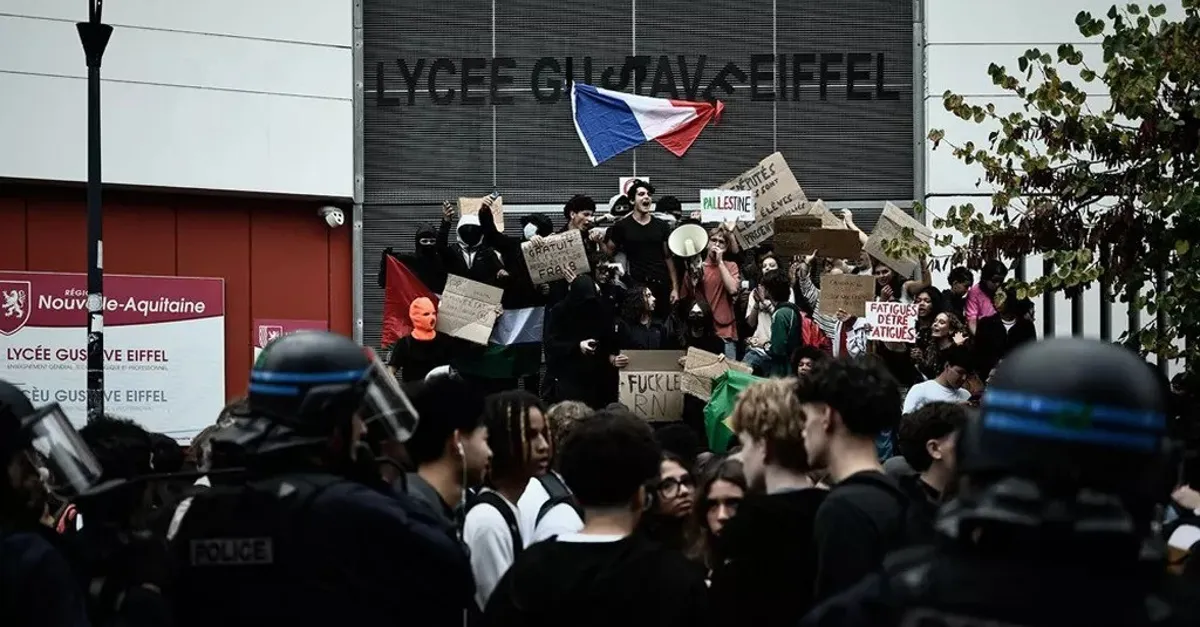
Protests by French high school students have rapidly escalated, engulfing educational institutions across the country. The unrest began just days ago and has already spread from the north to the south of France, threatening to extend to universities. The protests are driven by a range of concerns, including poor conditions, a shortage of teachers, and the pressures of a new university admissions platform.
The French government has responded to the growing crisis, with Interior Minister Laurent Nunez stating that 356 educational institutions were affected by disruptions on Wednesday alone. Of these, 205 had not previously been impacted, highlighting the rapid spread of the protests. The disruptions have resulted in 119 student and staff injuries, as well as 83 police officers injured, and 625 arrests were made on Wednesday.
President Emmanuel Macron has weighed in on the crisis, calling for calm and emphasizing that schools should be places of learning, not sites of violence and destruction. Education Minister Edouard Geirard also stressed that violence would not be tolerated, while urging local authorities to bolster security around educational institutions.
The protests are driven by deep-seated grievances that have been building for years. According to the USL student union, students face a range of challenges, including a shortage of teachers, outdated and dilapidated facilities, and excessive academic pressures. These concerns are underscored by official data, which shows that 20 million hours of teaching were lost in state schools last year.
The government has launched a consultation platform in an effort to engage with students and address their concerns. However, some student leaders have expressed skepticism about the initiative, citing a lack of trust in official channels. The government has also faced calls to invest in the education system, with some economists arguing that savings from declining student numbers could be redirected to improve educational outcomes.
Education Minister Geirard has proposed a compromise, suggesting that 60% of any savings from declining student numbers be reinvested in the education system, with the remaining 40% used to reduce public spending. This proposal will be subject to parliamentary debate as part of the upcoming budget discussions.
The OECD has noted that France spends 28% more than the European average on secondary education, but faces significant challenges in primary and lower secondary education. The organization has called for a more efficient allocation of resources to address these disparities and improve educational outcomes.
Key points
- The protests have resulted in significant disruptions, with 356 educational institutions affected and 625 arrests made on Wednesday alone.
- The government has faced calls to invest in the education system, with some economists arguing that savings from declining student numbers could be redirected to improve educational outcomes.
- President Macron has emphasized that schools should be places of learning, not sites of violence and destruction, and called for calm in the face of the escalating protests.