The French government is confronting a surge in social unrest as citizens protest against declining purchasing power and rising living costs. On Sunday, November 1, 2026, French media reported that 565 people were arrested during Saturday's protests, with over 40,000 individuals subjected to monitoring and inspection. A significant security deployment accompanied the protests, with 15,000 people in the Paris area undergoing checks.
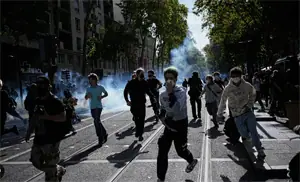
The protests saw widespread security measures, including roadblocks, crowd containment, and restricted movement. Reports indicated that over 200 protesters were detained within a security cordon in Paris, where they were searched and had personal belongings confiscated. In Marseille, security forces used tear gas and stun grenades to disperse protesters in Jean Jaurès Square, resulting in at least three injuries.
The unrest is not limited to Paris, with reports of violent security interventions in other cities. Protesters described being beaten during arrest and detention. Organizers estimate that around 500,000 people participated in Saturday's protests, with demands extending beyond purchasing power to include deteriorating public services, education, and growing social exclusion.
The student movement in France announced on Sunday that they would resume school closures starting Monday, November 2, 2026, as part of ongoing protests. The movement's leader, Pierre Soura, stated that protests would intensify, with some schools closing their doors. The protests initially focused on poor school conditions but have expanded to address broader issues.
The French government's response to the protests has drawn criticism from the United Nations. Four UN experts condemned the security forces' excessive use of force, stating that mass arrests and violent dispersal of protests are not suitable responses in a country governed by the rule of law.
The protests have resulted in significant disruptions, with multiple cities experiencing violent clashes between protesters and security forces. The situation remains volatile, with no clear resolution in sight. The French government faces mounting pressure to address the underlying issues driving the protests.
The international community is watching the situation closely, with concerns about human rights and the government's response to the protests. The French government must balance maintaining order with addressing the legitimate concerns of its citizens.
Key points
- The French government faces growing social unrest due to declining purchasing power and living costs.
- The student movement has resumed school closures as part of the ongoing protests.
- The UN has criticized the French government's response to the protests, citing excessive use of force.