Travelers returning to France from Algeria are entitled to a customs allowance, which varies depending on the mode of transportation. For air and sea travel, the allowance is 430 euros per person aged 15 and above, while for land and rail travel, it is 300 euros per person. For minors under 15, the allowance is 150 euros. It is essential to note that this allowance is non-cumulative among family members.
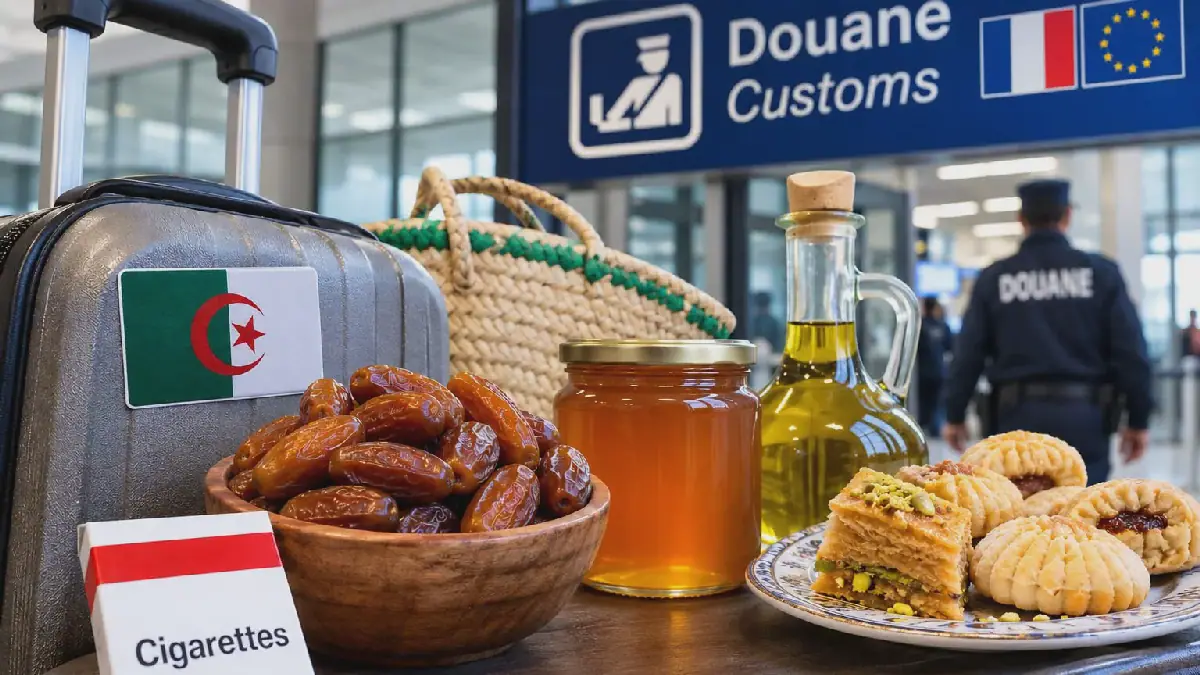
The French customs authorities have set specific limits on certain items, including cigarettes and alcohol. Travelers aged 17 and above can bring back 200 cigarettes, 100 cigarillos, 50 cigars, or 250 grams of smoking tobacco. For alcohol, the limit is 1 liter of liquor with an alcohol content above 22 degrees or 2 liters of liquor with an alcohol content below 22 degrees. Additionally, travelers can bring back 4 liters of still wine and 16 liters of beer.
Certain food products are strictly prohibited from being brought into the European Union from Algeria, including meat, milk, and products derived from them, such as khliî, cheese, lben, and smen. This ban aims to prevent the introduction of animal diseases. The Algerian authorities have reported outbreaks of foot-and-mouth disease in the eastern part of the country, and imports of cattle have been suspended.
While some food products are prohibited, others are allowed in limited quantities. Travelers can bring back up to 2 kg of honey and 20 kg of fish, either fresh or dried. These products must be declared and presented to the customs authorities upon arrival. Additionally, certain traditional Algerian pastries, such as makrout, ghribia, and baklawa, are allowed, provided they do not contain meat and can be stored at room temperature.
The importation of fruits, vegetables, plants, and seeds from Algeria is subject to a phytosanitary certificate. However, there are exceptions, including bananas, pineapples, coconuts, durian, and dates. Dates, a major Algerian product, can be brought back without a certificate and without quantity limits. Olive oil, a processed product, is also exempt from the phytosanitary certificate requirement.
Travelers carrying 10,000 euros or more in cash or valuables must declare it to the customs authorities. This obligation applies to both departure and arrival, regardless of the currency. The declaration can be made online through the DALIA service up to 30 days before departure. Failure to comply with this regulation may result in penalties.
Counterfeit goods, including fake brand-name items, are strictly prohibited, even for personal use. Travelers found with counterfeit goods may face fines and confiscation. Additionally, the smuggling of narcotics and protected species of animals and plants is also prohibited. Travelers are advised to verify their purchases before packing them in their luggage to avoid any issues with the customs authorities.
Key points
- Travelers returning from Algeria can bring back 200 cigarettes and up to 2 kg of honey without exceeding the customs allowance.
- Certain food products, such as meat, milk, and products derived from them, are strictly prohibited from being brought into the European Union from Algeria.
- Travelers carrying 10,000 euros or more in cash or valuables must declare it to the customs authorities to avoid penalties.