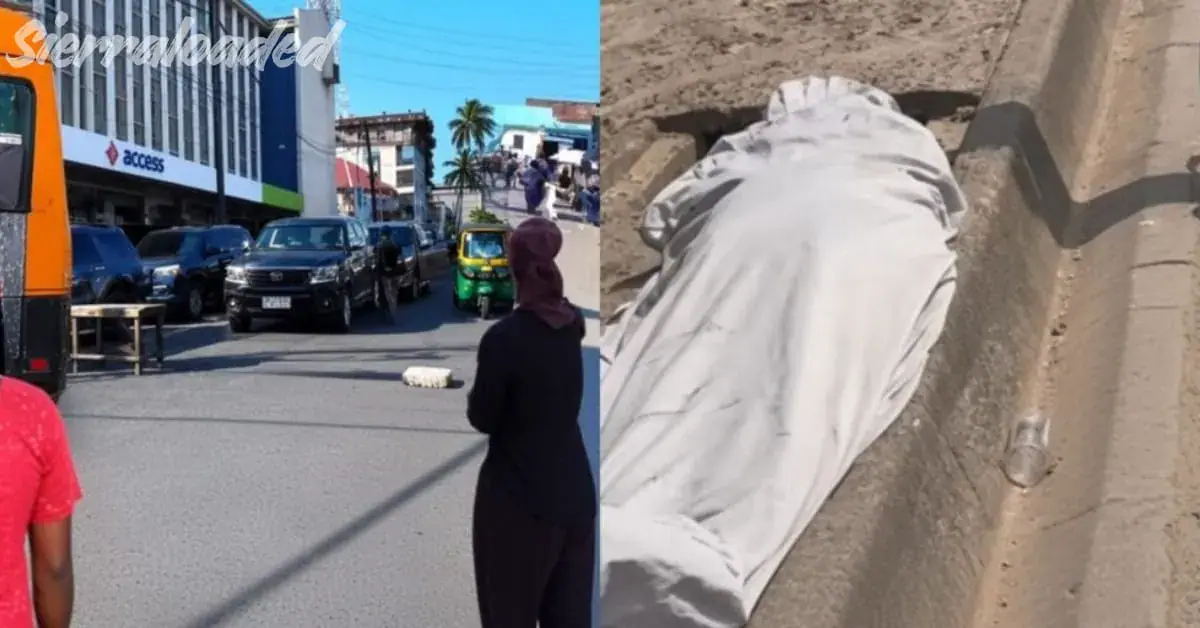
A youth protest near Freetown's Central Mosque has brought attention to the government's response system for removing unidentified bodies from public spaces. Members of the Soja Team blocked connecting streets after a decomposing body allegedly remained unattended for several days. Residents and group members said they had repeatedly contacted authorities seeking the body's removal but received no timely intervention. The youths resorted to roadblocks to draw attention to the situation and pressure authorities to respond.
The incident has renewed scrutiny of the division of responsibilities between the Sierra Leone Police and Freetown City Council (FCC) in handling bodies discovered in public places. In October 2025, FCC suspended its street-body collection service due to questions about its legal authority. Records showed that FCC collected 220 bodies between January 1 and October 8, 2025, burying 170 after relatives claimed 50.
Mayor Yvonne Aki-Sawyerr confirmed that the government reassigned responsibility for collecting bodies found on Freetown's streets to the Sierra Leone Police. The police and medical examiners are expected to attend the scene, examine the body, and arrange its transportation to a mortuary. FCC retains responsibility for providing burial space. However, the latest incident raises questions about the effectiveness of the established arrangements.
Residents near the Central Mosque have expressed frustration over the unpleasant odour and the prolonged presence of human remains in a populated public area. The identity of the deceased and the circumstances surrounding the death have not been established. There is also no confirmed information about when the police were first notified or why the reported retrieval was delayed.
A member of the Soja Team described the continued presence of bodies in public spaces as an unacceptable situation, calling for stronger institutional action to prevent such occurrences. The protest has placed renewed pressure on authorities to ensure that existing procedures translate into timely responses and that unidentified deceased persons receive dignified treatment.
The incident highlights the challenges in coordinating responses to unattended bodies in public spaces. The FCC had collected bodies from streets, but its suspension of the service has led to confusion about responsibilities. The government's response system is being questioned, with residents and groups calling for more effective action.
The protest near the Central Mosque is a reminder of the need for clear communication and effective coordination between authorities and residents. The incident has sparked renewed debate about the government's response system and the need for stronger institutional action to prevent such occurrences in the future.
Key points
- Youths in Freetown block roads to protest a decomposing body near the Central Mosque, highlighting the need for effective coordination between authorities.
- The incident renews scrutiny of the division of responsibilities between the Sierra Leone Police and Freetown City Council in handling bodies discovered in public places.
- The protest pressures authorities to ensure timely responses to unattended bodies and dignified treatment for unidentified deceased persons.