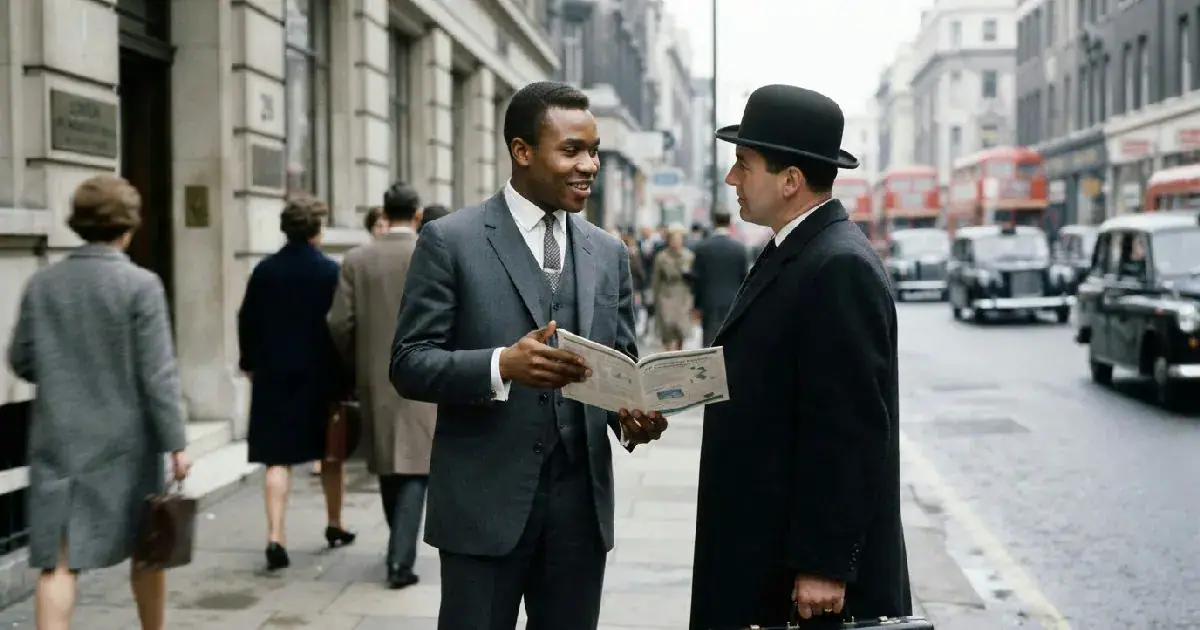
Arthur Nzeribe, a prominent Nigerian political figure, began his journey far from home. In 1958, he secured a scholarship from the Nigerian Ports Authority to study marine engineering in England. However, he pivoted to commercial ventures, finding initial success selling life insurance policies to Black immigrants across Britain. This early hustle provided him with vital contacts and hands-on commercial experience. Nzeribe's connections and skills developed in Britain ultimately led to the establishment of the Fanz Organization in 1969.
The Fanz Organization grew into a sprawling international business, encompassing heavy construction, oil brokerage, publishing, and arms trading. This period coincided with Nigeria's tumultuous post-independence years, including the Nigerian civil war, which significantly impacted the demand for arms and supplies. The Fanz Organization's ventures extended into the Middle East and Gulf states, showcasing Nzeribe's ambition beyond Nigerian borders. His firm became a key player in various sectors, accumulating significant financial resources.
By 1979, Fanz boasted an annual trading turnover of £70 million, cementing Nzeribe's status as a formidable international businessman. Nzeribe's business acumen also saw him establish interests back home in Nigeria, including Sentinel Assurance. His country home in Oguta, aptly named "Heaven of Peace," consisted of multiple mansions, a testament to his staggering wealth. By 2018, he was reportedly worth over $1.5 billion.
Nzeribe's international dealings often intertwined with political environments, as seen in Ghana during the late 1960s. Through a London-based public relations firm, he forged connections with African diplomatic missions. These relationships introduced him to influential figures, most notably Ghana's first president, Kwame Nkrumah. Nzeribe reportedly worked on public relations activities for Nkrumah's government, expanding his professional network across West Africa.
However, Nzeribe's position shifted dramatically after a military coup that overthrew Nkrumah. While initially losing influence, Nzeribe quickly adapted, developing a working relationship with the new National Liberation Council (NLC) government led by Lieutenant General Joseph Arthur Ankrah. This adaptation, however, led to controversy. Nzeribe became embroiled in a bribery scandal in 1969 that eventually forced Ankrah's resignation as Ghana's head of state.
Nzeribe's commercial success gave him immense financial resources and an expansive network of international contacts, all of which became crucial levers in his political activities back home. He won his first senatorial seat in 1983, spending N12 million, a significant amount at the time. However, his first tenure was brief, ending abruptly with a military coup in December 1983. This event dissolved the elected political institutions, cutting short Nzeribe's nascent legislative career.
Nzeribe's most controversial political chapter unfolded in 1993, during General Ibrahim Babangida's transition programme. He became the leading figure behind the Association for Better Nigeria (ABN), a political pressure group that actively campaigned against the scheduled return to civilian rule. The ABN's actions contributed to the political crisis that culminated in Babangida's decision to annul the June 12, 1993, presidential election. Nzeribe died on May 8, 2022, at the age of 83, following an extended illness caused by COVID-19.
Key points
- Arthur Nzeribe started his business career selling life insurance policies to Black immigrants in Britain.
- He built a business empire through the Fanz Organization, with interests in construction, oil brokerage, and arms trading.
- Nzeribe's net worth was estimated to be over $1.5 billion by 2018.