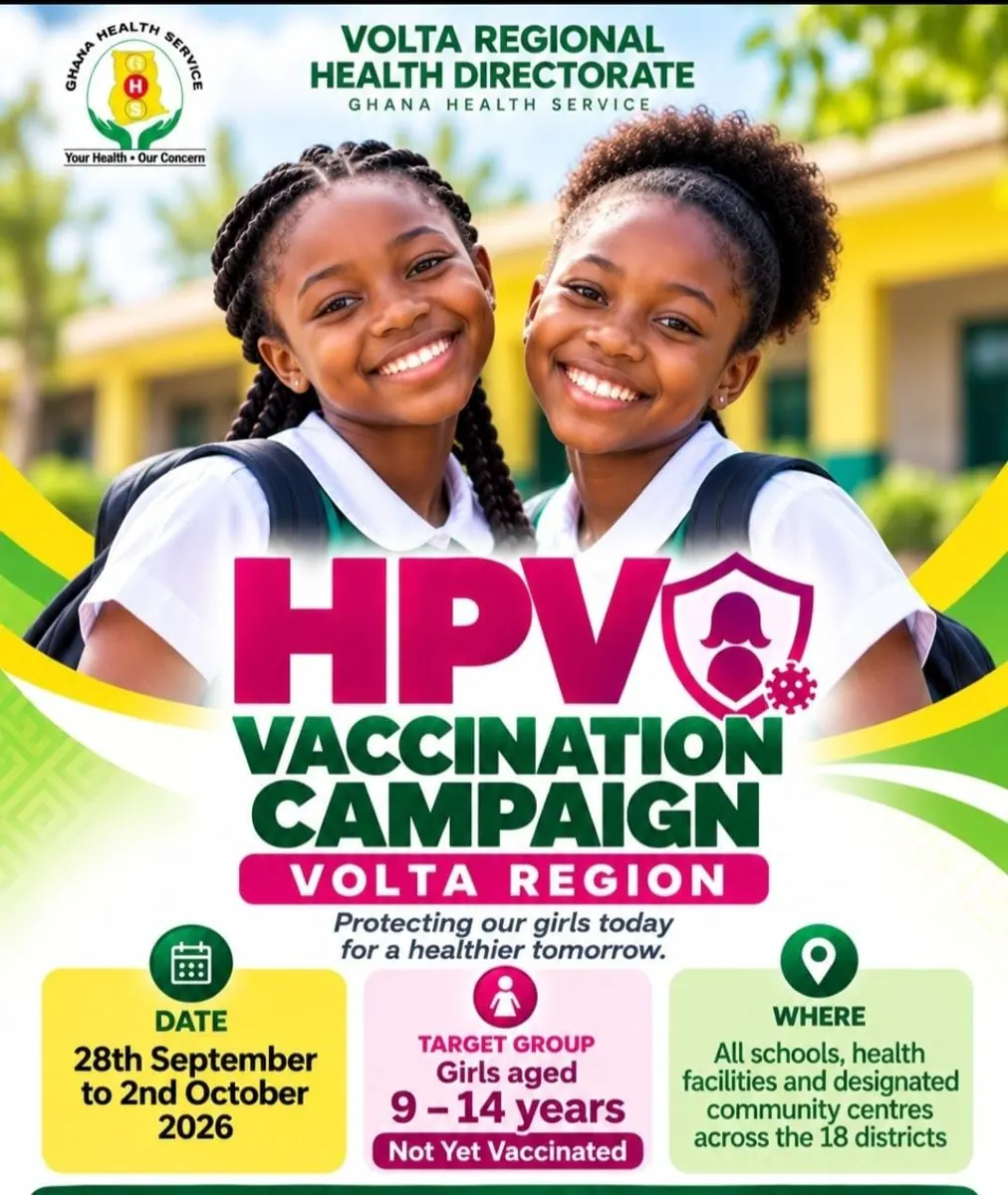
Health authorities in Ghana's Eastern and Volta Regions have launched a free HPV vaccination drive for girls aged 9-14 who missed earlier doses. The exercise, known as the Periodic Intensification of Routine Immunisation (PIRI), aims to protect girls against cervical cancer. The drive will run in two rounds: from 28 September to 2 October 2026, and again from 23 to 27 November 2026. Vaccination teams will visit schools, communities, and designated points in both regions to administer the free shots.
The HPV vaccine is provided at no cost under Ghana's national immunisation programme and is a key tool in preventing cervical cancer. According to Dr Moses Barima Djimatey, Eastern Regional Deputy Director of Public Health, the vaccine is safe and effective. He encouraged parents and guardians to allow their daughters and wards to be vaccinated, saying the current drive targets girls who either missed earlier doses or need another opportunity to be vaccinated.
The Ghana Health Service introduced the HPV vaccine into the national immunisation schedule in 2025 for girls aged 9-14. The vaccine was initially introduced as a separate programme before being folded into routine immunisation services. Health teams will work with schools and communities to identify eligible girls, including those who are out of school. Dr Djimatey appealed to the public to seek information from trained health professionals rather than relying on rumours and unverified claims circulating on social media.
In the Volta Region, the campaign covers all 18 districts, with vaccination teams targeting schools, communities, and designated vaccination points throughout the exercise period. Acting Municipal Director of Health in Keta Municipality, Mr Ernest Alignol, urged institutions and communities to identify eligible girls and present them to the vaccination teams. He reiterated that the HPV vaccine is safe, effective, and free of charge, stressing that no girl within the target age bracket should be left out over concerns about cost.
Cervical cancer remains one of the more preventable cancers when caught early or avoided through vaccination. The HPV vaccine is designed to protect girls before they are exposed to the virus that causes most cases. Because the vaccine is offered free under Ghana's national immunisation programme, families in the Eastern and Volta Regions are not expected to bear any cost for the two rounds of jabs. The programme specifically targets girls who missed earlier vaccination opportunities, helping to close coverage gaps that could otherwise leave some girls unprotected.
Health officials in both regions have called on parents, school authorities, and community leaders to ensure eligible girls are available at vaccination points during the scheduled windows. The first round of the PIRI exercise runs from 28 September to 2 October 2026, with a second round following from 23 to 27 November 2026. It is unclear whether further rounds will be scheduled beyond November. Officials are urging cooperation and support from the public to make the exercise a success.
The HPV vaccination drive is a collaborative effort between health authorities, schools, and communities. Letters on the exercise were copied to a wide range of stakeholders, including municipal chief executives, members of parliament, the Ghana Education Service, health facility heads, and faith leaders. The exercise aims to reach every eligible girl in the Eastern and Volta Regions, providing them with protection against cervical cancer and promoting a healthier future.
Key points
- The HPV vaccination drive targets girls aged 9-14 who missed earlier doses.
- The exercise runs in two rounds: 28 September to 2 October 2026 and 23 to 27 November 2026.
- The HPV vaccine is provided free under Ghana's national immunisation programme.