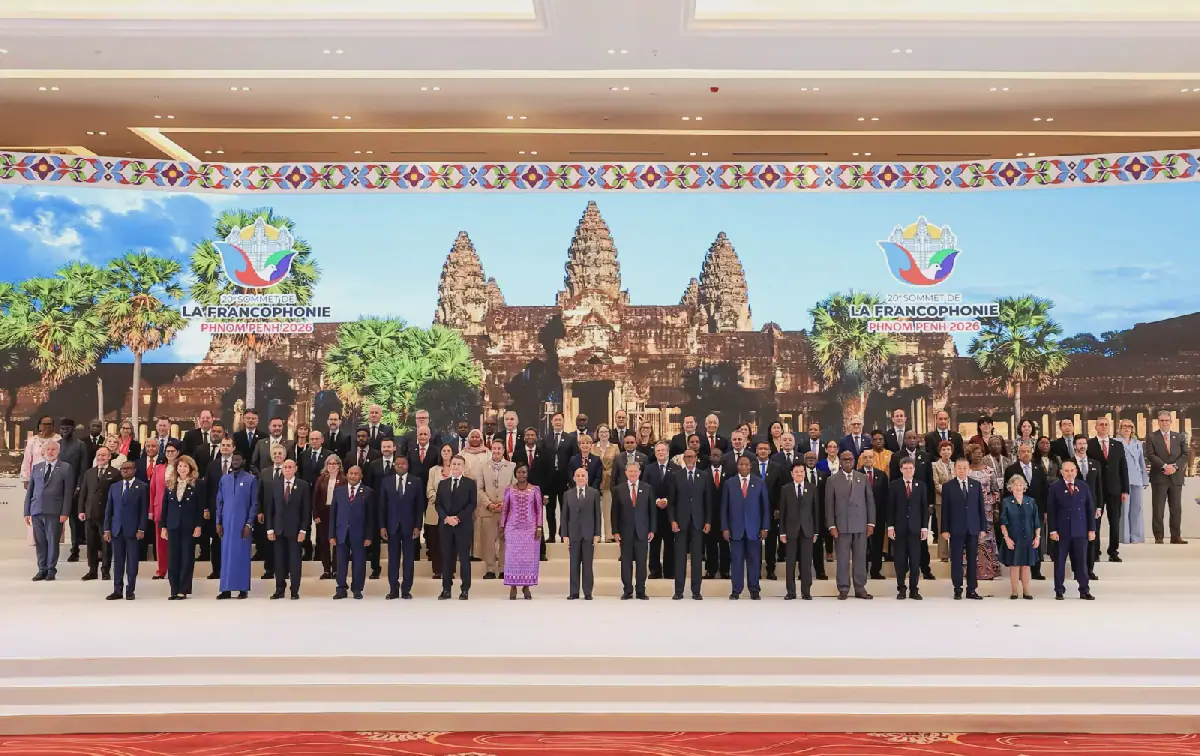
The 20th summit of the International Organization of La Francophonie (OIF) in Phnom Penh, Cambodia, has failed to elect a new Secretary-General. The organization comprises countries that use French as an official language. The summit had been closely watched by citizens of member countries and international politics observers. Three candidates were in the running: incumbent Louise Mushikiwabo of Rwanda, Dacian Cioloș of Romania, and Coumba Bâ of Mauritania.
The election process was expected to be straightforward, with the new Secretary-General serving a three-year term. However, the summit was marked by disagreements among member countries. France reportedly asked Rwanda to withdraw or step down as a candidate for Louise Mushikiwabo. Rwanda responded, stating it was not bound by France's requests. The member countries were divided, with some advocating for the election to proceed and others pushing for a consensus candidate.
After over three hours of negotiations, the member countries failed to reach an agreement. They decided to postpone the election for one year, allowing Louise Mushikiwabo to continue in her position. Rwandan Foreign Minister, Amb. Olivier Nduhungirehe, stated that there were lengthy discussions and disagreements among member countries. He noted that some countries, including Senegal's President Bassirou Diomaye Faye, pushed for a decision that would be acceptable to all member countries.
According to Amb. Nduhungirehe, the agreement reached included extending Louise Mushikiwabo's term by 12 months. During this period, she will work on reforms in preparation for the next election. The agreement also established that Rwanda will not submit a candidate for the Secretary-General position in the next election. Other candidates will be allowed to campaign, and member countries can submit their own candidates.
Dr. Ismael Buchanan, a University of Rwanda professor and expert in international politics, attributed the Democratic Republic of Congo's opposition to Louise Mushikiwabo's re-election to historical and political factors. He stated that Congo was unhappy with Mushikiwabo's perceived lack of attention to Congo's issues. Buchanan suggested that Congo's leaders harbor resentment towards Rwanda, dating back to the pre-1994 era.
The Democratic Republic of Congo had initially supported Juliana Amato Lumumba as its candidate. However, it withdrew her candidacy and threatened to leave the organization if Mushikiwabo were re-elected. Following the agreement to postpone the election, the Congolese government announced its acceptance of the decision, including the condition that Mushikiwabo would not serve a third term.
Dacian Cioloș, the Romanian candidate, expressed disappointment with the outcome, describing it as a "bad day" that could have significant consequences for the organization. The OIF summit's failure to elect a new Secretary-General has raised questions about the organization's future and its ability to adapt to changing global politics.
Key points
- The OIF summit failed to elect a new Secretary-General, extending Louise Mushikiwabo's term by 12 months.
- The election was postponed due to disagreements among member countries, with some advocating for a consensus candidate.
- The agreement reached included allowing other candidates to campaign and submit their nominations for the next election.
Reporting sources
- Ibyabereye mu cyumba cyaberagamo amatora y’Umuyobozi wa OIF · https://umuseke.rw/