France experienced its third consecutive weekend of protests, with hundreds of thousands of people participating in demonstrations across the country. The protests, which began last month among high school students, later drew support from university students and labor unions. A coalition of youth organizations and student unions estimated that nearly 500,000 people joined Saturday's rallies nationwide.
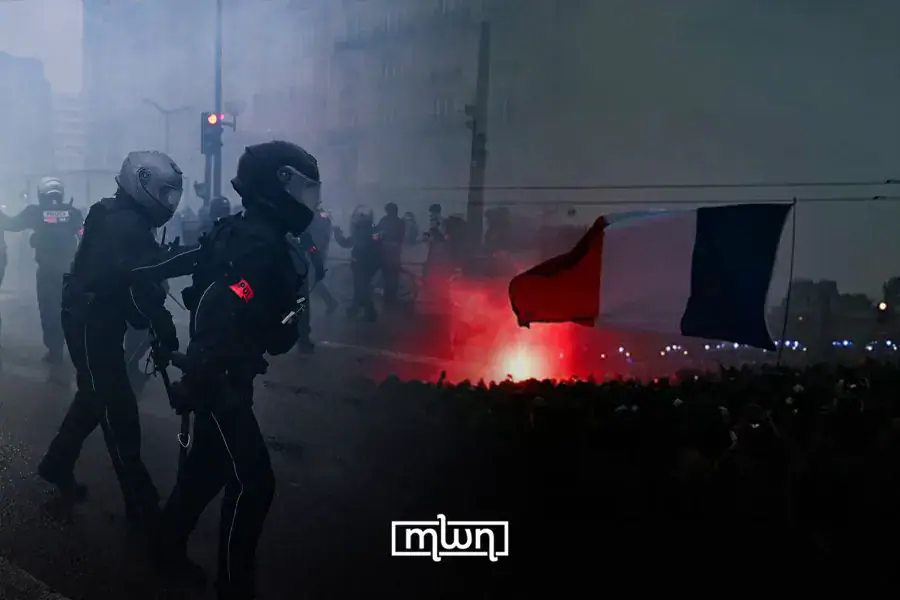
The demonstrations in Paris and Lyon turned violent as protesters set fire to bins and street furniture, while masked individuals dressed in black used hammers to remove paving stones and throw them at police. Riot police responded with tear gas and baton charges. Officers warned demonstrators through loudspeakers that they would deploy more tear gas unless crowds cleared the streets. Medics treated and evacuated injured protesters as some demonstrators raised their hands to signal that they posed no threat.
According to France's Interior Ministry, at least 290 arrests were made nationwide during the protests. Despite the clashes, many demonstrators condemned the violence and accused the government of failing to address their concerns. Protesters have criticized deteriorating school buildings, teacher shortages, and a university admissions system they consider unfair to students from disadvantaged backgrounds.
Prime Minister Sebastien Lecornu held several meetings with student unions during the week and said the government had listened to their demands. Authorities are also considering measures to ease the cost of living. Ahead of Saturday's demonstrations, France deployed approximately 70,000 police officers and gendarmes nationwide. Interior Minister Laurent Nunez warned of a high risk of disorder, particularly after dark during Halloween weekend.
The protests have also spread beyond France, with demonstrations taking place in Germany, Spain, and Italy. In Germany, an estimated 120,000 participants took part in demonstrations organized under the youth alliance "Gen Z regelt". Protesters opposed rising living costs, government budget cuts, and increased defense spending. Police deployed water cannons and pepper spray in Frankfurt, Cologne, and Hamburg after clashes erupted.
Authorities in Germany reported looting, smashed windows, and attacks on emergency services, while several people were detained and at least one police officer was injured. In Spain, regional police raised their alert level in Barcelona following riots on October 24 that led to around 130 arrests, mostly involving minors. Italian police also remained on alert after clashes in Milan, Turin, and Bologna.
The French authorities put the national turnout at 320,000, with 70,000 demonstrators in the capital. A coalition of youth organizations and student unions estimated that 200,000 people participated in the Paris march. The main Paris march was moved to the city's eastern edge following a court dispute.
Key points
- At least 290 arrests were made nationwide during the protests.
- The protests drew support from university students and labor unions.
- The demonstrations took place in several countries, including Germany, Spain, and Italy.