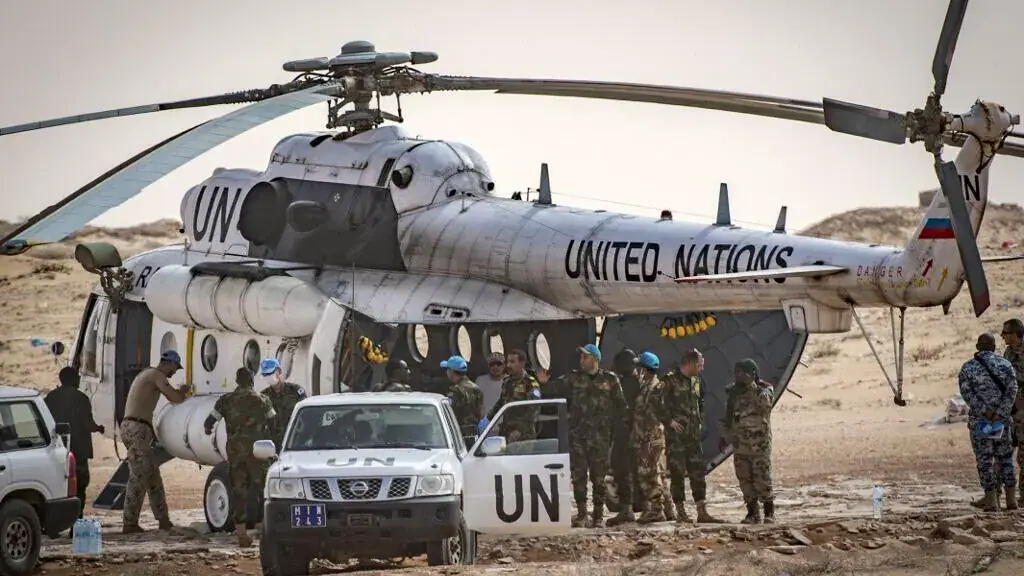
The United Nations Mission for the Referendum in Western Sahara (MINURSO) has been disbanded after 35 years of operation, due to a disagreement between the United States and Russia over the inclusion of a referendum in the mission's mandate. The US, which supports Morocco's autonomy plan, and Russia, which backs Algeria's push for a referendum, both exercised their veto power to block each other's resolutions. This development has significant implications for the future of Western Sahara.
The dispute reflects the ongoing rivalry between Morocco and Algeria over the status of Western Sahara. Morocco claims sovereignty over the territory, while Algeria supports the Polisario Front, which seeks independence. The two countries have been unable to reach a resolution, and have instead relied on international powers to advance their interests. The US has traditionally supported Morocco, while Russia has backed Algeria.
The end of MINURSO has raised concerns about the potential for escalation in the region. The UN's Secretary-General, António Guterres, has expressed fears of a "risk of escalation" following the mission's termination. This concern is heightened by Morocco's intention to implement its autonomy plan, which could be seen as a provocation by the Polisario Front.
The situation in Western Sahara is further complicated by the involvement of global powers. The US and Russia are not only rival powers but also represent different blocs, with the US part of the Western bloc and Russia aligned with the Eastern bloc. This has raised the stakes, with the potential for the conflict to become a proxy war.
The impact of the MINURSO's termination is being felt on the ground. The UN is working to liquidate the mission, but the consequences of its departure are unclear. The situation on the ground remains tense, with both Morocco and Algeria maintaining their positions.
The Western Sahara conflict has broader implications for the region and the world. The Sahel, Ukraine, and the Middle East are all areas of conflict where global powers are vying for influence. The situation in Western Sahara could have far-reaching consequences, including the potential for a wider conflict.
The future of Western Sahara remains uncertain, with no clear solution in sight. The Polisario Front and Morocco are dug in, and the international community seems unable to find a way forward. The end of MINURSO has created a power vacuum, which could be exploited by either side.
Key points
- The US and Russia's vetoes have led to the end of MINURSO.
- The dispute reflects the ongoing rivalry between Morocco and Algeria over Western Sahara.
- The situation has raised concerns about the potential for escalation in the region.