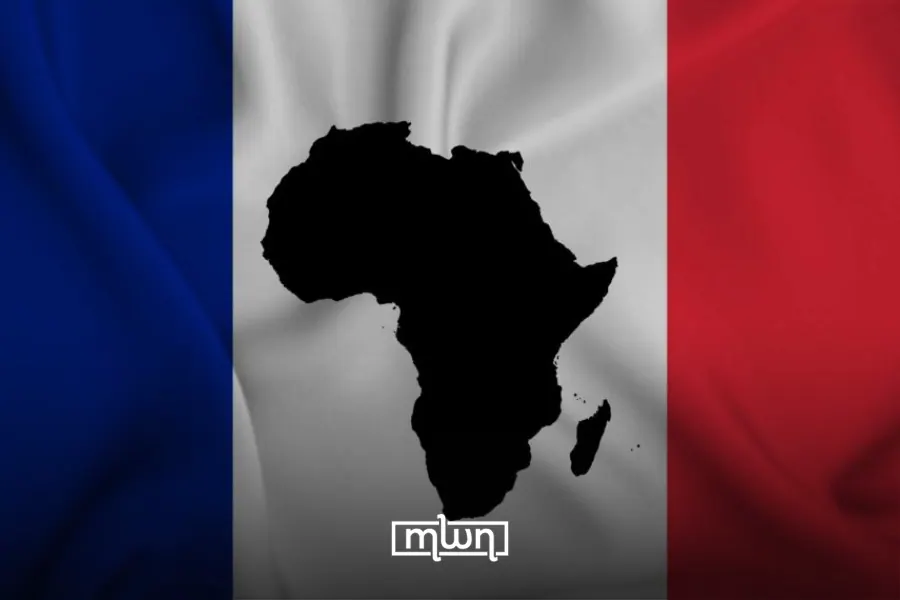
The French military presence in Africa has undergone significant changes in recent years. In January 2025, French forces handed over the garrison at Abéché, in eastern Chad, to the Chadian state, which subsequently granted the base to Turkey. This move was seen as a symbol of French decline in Africa, but it only tells part of the story. The French presence in Africa was never solely about soldiers; it was a complex system of access, including military bases, political relationships, commercial networks, ports, infrastructure, energy contracts, and currency arrangements.
The visible layer of French influence, its military bases, has almost completely collapsed over the past four years. Mali, Burkina Faso, and Niger expelled French troops after successive coups, while Chad ended its defense agreement, and the last French garrison left N'Djamena on January 30, 2025. Senegal followed suit, and in June 2026, Burkina Faso severed diplomatic relations with Paris, accusing its former colonial ruler of maintaining subversive networks. At the same time, Mali, Burkina Faso, and Niger left ECOWAS and consolidated their own confederation.
Despite the decline of its military presence, France still maintains significant economic influence in Africa. The CFA franc, a currency tied to the euro, still binds fourteen African economies to Paris, and it remains the most durable instrument France has in Africa. However, the Sahel states have announced their intention to leave the CFA franc arrangement. Meanwhile, other countries have moved into the space left by France. Russia has taken over security relationships, with roughly two thousand fighters in Mali and several hundred more in Burkina Faso and Niger.
China has moved into the mines and infrastructure contracts, while Turkey has taken a share of both, presenting itself as a third option. This raises questions about what exactly was left for France. According to Étienne Giros, head of the association of French companies operating in Africa, many executives overestimate "African risk" and abandon viable projects outright. Some of the French retreat was expulsion, while some was a decision made in Paris boardrooms.
In 2022, Bolloré sold its entire African logistics network to the shipping group MSC for 5.7 billion euros, a move that was not driven by expulsion. The French giant's retreat did not shrink what France wanted from the continent. Instead, Paris has focused on deepening its partnership with Morocco. In July 2024, President Emmanuel Macron wrote to King Mohammed VI, recognizing Moroccan sovereignty over the Sahara, and in October, he visited Rabat, signing twenty-two agreements worth around ten billion euros.
The partnership between France and Morocco has been strengthened further, with a bilateral treaty structuring their relationship for decades, reported as the first agreement of its kind France has concluded with a country outside Europe. In July 2026, France's prime minister made Rabat the destination of his first official trip abroad, arriving with roughly a dozen ministers. This series of moves reveals that France is aware it still holds significant interests in Africa, which it can no longer service on its own.
Morocco has been accumulating influence in Africa for twenty years, long before Paris needed it. The kingdom has become a major player in African finance, with Moroccan banks acquiring lenders in Senegal, Côte d'Ivoire, and neighboring markets, mainly from French institutions. This has allowed Morocco to position itself as a regional leader and broker, with a dual role as a destination and gateway to Africa.
Key points
- France's influence in Africa has shifted from military presence to economic and commercial relationships.
- Morocco has become a key partner for France in Africa, with a strengthened bilateral relationship and significant economic ties.
- The currency of influence in Africa has changed, with a focus on ports, banks, corridors, and market access.