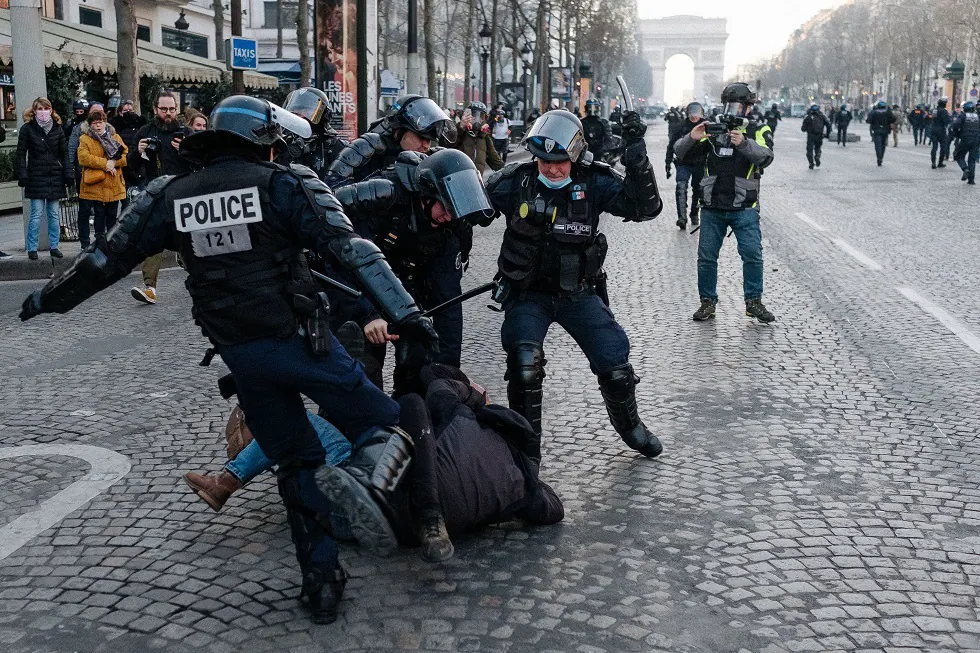
The French government's response to recent student protests has been criticized for its heavy-handedness and excessive use of force. Police have used batons, tear gas, and sonic bombs to disperse protesters, resulting in injuries and arrests. The protests, which began as a reaction to educational reforms, have escalated into a broader movement with students demanding better working conditions, more resources, and greater autonomy.
The use of force against students has been particularly concerning, with reports of police using physical violence and intimidation tactics against minors. Videos and images shared on social media have shown police in riot gear beating and arresting students, sparking outrage and condemnation from human rights groups. The French government has defended its actions, citing the need to maintain order and ensure public safety.
The protests have also highlighted concerns about police accountability and the use of force by law enforcement. Many protesters have reported being beaten, pepper-sprayed, or subjected to other forms of physical violence by police. Human rights groups have documented numerous cases of police brutality and called for an investigation into the use of force against protesters.
The French government's response to the protests has also been criticized for its attempts to intimidate and silence student leaders. Several student activists have been arrested and charged with various crimes, including "inciting violence" and "disrupting public order." The government has also used social media to target and discredit student leaders, accusing them of being "manipulated" by outside forces.
The protests have sparked a wider debate about the state of democracy and civil liberties in France. Many critics argue that the government's response to the protests reflects a broader trend of authoritarianism and a disregard for human rights. The French government has faced criticism from international human rights groups, who have expressed concern about the use of force against protesters and the erosion of civil liberties.
The role of the media in covering the protests has also been scrutinized. Some critics argue that the media has been biased in favor of the government, downplaying the scale and severity of the protests. Others have accused the media of being overly focused on the violence and disorder, rather than the underlying issues driving the protests.
The protests have raised important questions about the future of democracy and civil liberties in France. As the government continues to grapple with the challenges posed by the protests, it remains to be seen whether it will take steps to address the underlying issues driving the unrest or continue down a path of confrontation and repression.
Key points
- The French government's response to student protests has raised concerns about civil liberties and police brutality.
- The use of force against students has been particularly concerning, with reports of police using physical violence and intimidation tactics against minors.
- The protests have sparked a wider debate about the state of democracy and civil liberties in France.