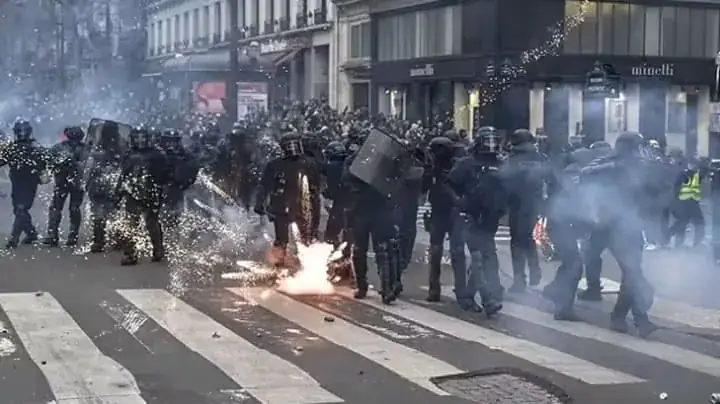
A nationwide strike called by French unions has brought partial paralysis to several sectors, with widespread demonstrations and attempts to close educational institutions and disruptions to transportation services. The strike is a response to declining purchasing power and demands for better wages, public services, and employment. The strike was called by major French unions at the beginning of October, with 244 demonstrations reported across the country.
The strike has seen significant participation, with Marie-Liesse Leon, General Secretary of the French Democratic Confederation of Labour (CFDT), expecting a large turnout similar to that seen during protests against pension reform in 2023, which drew around 1.3 million people. In Marseille, tens of thousands of people, including students, port workers, healthcare professionals, lawyers, and cultural sector workers, took part in a demonstration.
The education sector has been significantly affected, with 60 institutions out of 184 experiencing disruptions, and student organizations reporting that around 90% of universities have been affected. Over 1,000 secondary schools have also seen their activities suspended. However, government figures report that only 81 secondary schools were closed or disrupted out of 3,700.
The strike has also affected the railway sector, with the four main unions of the National Railway Company (SNCF) calling on workers to participate. The unions are demanding real negotiations on wages and employment. Despite the company announcing measures to improve purchasing power, including a €400 bonus for around 140,000 employees and a 2% increase in some allowances, the unions have maintained their call for a strike.
There have been calls for unity among the trade union, student, and "Yellow Vest" movements, with demands for continued strikes and protests on November 6 and 7. The aim is to broaden the mobilization and pressure the government to respond to social demands. In response to the pressure, the French government has begun to send signals to try to ease economic tensions.
The French Minister of Economy has stated that the government is seriously considering bringing forward a planned increase in the minimum wage to before the scheduled date in January. However, unions argue that these promises do not meet the aspirations of the public, which is demanding the cancellation of the austerity budget, lower fuel and energy prices, and radical solutions to the cost of living crisis.
The French parliament has rejected the 2027 state budget in a first reading, with an overwhelming majority, extending the deadlock amid concerns about the country's public finances, just months before the presidential election. The strike and demonstrations reflect the rising social tensions in France, with unions and the public demanding significant changes to address the cost of living crisis and improve public services.
Key points
- The strike has seen significant participation across various sectors, including education, transportation, and healthcare.
- The French government is considering bringing forward a planned increase in the minimum wage to ease economic tensions.
- The strike and demonstrations reflect the rising social tensions in France, with unions and the public demanding significant changes to address the cost of living crisis and improve public services.