A nationwide day of protest against the high cost of living took place in France on Saturday, November 7, 2026, marking the fourth consecutive Saturday of mobilization. The main demonstration in Paris, which connected the Republic Square to the Nation Square, was secured by a significant police presence. A separate rally by the "yellow vests" movement, scheduled at the Concorde Square, was prohibited by the prefecture.
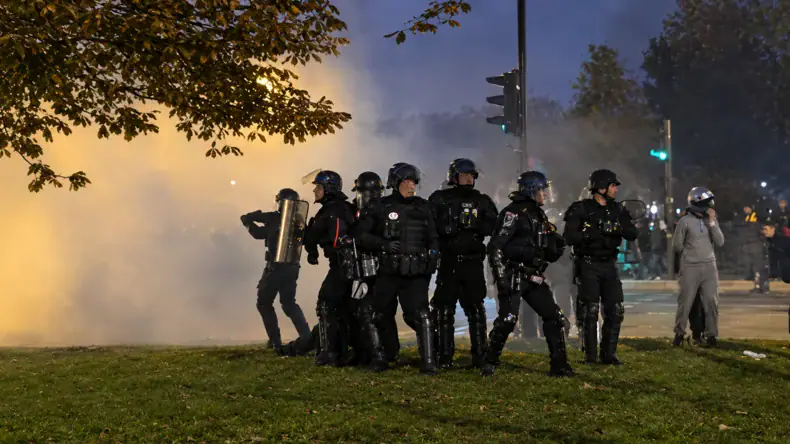
Despite the ban, around 100 people attempted to gather at the Concorde Square, leading to the arrest of two spokespersons, Benjamin Ball and Azelma Sigaux. The Parisian procession concluded in a tense atmosphere at the Nation Square, where police used tear gas and charged, while 16 metro stations remained closed as a precautionary measure. Clashes and police interventions were also reported in several major regional cities.
In Lyon, an undeclared march of 300 to 400 people near the Tobacco Factory was dispersed using tear gas, resulting in 11 arrests, according to the Rhône prefecture. In Montpellier, projectiles and barricades prompted a response from intervention forces. In Nantes, authorities recorded 25 arrests. A water cannon truck was positioned in the city center of Marseille, and the Gironde prefecture reported up to 9,100 participants in the Bordeaux procession.
There were significant discrepancies between official sources and organizers regarding the scale of the mobilization. The youth intersyndicale claimed 250,000 demonstrators nationwide, including 75,000 in Paris, while the Interior Ministry estimated 146,000 participants globally, including 46,000 in the capital. To manage potential unrest, Interior Minister Laurent Nuñez ordered the strategic deployment of 70,000 police officers and gendarmes.
The deployment included armored vehicles and water cannons, accompanied by over 15,600 preventive checks carried out during the day. The protests were marked by significant police presence and interventions, reflecting the tensions between demonstrators and authorities. The events highlight the ongoing concerns about the cost of living in France and the public's response to it.
The protests also underscore the complexities of managing large-scale demonstrations and the challenges of balancing public expression with maintaining order. The use of tear gas, charges, and arrests in various cities indicates the level of tension and the measures taken by authorities to control the situation.
As the protests continue, the French government faces ongoing pressure to address the concerns of its citizens regarding the high cost of living. The scale of the mobilization and the tensions observed during the demonstrations suggest that this issue remains a significant challenge for the authorities to tackle.
Key points
- The protests were marked by significant police presence and interventions, reflecting the tensions between demonstrators and authorities.
- There were significant discrepancies between official sources and organizers regarding the scale of the mobilization.
- The French government faces ongoing pressure to address the concerns of its citizens regarding the high cost of living.
Reporting sources
- France : Quatrième samedi consécutif de mobilisations contre la vie chère marqué par de vives tensions · Le Quotidien de Nouakchott