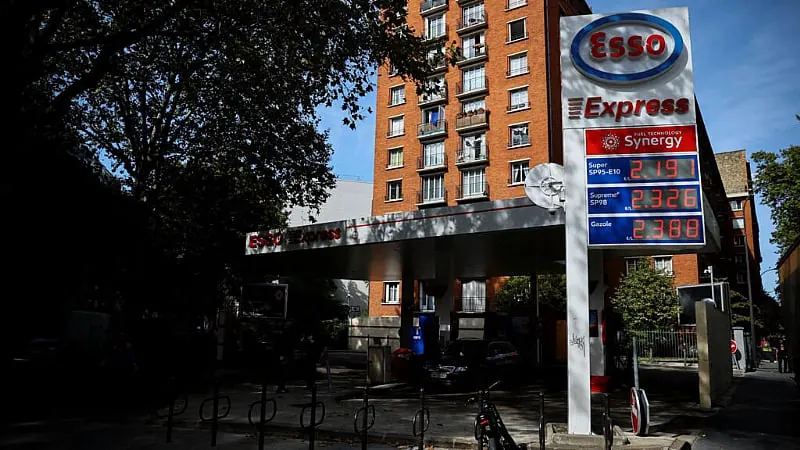
The French government has expanded its fuel aid program to support 5.5 million drivers, up from three million, as fuel prices continue to climb to record levels. The aid package, which includes a €100 payment, will run until the end of the year. This move aims to alleviate the financial burden on households and businesses. The additional measures are expected to cost around €450 million.
The €100 payment will benefit those who rely heavily on their cars, representing approximately 40 cents per liter of fuel for two months on average. To be eligible, single people must earn a net salary of up to €2,050 a month, while couples with two children can earn up to €6,100. Applicants must travel at least 15 kilometers each way to work or drive more than 8,000 kilometers a year for work.
However, France's main trade union, the CGT, has expressed dissatisfaction with the measures, calling them "a drop in the ocean." Secretary-general Sophie Binet stated that the aid does not adequately address the surge in petrol prices. The union is advocating for fuel prices and oil-company margins to be capped. Binet also criticized the scheme, citing that only about half of those eligible had applied.
Other politicians have also weighed in on the issue. Socialist Party first secretary Olivier Faure acknowledged some positive elements in the package but called for an exceptional tax on oil companies' profits. The government has also increased the maximum tax-free fuel payment employers can give workers from €600 to €1,000. Additionally, self-employed nurses driving over 100 kilometers a day will receive a one-off €80 payment.
The French government has taken steps to support various professions, including home care workers who use their own vehicles and drive at least 30 kilometers a day. Over 25,000 self-employed nurses are expected to benefit from the new measures. Some 1.2 million people already registered will receive the payment automatically. The government aims to mitigate the impact of rising fuel prices on these groups.
Fuel prices in France have reached record levels, with diesel averaging €2.41 a liter and premium SP98 petrol at €2.27. Concerns about the financial strain of high fuel prices are widespread. Delivery manager Sylvano Doré expressed worry about making ends meet, while home care worker Sabrina Breteau felt that she was "paying to go to work." Despite shortages at some filling stations, the government assures that France has sufficient supplies.
The government remains committed to addressing the issue, with Economy and Finance Minister Roland Lescure stating that authorities have "two months of visibility" and that "there is no supply problem in France." The expanded fuel aid package is a temporary measure to alleviate financial pressure on households and businesses. The effectiveness of these measures and the potential for future actions will be closely watched as France navigates the challenges of high fuel prices.
Key points
- France expands fuel aid to 5.5 million drivers amid record-high fuel prices.
- Unions demand more action, calling the current measures "a drop in the ocean."
- The aid package is expected to cost around €450 million and will run until the end of the year.