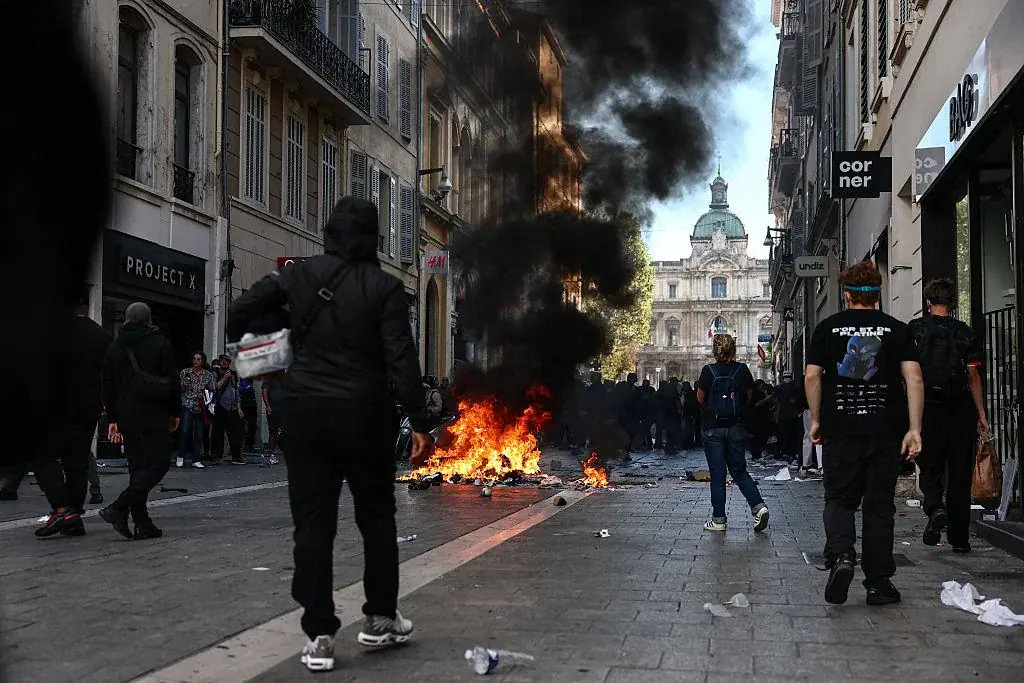
France is gearing up for a fresh wave of protests on Saturday, October 31, as citizens take to the streets to express their discontent with the rising cost of living and demand improved education conditions. The government has heightened security measures, with concerns of renewed violence and vandalism, similar to the events of October 17, which resulted in widespread destruction of public buildings and thousands of shops.
The French Ministry of Interior has expressed fears of a repeat of the violent incidents that occurred during the previous protests, which led to significant damage to property. In response, the government has bolstered its security plan, with Interior Minister Laurent Nunez announcing increased protection for commercial centers and public properties. The new measures include prohibiting protests in city centers, such as Paris, Lyon, and Bordeaux, and redirecting demonstrators to the outskirts.
To maintain order, a nighttime curfew has been imposed in several neighborhoods of Paris and other cities, from 11 pm to 6 am. The authorities have also banned the wearing of Halloween costumes to conceal identities and prevent vandalism during the protests. These developments have raised concerns among the business community, with approximately 600 stores still closed out of 2,500 that were damaged during the previous unrest.
In a bid to protect their businesses, many shop owners, particularly in the Parisian Opera district, have erected wooden barricades around their premises. The Paris city council has also mobilized over 1,000 personnel to clear public spaces and confiscate any equipment that could be used for vandalism. The ongoing protests are part of a broader social movement that began in late September, involving trade unions and educational institutions.
The protests have been marked by clashes between demonstrators and law enforcement, resulting in injuries to many protesters and 1,193 police and gendarmerie personnel. The unrest has added to the economic pressures facing the country, just months ahead of the 2027 presidential elections, in which far-right candidate Marine Le Pen has been gaining traction in opinion polls.
The French government is working to mitigate the impact of the protests on the economy and maintain public order. The country's president, Emmanuel Macron, is set to face a challenging period as he navigates the country's economic and social issues ahead of the elections. The situation remains uncertain, with many stakeholders closely monitoring developments.
As the protests unfold, the international community is watching closely, aware of the potential implications for European politics and stability.
Key points
- The protests are expected to draw between 350,000 to 450,000 participants across 350 demonstrations.
- The French government has heightened security measures to prevent a repeat of the violent incidents that occurred during previous protests.
- The ongoing unrest has added to the economic pressures facing the country, just months ahead of the 2027 presidential elections.