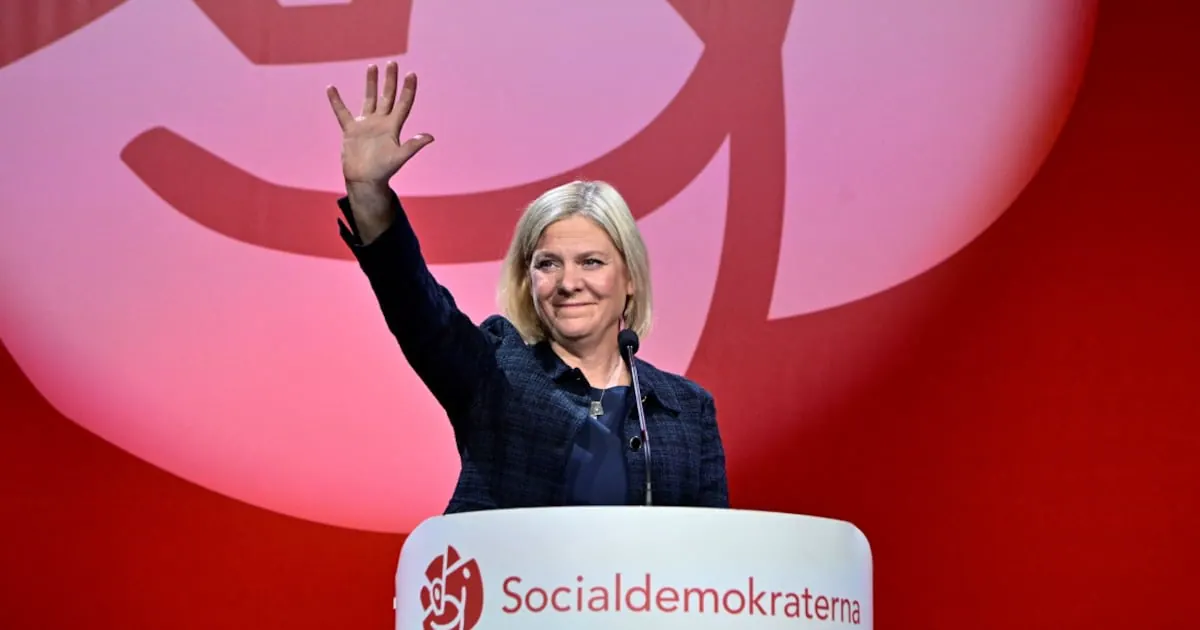
The recent Swedish election has shown that securing 28% of the vote can be enough to make a party the largest and put its leader in line for the prime ministership. This has implications for South Africa's upcoming municipal elections, where the African National Congress (ANC) and the Democratic Alliance (DA) are heading in opposite directions. The ANC's decline is rapid, having fallen from 57% to 40% nationally two years ago.
In the 2021 local government election, the ANC won 33% of the vote in Johannesburg, while the DA secured 26%. Recent polling by the Social Research Foundation has the ANC at 18% and the DA at 42%, although a surge in younger voter registration may affect the DA's share. This data provides a baseline for the upcoming elections, where the two parties are likely to pass each other in terms of voter support.
The concept of a 51% majority is becoming increasingly misconceived in fragmented politics. A "win" is no longer solely defined by securing a majority, but rather by assembling a viable coalition alliance sufficient to form a government. The DA may need to rethink its strategy, potentially holding a tighter line and building incrementally on its base rather than seeking to win over a wider cross-section of the electorate.
The DA's strategic conundrum is complicated by the risk of being blindsided by more muscular populist parties to its right. However, if it can maintain its base and capitalize on the ANC's decline, it may be able to secure power without needing to secure a majority. This approach would require careful consideration of policy agendas and voter support.
The ANC's decline and the DA's potential rise have significant implications for South Africa's politics. The upcoming municipal elections will be crucial in determining the trajectory of the country's politics, with the possibility of a shift in power dynamics. The ANC's loss of support may be attributed to various factors, including its performance in government and the rise of other parties.
According to Richard Calland, a visiting adjunct professor at the Wits School of Governance, the arithmetic of fragmented politics has real relevance for South Africa's upcoming municipal elections. He argues that winning an election no longer necessarily means winning a majority of the vote, and that the decisive contest takes place after the votes have been counted, when parties negotiate coalition alliances.
Key points
- The ANC and DA are heading in opposite directions in terms of voter support, with the ANC in decline and the DA potentially on the rise.
- The concept of a 51% majority is becoming increasingly misconceived in fragmented politics, where securing a viable coalition alliance is sufficient to form a government.
- The DA may need to rethink its strategy, potentially holding a tighter line and building incrementally on its base rather than seeking to win over a wider cross-section of the electorate.