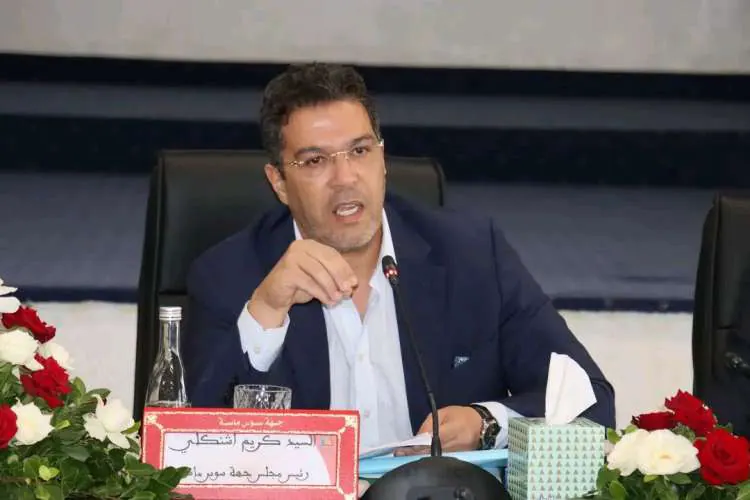
A significant development has unfolded in the Souss-Massa regional council in Morocco, where a scheduled meeting in October failed to take place due to a lack of quorum. Council head, Karim Achakli, was forced to postpone the meeting, which was set to be held in Taroudant, after only 22 out of 57 members attended. The boycott was led by members from various parties, including the Authenticity and Modernity Party, Independence Party, and the Socialist Union of Popular Forces.
The boycott is reportedly a result of growing discontent among council members over the management of the region. Sources close to the council indicate that some members have been unhappy with the leadership's approach, citing a lack of transparency and favoritism in the allocation of contracts and resources. The boycott is seen as a manifestation of a deeper rift within the council, with some members feeling that the leadership has become too beholden to regional authorities.
The rift within the council has been exacerbated by the appointment of a close associate of the regional governor to a key administrative position within the council. This move has been seen as an attempt to exert control over the council and has further eroded trust among members. The boycott has also highlighted concerns over the council's ability to function effectively, with some members expressing frustration over the lack of progress on key regional issues.
According to sources, the council's leadership has become increasingly isolated, with some members feeling that their concerns and proposals are being ignored. The boycott is seen as a bid to assert the council's independence and to push for greater transparency and accountability in the management of regional affairs. The development has raised questions about the stability of the council and the potential for further conflict.
The Souss-Massa regional council is composed of 57 members, representing various parties, including the National Rally of Independents, Independence Party, Authenticity and Modernity Party, and others. The council's inability to function effectively has raised concerns about the impact on regional development and the delivery of services to local communities.
The situation has also highlighted the complex relationships between regional authorities and local councils in Morocco. The extent to which the regional governor is exerting influence over the council is unclear, but the boycott has exposed tensions between the two levels of government. The development has sparked concerns about the potential for further conflict and the need for greater clarity on the roles and responsibilities of regional authorities.
The boycott has significant implications for the region, with some members calling for greater autonomy and decision-making power. The situation remains fluid, with ongoing efforts to resolve the impasse and restore functionality to the council. The outcome will likely have far-reaching consequences for the region and may set a precedent for similar councils across Morocco.
Key points
- The Souss-Massa regional council's inability to hold a meeting due to a boycott by 35 members has exposed deep divisions and concerns over governance and regional authority interference.