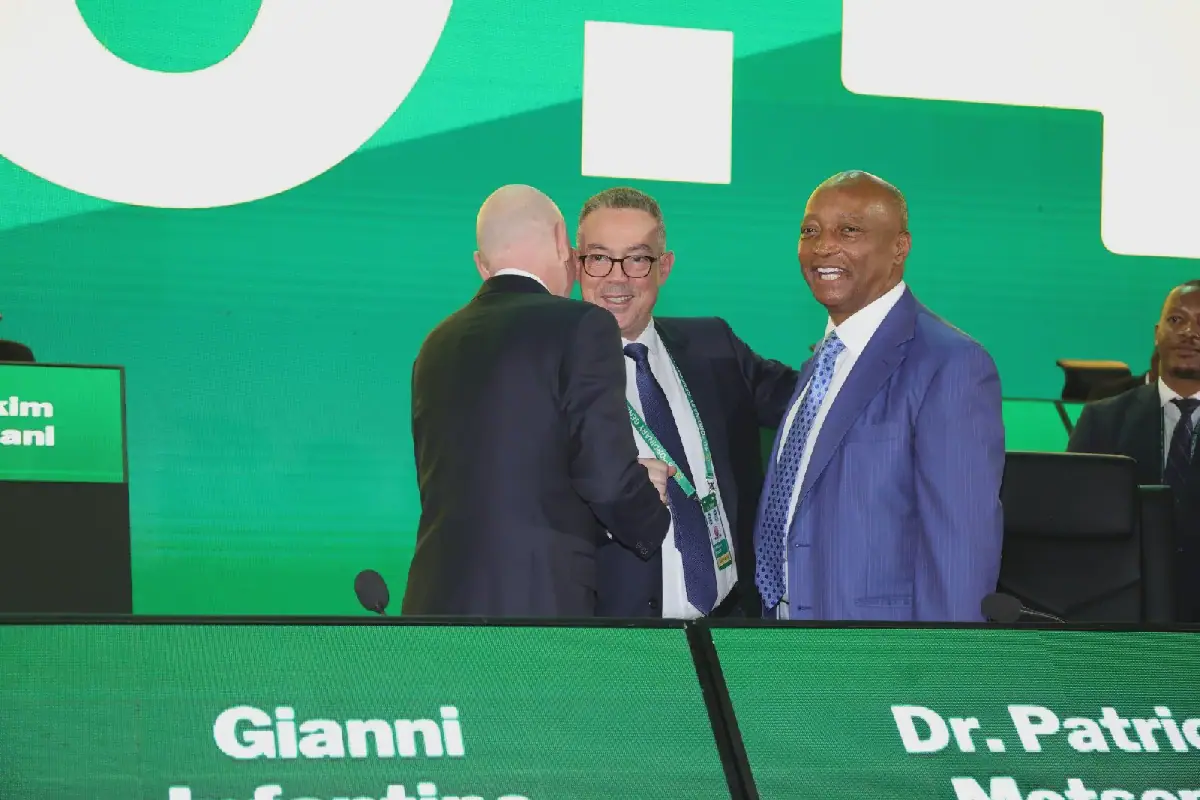
The Confederation of African Football (CAF) has announced changes to its permanent commissions, with Fouzi Lekjaa, president of the Royal Moroccan Football Federation (FRMF), stepping down as head of the finance commission. This move comes after Lekjaa's recent appointment as Morocco's Minister of Economy, Finance, and Public Performance. He will, however, retain his position as first vice-president of the CAF. The changes were made during the 48th Ordinary General Assembly in Abuja, Nigeria.
Lekjaa's departure from the finance commission is seen as a significant change in the power dynamics within the CAF. As head of the commission, he played a crucial role in preparing budgets, controlling expenses, and monitoring the institution's resources. The commission also oversaw financial aspects of continental competitions, including the Africa Cup of Nations. Although Lekjaa remains first vice-president of the CAF and president of the FRMF, his exit represents a loss of institutional leverage for Morocco.
The CAF is undergoing a period of restructuring, including the dissolution and reconstitution of the referees' commission under FIFA supervision. This move is amid repeated arbitration controversies. Additionally, CAF president Patrice Motsepe, who was re-elected in March 2025 for a second four-year term, has announced he will not seek a third term in 2029. This has opened a period of positioning within the different spheres of influence in African football.
The timing of Lekjaa's departure is also significant, given the impending decision of the Court of Arbitration for Sport (CAS) in the dispute between Senegal and the CAF, as well as the FRMF. The CAS decision, expected in late November, is a major issue for both federations. The dispute relates to the 2025 Africa Cup of Nations, where Senegal was initially declared the winner on the field but later forfeited due to a jury's decision.
Morocco maintains a presence in several CAF structures, with four representatives in the new permanent commissions. However, the loss of the finance portfolio reduces Morocco's direct influence on a strategic sector of the institution. For Morocco, the challenge will be to preserve its weight in continental decisions without one of its main historical levers.
The CAF's recomposition may just be beginning, especially with the approaching end of Motsepe's term and the awaited CAS verdict. Lekjaa's new role in the Moroccan government may also impact his influence within the CAF. As the situation unfolds, stakeholders will be watching to see how these changes affect African football's governance and Morocco's position within it.
The changes within the CAF and Morocco's football leadership may have implications for the sport's future in the region. With Lekjaa's promotion, Morocco's football landscape is experiencing a period of significant change. The Royal Moroccan Football Federation will likely continue to play a key role in African football, despite Lekjaa's reduced direct involvement in CAF's financial matters.
Key points
- Fouzi Lekjaa steps down as head of CAF's finance commission amid new role in Moroccan government
- CAF undergoes restructuring, including changes to referees' commission and impending leadership transition
- Morocco maintains significant presence in CAF structures despite Lekjaa's departure from finance commission