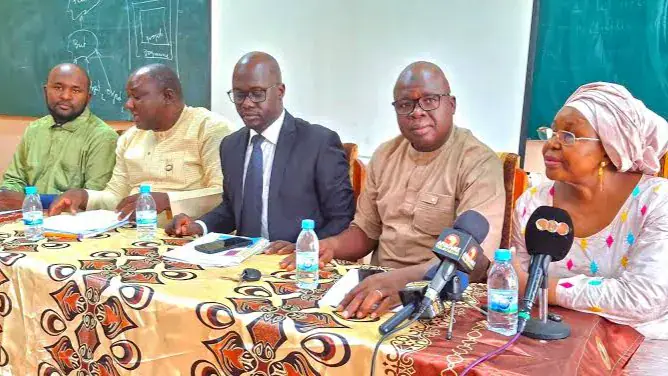
University teachers in Mali have voted to continue their strike, entering its fourth week, after an assembly on November 18, 2026. The Syndicat national de l’enseignement supérieur (SNESUP) members unanimously decided to maintain the movement. The strike affects all institutions of higher education and research, as well as university hospitals. As a result, classes, thesis defenses, and other academic activities remain suspended.
The national bureau of the SNESUP presented a report on its meetings with top authorities and civil society organizations, including the Haut Conseil islamique, Coordination des chefs de quartier, and RECOTRAD. The union's demands include fixing the amount of the research allowance, determining its application date, and paying arrears since 2017. They insist that the government's proposals must be concrete to consider suspending the strike.
The SNESUP has set three main conditions to end the strike. Firstly, they want a fixed amount for the research allowance. Secondly, they demand a specific date for its implementation. Lastly, they require the payment of arrears accumulated since 2017. The union believes that the President of the Transition must intervene to resolve the issue and save the education and culture year.
The strike has significant implications for the education sector in Mali. With classes and academic activities suspended, students and teachers are facing uncertainty. The SNESUP's determination to continue the strike until their demands are met has left the government with increasing pressure to respond. The situation remains tense as the strike enters its fourth week.
The Malijet reported that the SNESUP's decision to continue the strike was unanimous. The union members are resolute in their demands, emphasizing that they will not back down without concrete proposals from the government. This development suggests that the strike may continue for an extended period, affecting the academic calendar and the overall education system in Mali.
The SNESUP's demands are centered on improving the working conditions and compensation of university teachers. The research allowance is a critical aspect of their remuneration, and its absence has been felt since 2017. The union's efforts to negotiate with the government and civil society organizations have so far yielded no results, leading to the continued strike.
The situation in Mali's education sector remains uncertain as the strike continues. The SNESUP's determination to achieve their goals has sparked a standoff with the government. With no immediate resolution in sight, students, teachers, and the broader education community are anxiously waiting for a breakthrough. The government's response will be crucial in resolving the crisis and restoring normalcy to the education system.
Key points
- University teachers in Mali demand a fixed research allowance, a specific implementation date, and payment of arrears since 2017.