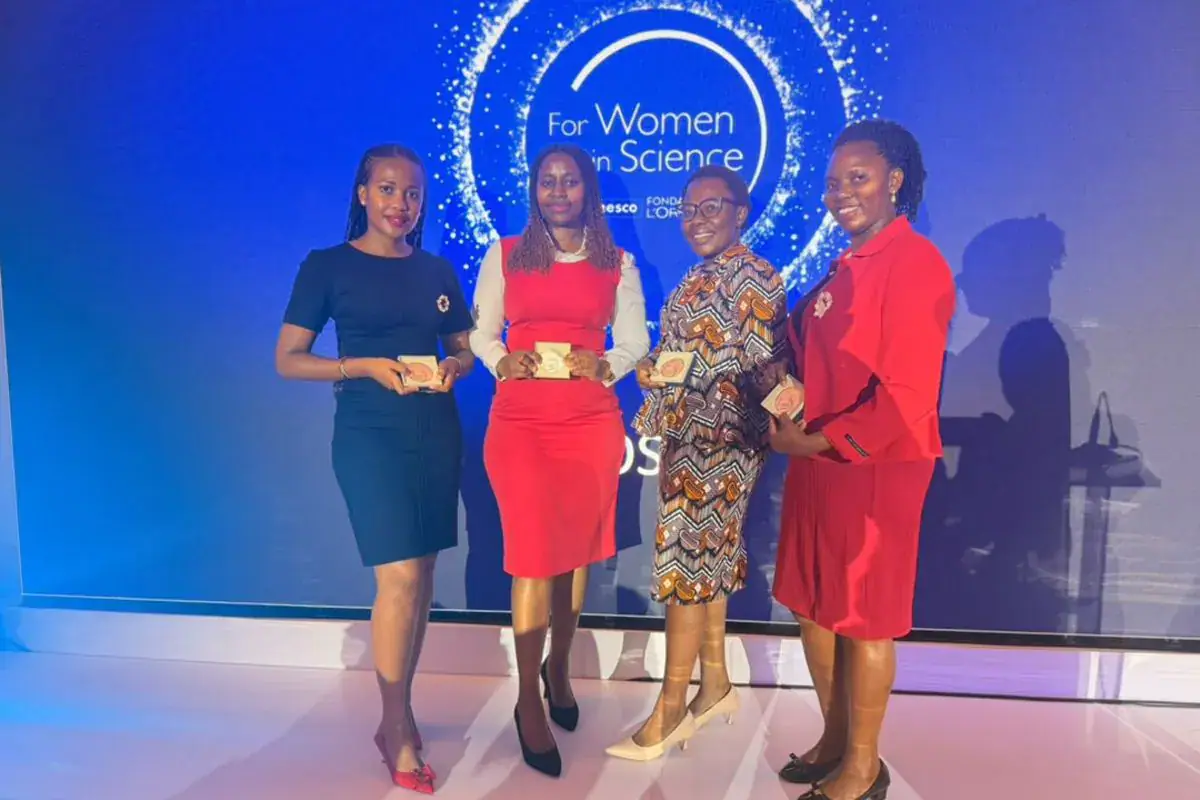
Four Tanzanian women scientists, Angel Meela, Dativa Pereus, Grantina Modern, and Hope Mbelwa, have earned regional acclaim for their research in science, technology, engineering, and mathematics (STEM). They are among 38 researchers recognized in the 2026 L’Oréal-UNESCO For Women in Science Sub-Saharan Africa programme. The ceremony took place in Johannesburg, South Africa, on November 19, 2026. Their research focuses on assistive technology for children with autism, malaria surveillance, childhood stunting, and cervical cancer detection.
Ms. Angel Meela, a PhD candidate at the Nelson Mandela African Institution of Science and Technology (NM-AIST), is developing an offline smartphone application using augmented reality to aid communication among autistic learners. This innovation aims to foster more inclusive education, particularly in schools with limited specialist support. Meanwhile, Ms. Dativa Pereus from Muhimbili University of Health and Allied Sciences (Muhas) is investigating how genomic information can be combined with epidemiological data to improve malaria surveillance and track transmission.
Ms. Grantina Modern, a PhD researcher at the University of Dar es Salaam (UDSM), is examining the interaction between the gut microbiome and environmental factors to influence child growth. Her work seeks to translate scientific evidence into a community-led growth-monitoring tool to combat stunting. Additionally, Ms. Hope Mbelwa, also a PhD researcher at NM-AIST, is exploring multimodal learning approaches to cervical cancer detection to improve early disease identification.
The recognition of these Tanzanian women scientists comes as the country works to strengthen its scientific capacity amid persistent gender disparities. According to Tanzania Commission for Universities (TCU) statistics for 2024/25, women accounted for 37 percent of students enrolled in STEM bachelor’s programmes. However, at postgraduate level, women comprised only 2,088 of 5,409 master’s students and 290 of 858 doctoral candidates.
A 2026 report by CGIAR researchers in Tanzania highlighted the gap, noting that women make up 36 percent of STEM students overall and just 10 percent in computer science degree programmes. South Africa’s Deputy Minister of Science, Technology and Innovation, Dr. Nomalungelo Gina, emphasized that higher enrolment does not automatically guarantee equal opportunity. She called for sustained support from classrooms to research leadership.
The 2026 cohort of researchers, selected from over 1,000 applicants, will receive leadership training alongside grants of €10,000 for doctoral and €15,000 for postdoctoral researchers. L’Oréal South Africa chief executive Serge Sacre urged the laureates to inspire younger generations and help build a stronger community of women in science. The programme aims to increase female participation in STEM and challenge barriers that deter girls and women from pursuing STEM careers.
The achievement of these four Tanzanian women scientists demonstrates the capacity of women researchers to pioneer home-grown scientific solutions. Their recognition provides fresh impetus to efforts aimed at increasing female participation in STEM. Key initiatives include addressing gender stereotypes and socio-cultural expectations, as well as providing stronger mentorship, research funding, and leadership opportunities.
Key points
- The four Tanzanian women scientists were recognized for their research in STEM fields, including assistive technology, malaria surveillance, childhood stunting, and cervical cancer detection.
- The 2026 L’Oréal-UNESCO For Women in Science Sub-Saharan Africa programme aims to increase female participation in STEM and provide leadership training and grants to researchers.
- Tanzania still faces persistent gender disparities in STEM, with women making up only 36 percent of STEM students overall and 10 percent in computer science degree programmes.