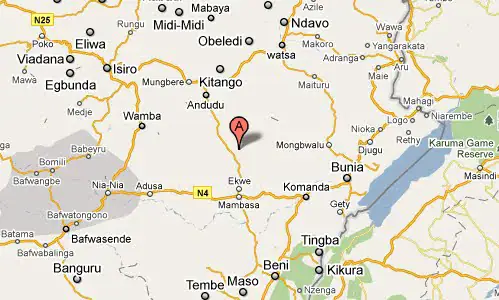
Representatives from the provinces of Tshopo, Bas-Uele, Haut-Uele, and Ituri, which make up the former Province-Orientale, gathered in Kisangani to reaffirm their commitment to the unity and territorial integrity of the Democratic Republic of Congo. The meeting, organized by Dynamique Grande-Orientale, brought together leaders and populations from the four provinces to discuss the region's development and security. They expressed their opposition to any project that could lead to the balkanization of the country.
The gathering resulted in a commitment to prioritize integrative projects that would stimulate development in the region. The participants recognized the need for economic and structural development in their provinces. They emphasized the importance of unity and cooperation to overcome the challenges facing the region. The colloquium also provided a platform for leaders to address issues related to poverty and underdevelopment.
To address the economic and structural challenges in the region, the representatives proposed the establishment of a financing mechanism to support community projects. According to Professor Jean-Paul Nemoyato, this initiative could help combat poverty and underdevelopment in the four provinces. The proposed mechanism aims to provide financial support to projects that benefit the local communities.
The involvement of women in the region's development was also highlighted as crucial. Deputy Geneviève Inagosi emphasized the need for greater inclusion of women in the development dynamics of the region. Her sentiments were echoed by other leaders who recognize the role women can play in promoting sustainable development.
For Senator Senold, a representative of Kisangani, the colloquium provided an opportunity for the Tshopo province to reaffirm its ambition to regain its status as an economically powerful region. The senator's sentiments reflect the aspirations of the populations in the Great Oriental region who seek to unlock the economic potential of their provinces.
In a message to those accused of disturbing the peace, Matheus Kanga, President of the Provincial Assembly of Tshopo, stated that the Great Oriental region would no longer serve as a rear base for those who spread death and desolation. His statement underscores the region's commitment to peace and stability.
The rejection of balkanization and the emphasis on integrative projects and women's involvement in development are key aspects of the Great Oriental region's vision for its future. The region's leaders and populations are committed to working together to promote sustainable development and ensure the unity and territorial integrity of the Democratic Republic of Congo.
Key points
- The four provinces of Tshopo, Bas-Uele, Haut-Uele, and Ituri have rejected any project of balkanization, reaffirming their commitment to national unity and territorial integrity.
- The representatives proposed the establishment of a financing mechanism to support community projects and stimulate development in the region.
- The involvement of women in the region's development was highlighted as crucial, with leaders emphasizing the need for greater inclusion of women in the development dynamics.