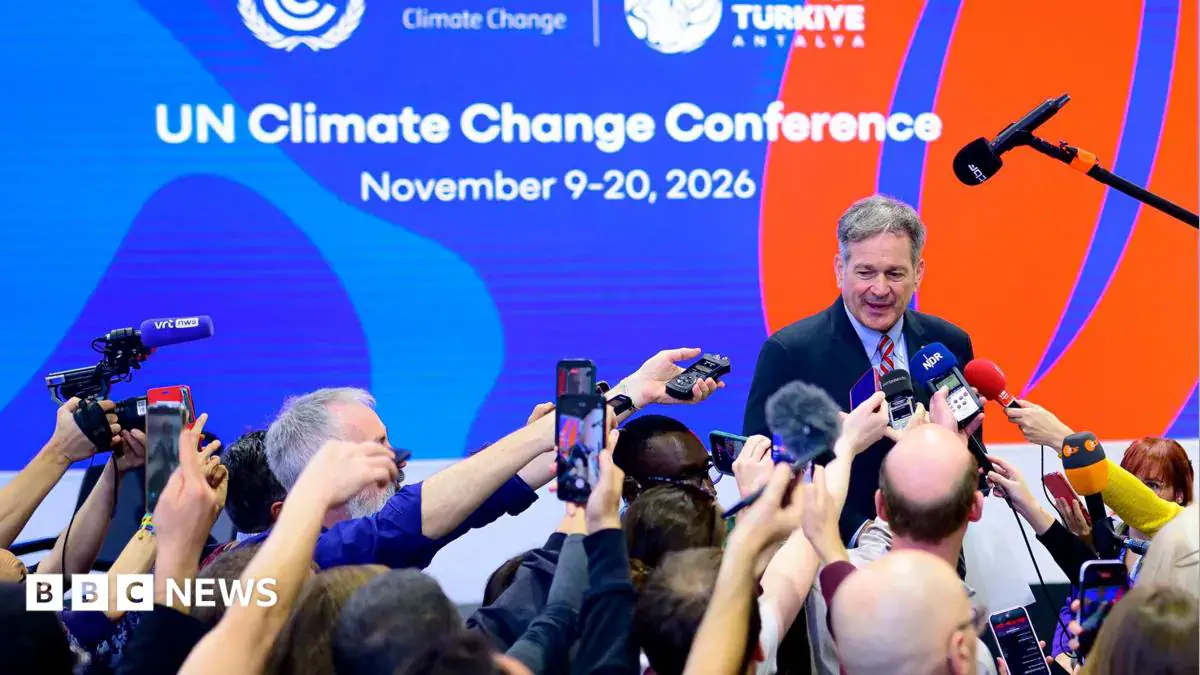
Climate negotiations at COP31 have stalled due to a dispute over the role of fossil fuels in the final agreement. Ministers from island nations, Panama, and several EU countries, including Spain, France, Belgium, Sweden, and Finland, are calling for a commitment to phase out fossil fuels. This push comes after Saudi Arabia and other oil-producing countries successfully advocated for the removal of fossil fuel references from the agreement.
The current agreement, known as the Antalya Accords, is the first at a COP to officially acknowledge that the goal of limiting temperature rise to below 1.5C has been missed. This situation is referred to as “overshoot” and scientists warn that it will expose millions more to rising sea levels and extreme heat. Panama’s Environment Minister, Juan Carlos Navarro, expressed concerns that a COP decision ignoring fossil fuels entirely is unacceptable.
France’s Minister of Ecological Transition, Monique Barbut, criticised the emphasis on carbon capture technology as a potential excuse for countries to continue using oil and gas. She stated that it is impossible to proclaim a 1.5C temperature increase while pretending everything is fine. The ministers' concerns are shared by some lead negotiators, who question how a climate agreement can be reached without mentioning the cause of the problem.
Despite the push for a fossil fuel phase-out, several EU nations were invited to join the initiative but opted out, citing concerns about derailing negotiations. Australia’s Climate Change and Energy Minister, Chris Bowen, emphasised that this COP focuses on implementation and transitioning to clean energy. He is leading the negotiations, which include a proposal to exclude fossil fuels from discussions in exchange for Saudi Arabia and other oil-rich nations committing to derive 35% of their energy from electricity by 2035.
However, this proposal does not address the critical issue of funding raised by developing nations. Earlier drafts had included a commitment to increase adaptation funding to $120 billion by 2035, which has since been removed. Ghana’s Environment Minister and chair of the African negotiating group, Zanetor Agyeman Rawlings, stated that developing countries are not there to beg, but to demand what is rightfully theirs for their people suffering due to the actions of developed countries.
The dispute over fossil fuels and funding has created a significant challenge for COP31. The negotiations are ongoing, with ministers working to find a solution that addresses the concerns of all parties. The outcome will have a significant impact on the global effort to combat climate change and reduce greenhouse gas emissions.
The issue of funding is a critical aspect of the negotiations, with developing nations seeking increased support to adapt to the impacts of climate change. The removal of the funding commitment from the agreement has been widely criticised, with many arguing that it is essential to support vulnerable communities in their efforts to mitigate and adapt to climate change.
Key points
- Ministers from island nations and several EU countries are pushing for a commitment to phase out fossil fuels at COP31.
- The current agreement acknowledges that the goal of limiting temperature rise to below 1.5C has been missed.
- Developing nations are seeking increased funding to adapt to the impacts of climate change, but this commitment has been removed from the agreement.
Reporting sources
- Fossil Fuel Dispute Stalls COP31 Climate Negotiations · sierraleonetoday.co.com