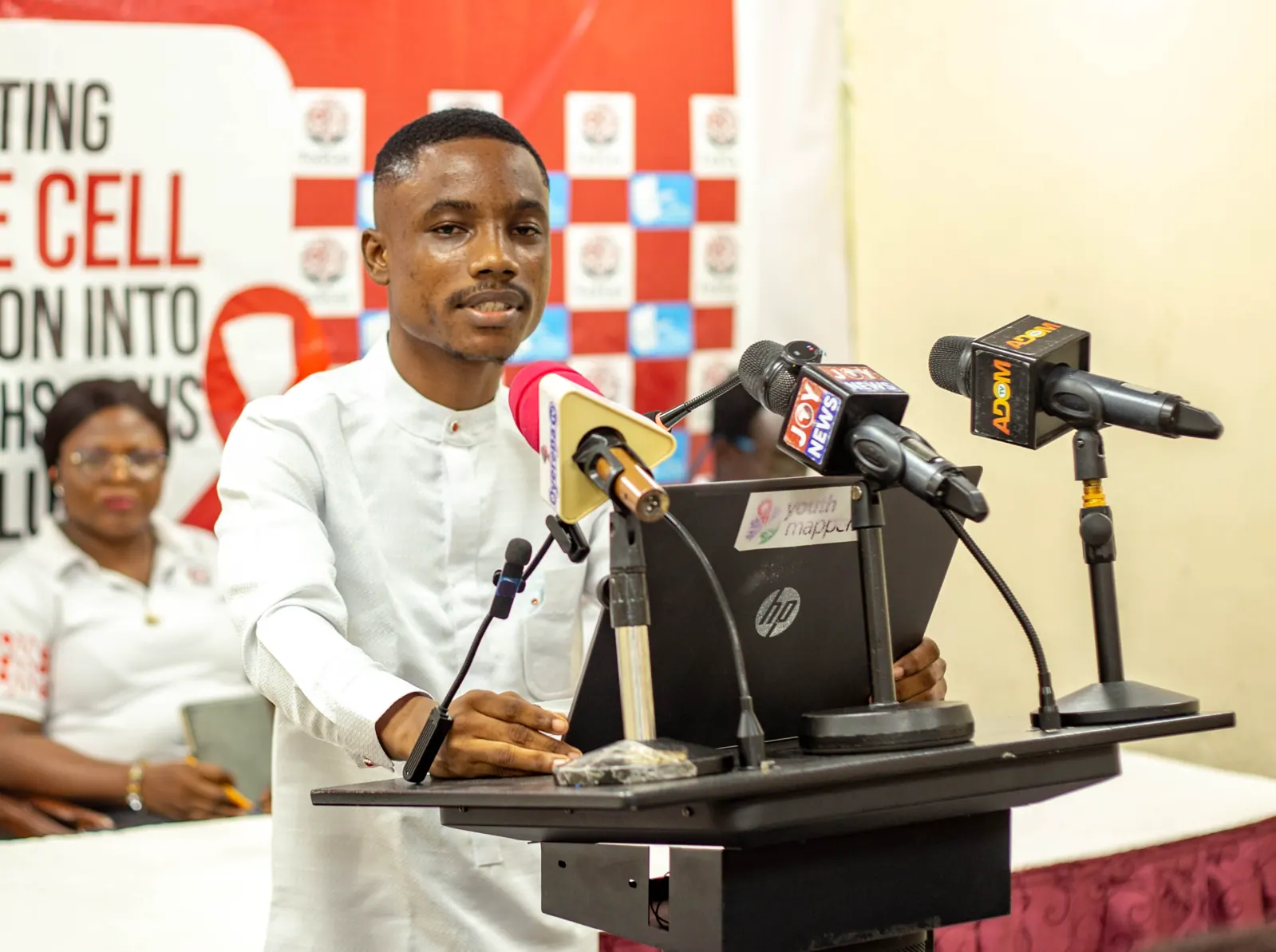
The Founder of the Focus on Sickle Cell Foundation (FoSCel), Amos Andoh, has called for structured, age-appropriate sickle cell education to be integrated into Ghana’s school curriculum. This move aims to equip young people with accurate information about the condition before they make decisions about relationships and parenthood. According to Mr. Andoh, Ghana’s response to sickle cell disease must extend beyond hospital-based treatment and public awareness campaigns to sustained education in schools.
Ghana records an estimated 15,000 to 18,000 babies born with sickle cell disease each year, according to recent health-sector and WHO-linked reports. The Ministry of Health has developed a national strategy and screening and case-management guidelines aimed at improving prevention, early diagnosis, and care. Mr. Andoh emphasized that the scale of the condition makes it necessary for education to become an integral part of Ghana’s national response.
Mr. Andoh described sickle cell disease as a national health, educational, and generational issue, arguing that healthcare interventions must be complemented by accurate information delivered early to children and young people. He stressed that healthcare is essential, but it must go hand in hand with accurate education. FoSCel’s approach is to transform awareness into practical knowledge that enables young people to make informed health decisions.
FoSCel has previously advocated for the integration of sickle cell education into Ghana’s Junior High School (JHS) and Senior High School (SHS) curriculum, including lessons on genotype, inheritance, screening, stigma, and informed health decisions. The Foundation has developed an educational comic model designed to make sickle cell information easier for young learners to understand. This model has been piloted in collaboration with the Ghana Education Service in the Efutu area.
The educational comic material covers sickle cell disease, genotypes, genotype compatibility, support for people living with the condition, stigma, and stereotyping. Mr. Andoh urged the Ministry of Education, Ghana Education Service, Ministry of Health, Ghana Health Service, National Health Insurance Authority (NHIA), and other relevant institutions to support the initiative and strengthen sickle cell education and policy.
Mr. Andoh commended the Ministry of Health, Ghana Health Service, and NHIA for efforts to improve access to healthcare for people living with sickle cell disease, particularly the inclusion of hydroxyurea and other essential sickle cell medicines under the NHIS benefits package. He encouraged people living with sickle cell disease and their caregivers to remain engaged with the healthcare system and ensure their NHIS membership remains active.
Mr. Andoh, who lives with sickle cell genotype SC, appealed to the public to reject misconceptions and discrimination against people living with the condition. He stressed that sickle cell disease is not contagious and cannot be acquired through ordinary social interaction. Mr. Andoh welcomed professional assessment of FoSCel’s educational materials and was hopeful that engagement with relevant institutions would contribute to a stronger national approach to sickle cell education.
Key points
- FoSCel founder Amos Andoh calls for sickle cell education in Ghana's school curriculum.
- Ghana records 15,000 to 18,000 babies born with sickle cell disease annually.
- FoSCel develops educational comic model for sickle cell education.