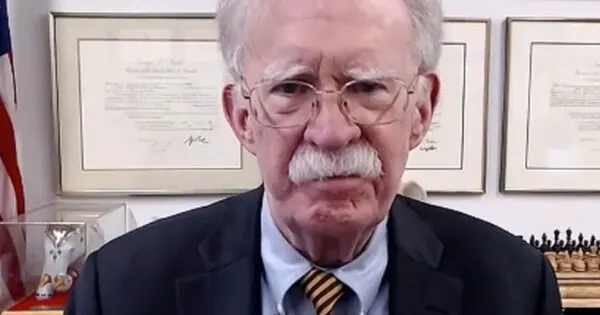
Former US National Security Advisor John Bolton has strongly criticized the newly enacted Lindsey O Graham Sanctioning Russia and Iran Act of 2026. He warned that granting President Donald Trump expanded authority to impose secondary sanctions and tariffs is a 'big mistake'. Bolton cautioned that secondary sanctions cause severe geopolitical friction with key partners like India. He urged Washington to pivot its diplomatic focus away from economic penalties and toward countering strategic threats posed by China.
Bolton emphasized that if the administration truly intended to target major purchasers of Russian oil and gas, the primary focus should be China rather than allies like New Delhi. He noted that China is the biggest purchaser of oil and gas from Russia and deserves the biggest sanctions. However, Bolton expressed skepticism that the Trump administration would impose sanctions on China. The Lindsey Graham bill grants the executive branch expanded powers to penalize foreign nations purchasing Russian energy.
When asked how he would advise the Trump administration on managing relations with India, Bolton advocated for prioritizing high-level strategic alignment over trade disputes and tariffs. He advised spending more time on strategic discussions with Prime Minister Modi and less concentration on tariffs. Bolton believes that the Trump tariffs from last year were a big economic mistake for the United States. He thinks that the US needs to clear up some of the tensions and animosities created by those tariffs.
Bolton called for leveraging multilateral groupings to address common security concerns in the Indo-Pacific. He emphasized the importance of the US and India having a closer bilateral relationship and more dealings in groups like the Asian Security Quad, along with Japan and Australia. Bolton remarked that Trump has not paid nearly enough attention to this aspect. The Quad partnership can help address mutual concerns about China.
External Affairs Minister S Jaishankar met with US Secretary of State Marco Rubio on the sidelines of the 81st United Nations General Assembly High-Level Week in New York. Jaishankar raised India's crucial economic and strategic concerns regarding proposed legislation targeting buyers of Russian energy. During the bilateral talks, Jaishankar directly addressed the Sanctioning Russia and Iran Act (SRIA).
The regulatory framework of the SRIA focuses on Russia's petroleum and military sectors, Russian administrators and banking institutions, alongside its designated "shadow fleet" of maritime vessels deployed to bypass limitations on Russian crude shipments. For India, the legislation establishes a statutory pathway that could allow Washington to impose tariffs of up to 100 percent on Indian imports in response to continued purchases of Russian energy.
Bolton concluded by emphasizing that bilateral economic issues should not overshadow the core security imperatives facing both nations. He added that any economic relationship between two large countries is going to have complicated economic issues. However, the centrepiece is the strategic threats that they face and how they can work together to deal with them. The US and India need to focus on their strategic partnership.
Key points
- Bolton urges US to prioritize strategic alignment with India over trade disputes and tariffs.
- The Lindsey O Graham Sanctioning Russia and Iran Act of 2026 grants the executive branch expanded powers to penalize foreign nations purchasing Russian energy.
- Bolton emphasizes the importance of the US and India leveraging multilateral groupings like the Asian Security Quad to address common security concerns.