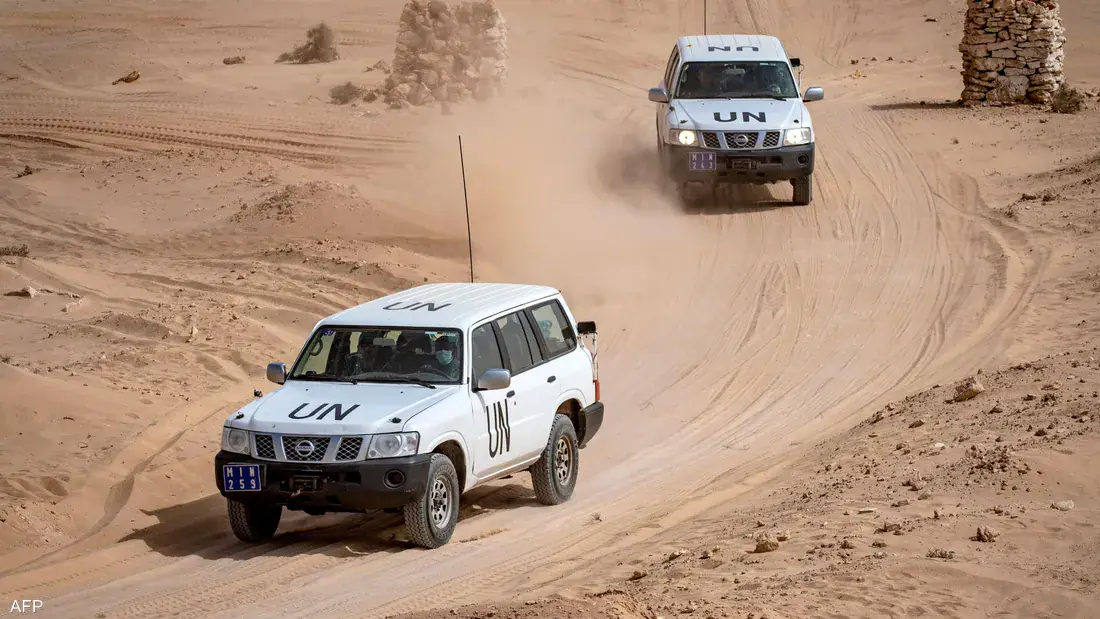
Julian Harston, former head of the United Nations Mission for the Referendum in Western Sahara (MINURSO), has called for the closure of the mission, stating that its continuation is no longer justified. In a post on Facebook, Harston described MINURSO as belonging to a previous era, with most of its original mandate no longer aligning with current realities. He emphasized that the mission's original goals, including organizing a referendum, are no longer feasible.
Harston, who led MINURSO from 2007 to 2009, highlighted that from the outset, there was no realistic possibility of holding a referendum in Western Sahara. He also noted that the Polisario Front, a separatist group, has not accepted a ceasefire, underscoring the challenges faced by the mission in achieving its original objectives. These factors, he argued, necessitate the mission's closure.
The former MINURSO chief asserted that autonomy under Moroccan sovereignty is the only viable solution to the Western Sahara conflict. He pointed out that the international community supports this option and urged the United Nations to adopt a similar stance. This approach, Harston believes, is in line with the evolving dynamics of the conflict resolution process.
Harston's comments come after the expiration of MINURSO's mandate, which was established in 1991. The mission's renewal was blocked in the UN Security Council due to Russia's veto of a US-proposed resolution that would have extended MINURSO's mandate for an additional year. The US proposal had garnered support from 11 of the 15 council members and emphasized the Moroccan autonomy plan as a key element in conflict resolution efforts.
The Moroccan autonomy plan, presented in 2007, offers a significant degree of self-governance within the framework of Moroccan sovereignty. This plan has been endorsed by several countries and is seen as a pragmatic approach to addressing the Western Sahara issue. Harston's advocacy for this solution aligns with the stance of many nations that view it as a viable pathway to peace and stability in the region.
The Western Sahara conflict has been a longstanding issue, with Morocco and the Polisario Front having competing claims over the territory. The situation has been monitored by the UN through MINURSO, which was tasked with organizing a referendum to determine the territory's future. However, the mission's effectiveness has been hampered by disagreements over its mandate and the veto power dynamics within the Security Council.
The closure of MINURSO, as suggested by Harston, would mark a significant shift in the international community's approach to the Western Sahara conflict. It would also underscore the need for a renewed focus on diplomatic efforts, potentially centered around the autonomy plan under Moroccan sovereignty, to find a lasting resolution to the dispute. The international community's response to Harston's proposal and the future of MINURSO remain to be seen.
Key points
- Former MINURSO head Julian Harston calls for the closure of the UN mission in Western Sahara.
- Harston advocates for autonomy under Moroccan sovereignty as the solution to the Western Sahara conflict.
- The UN Security Council's inability to renew MINURSO's mandate due to a Russian veto has added urgency to finding a new approach.