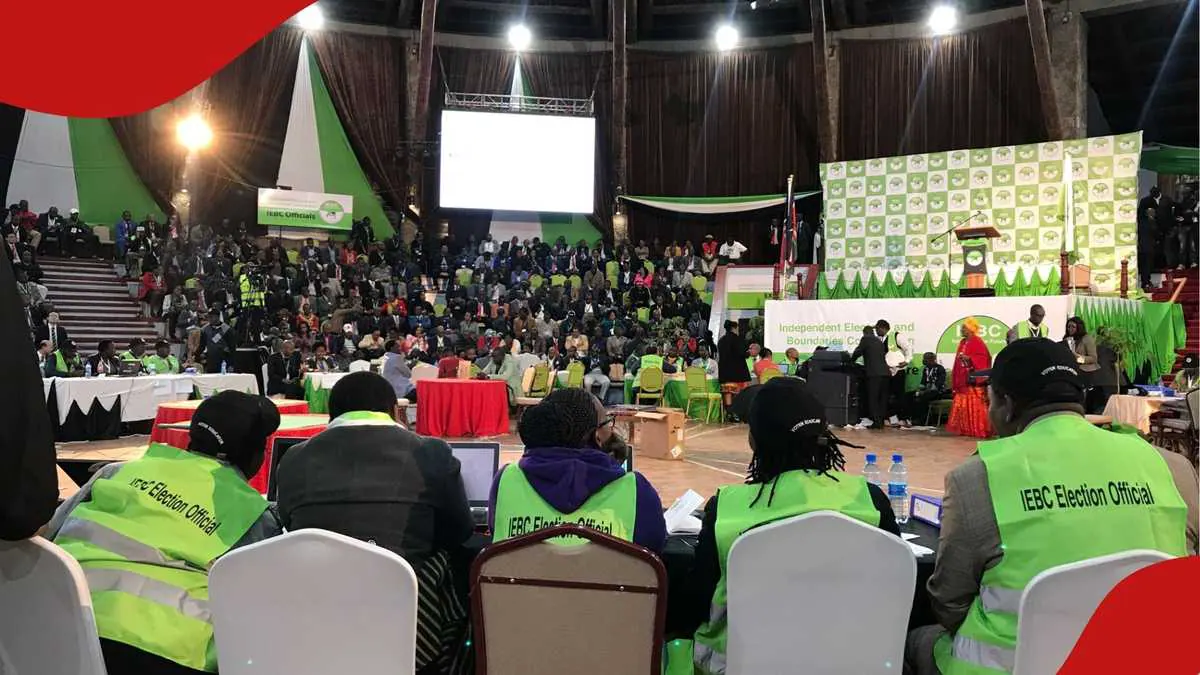
The Milimani Anti-Corruption Court convicted George Kipyatich Kibor, a former assistant elections officer at the Independent Electoral and Boundaries Commission (IEBC), on September 17, 2026. Kibor was found guilty of uttering a false document after submitting a forged university degree to support a job promotion application. The court imposed a fine of KSh 80,000, with a default sentence of eight months in prison should he fail to pay.
Investigations conducted by the Ethics and Anti-Corruption Commission (EACC) revealed that Kibor had presented a forged Bachelor of Business Management degree, specialising in Finance and Banking, purportedly awarded by Moi University. He submitted the document as part of his bid to secure a promotion from IEBC Grade 8 to Grade 7. Kibor was arrested and subsequently charged before the Milimani Anti-Corruption Court on March 10, 2026.
The court ultimately acquitted Kibor on the forgery charge but found him guilty on the second count of uttering a false document. The EACC welcomed the verdict, describing the outcome as a deterrent to others who might consider engaging in similar conduct. The commission announced the conviction through its official X account on Monday, September 21, 2026.
The case highlighted a persistent problem in Kenya, where forged academic certificates have repeatedly surfaced in public institutions, with individuals using fraudulent qualifications to secure employment or career advancement in government agencies. This issue has raised concerns about the verification processes in place for academic credentials.
In related news, Jomo Kenyatta University of Agriculture and Technology (JKUAT) disowned Kimilili MP Didmus Barasa’s alleged electronic engineering degree. The university said his name does not appear in its alumni records and that the certificate attributed to him is not genuine. The revelation raised questions about how the EACC, EBK, and CUE handled the institution’s earlier findings.
The controversy surrounding forged academic certificates comes weeks after Barasa completed a doctorate whose validity is also being challenged in court. This has sparked a wider conversation about the integrity of academic credentials in Kenya and the need for more stringent verification processes.
The EACC's conviction of Kibor and the subsequent fine serve as a reminder of the consequences of submitting false documents in job applications. The commission's efforts to combat corruption and ensure the authenticity of academic credentials are ongoing, with a focus on promoting integrity in public institutions.
Key points
- George Kibor, a former IEBC official, has been fined KSh 80,000 for submitting a forged Moi University degree certificate.
- The EACC welcomed the verdict, describing it as a deterrent to others who might consider engaging in similar conduct.
- The case highlights a persistent problem in Kenya, where forged academic certificates have repeatedly surfaced in public institutions.