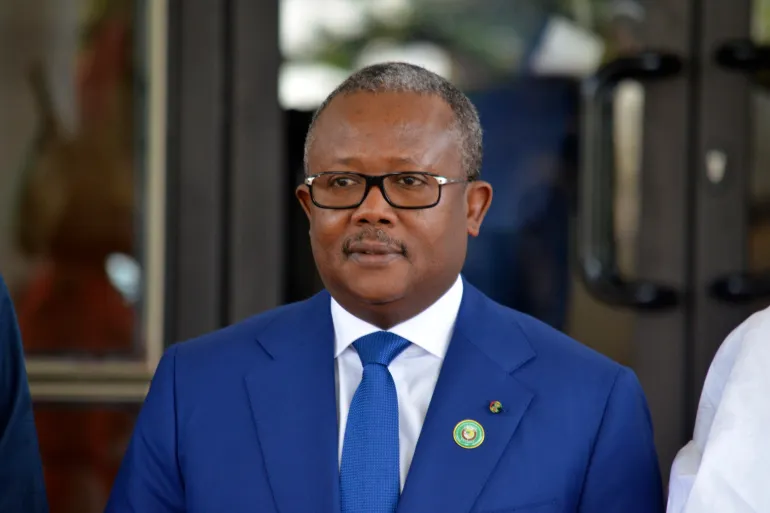
Former Guinea-Bissau President Oumarou Cissoko Embalo has announced his intention to return to his country voluntarily on October 4. Embalo was deposed in a military coup last November, which his opponents claimed he had orchestrated. He has been living in exile in Morocco since then, after initially fleeing to Senegal. Embalo stated that his decision to return was motivated by his attachment to his country and his confidence in its future.
Embalo's return has sparked significant interest in Guinea-Bissau, with many of his supporters launching campaigns on social media to promote his comeback. The campaigns, which have been joined by some political figures and government officials, aim to ensure a peaceful and popular welcome for Embalo. The former president has called on his supporters to remain calm and peaceful during his return.
The transitional military authorities in Guinea-Bissau have not expressed any opposition to Embalo's return. In fact, Prime Minister Elido Vieira Te stated that Embalo, as a citizen of Guinea-Bissau, has the right to return to his country like any other citizen. However, the situation remains complex, with some questioning the military's stance on Embalo's potential participation in upcoming presidential elections.
Guinea-Bissau is set to hold presidential elections in December, following a transitional period led by General Horta Netam. Embalo, who came to power in 2020, had initially announced that he would not seek a second term but later reversed his decision. His opponents have accused him of attempting to cling to power.
The circumstances surrounding Embalo's ousting remain contentious, with his opponents claiming that the coup was a "mise en scène" orchestrated by him. The electoral commission has not published official results, but some media outlets reported that Embalo's opponent, Fernando Diaz, had a slight lead in the vote count.
Analysts believe that Embalo's biggest challenge will not be his return to the country but rather the military's stance on his potential participation in the elections. François Diaz, a Bissau Guinean political analyst, noted that Embalo's return is contingent upon the military's decision to allow him to participate in the elections and his ability to form new alliances.
Embalo's return to politics has also sparked interest in the formation of a new party by Prime Minister Elido Vieira Te, who had previously led Embalo's last presidential campaign. Vieira Te's new party, the "Parti Populaire Guinéen," has been seen as a potential vehicle for Embalo's return to power, although Vieira Te has denied any such intentions.
Key points
- Oumarou Cissoko Embalo plans to return to Guinea-Bissau on October 4, nearly a year after his ousting in a military coup.
- Embalo's return has sparked significant interest and campaigns on social media, with many calling for a peaceful and popular welcome.
- The transitional military authorities have not expressed opposition to Embalo's return, but the situation remains complex, with questions surrounding his potential participation in upcoming presidential elections.