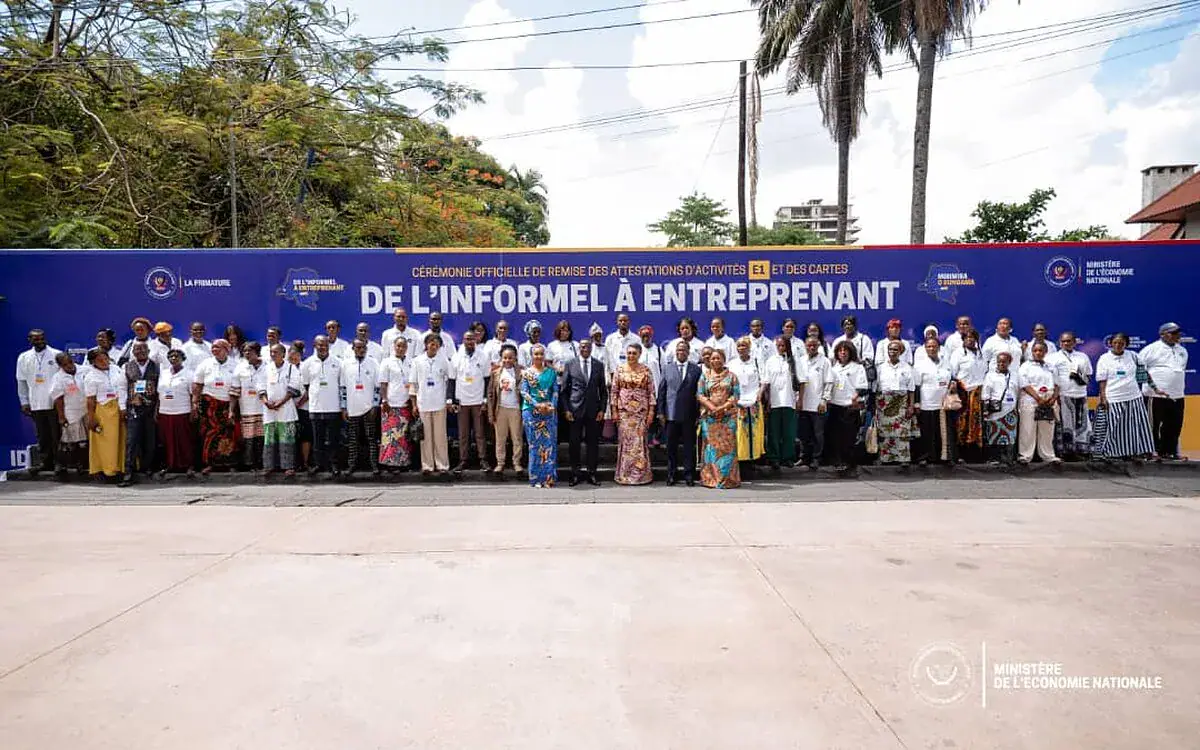
The government of the Democratic Republic of Congo, under the leadership of Prime Minister Judith Suminwa Tuluka, has launched a new phase in its strategy to formalize the country's economy. The initiative, which aims to recognize and support small entrepreneurs, was attended by nearly 2,000 entrepreneurs, several government officials, and Vice Prime Minister Daniel Mukoko Samba. This move follows a nationwide identification campaign that registered over 200,000 economic actors.
The formalization process is a key component of President Félix-Antoine Tshisekedi Tshilombo's vision to build a more inclusive and structured economy. According to Vice Prime Minister Mukoko Samba, this reform goes beyond administrative procedures, reflecting a political will to acknowledge the significant contribution of the informal sector to the country's economy. The government aims to provide better institutional recognition and favorable conditions for the development of small entrepreneurs.
The first certificates issued, known as E1 attestations, mark a crucial step in the formalization process. These certificates, along with the entrepreneur's card, are designed to facilitate access to economic support systems for beneficiaries. Prime Minister Suminwa emphasized that formalization should not be seen as an additional administrative burden but rather as an opportunity for recognition and support. The government aims to create a more favorable business environment, allowing entrepreneurs to access services and support.
A critical aspect of this initiative is the integration of the informal sector into the national economy. The government plans to work with various ministries, including Health and Social Protection, to ensure that beneficiaries have access to health coverage and other social services. This approach aims to reduce the vulnerability of small entrepreneurs and provide them with opportunities for growth and development.
The formalization of the informal sector is expected to have a significant impact on the country's economy. By recognizing and supporting small entrepreneurs, the government hopes to create new opportunities for job creation, economic growth, and social inclusion. The challenge now is to maintain the trust of entrepreneurs and ensure that formalization is seen as a tool for economic development rather than an additional burden.
The government has expressed its commitment to ensuring that formalization is a smooth and beneficial process for all parties involved. By working closely with entrepreneurs, government agencies, and other stakeholders, the authorities aim to create a more inclusive and supportive business environment. The success of this initiative will depend on the government's ability to deliver tangible benefits to beneficiaries and maintain their trust.
As the Democratic Republic of Congo continues to formalize its economy, the focus will shift to ensuring that the benefits of formalization are realized by small entrepreneurs. The government will need to address challenges and concerns raised by entrepreneurs, providing them with the support and resources needed to grow and develop their businesses. The formalization of the informal sector has the potential to drive economic growth and create new opportunities for the country's citizens.
Key points
- The Democratic Republic of Congo has registered over 200,000 economic actors and issued the first E1 certificates as part of its efforts to formalize the economy.