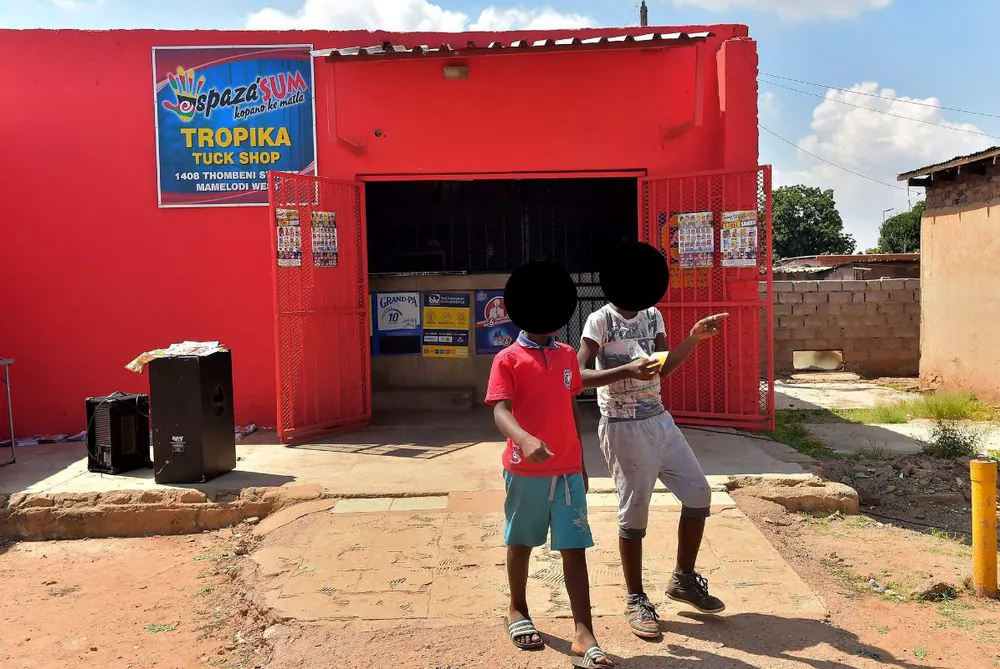
A recent report has shed light on the alleged use of foreign-owned spaza shops in South Africa as conduits for illegal financial activities. The report, titled "The Nature of Stealthy Remittance in South Africa," estimates that around R6.3 billion from these spaza shops was illegally transferred out of the country. This money is reportedly being transferred through unregistered SIM cards and informal cash networks, contributing to South Africa's grey listing due to poor systems for tracking money laundering and terrorist financing.
According to official government data, out of roughly 87,000 recently registered spaza shops nationwide, non-South African citizens own approximately 32,824, or about 38%. However, regional estimates and informal sector figures indicate that foreign nationals operate a much higher percentage, ranging from 50% to over 70%, of unregistered or total informal township stores. The report highlights that the use of such channels often occurs outside formal financial systems, resulting in remittances that are neither recorded nor taxed in either the host country or the migrant-sending country.
The study warns that the increase of informal social networks, digital communication platforms, and community-based remittance systems has created alternative financial ecosystems that operate parallel to formal banking institutions. These networks facilitate the movement of funds while simultaneously reducing the visibility of transactions to regulatory authorities, such as the South African Revenue Service (SARS) and the South African Reserve Bank (SARB). This has raised concerns among parliamentary committees, particularly the Standing Committee on Finance, about billions of rands leaving the country through unmonitored channels.
SARS is actively targeting the estimated R200 billion spaza shop sector as part of an aggressive strategy to expand the national tax base. While public and political pressure has mounted to clamp down specifically on foreign-owned outlets due to widespread non-compliance, SARS does not differentiate enforcement based on nationality. Instead, it faces systemic structural hurdles across the entire informal economy. Government data shows that only about 30% of spaza shops are registered taxpayers, leaving 70% entirely outside the formal net.
Financial investigation consultant Emerald van Zyl has accused banks of supporting terrorist groups, citing a profound impact since the majority of political leaders were freed from Robben Island in 1990. Van Zyl claims that many individuals advanced to positions as Cabinet ministers or bank directors, creating a conflict of interest that prevented them from holding banks accountable and ultimately led to the failure of consumer protection in South Africa.
The 2025 SARB report on money laundering, terrorist financing, and proliferation financing sector risk assessment for the South African Banking Sector reveals that South Africa's banking sector faces high inherent money laundering, terrorism financing, and proliferation financing risks, especially among larger domestic institutions. These offences generate the largest, most recurrent, and most banking-embedded criminal proceeds in South Africa. As a result, SARB has issued fines against banks, including a R28 million fine against Capitec Bank for administrative non-compliance with the Financial Intelligence Centre Act (FICA).
The penalties are part of an aggressive enforcement strategy by regulators to clean up South Africa's financial systems after the country was placed on the global financial watchdog's grey list. South Africa ultimately exited the grey list in October 2025. According to the SARB report, the banking sector served approximately 80.2 million clients at the close of 2024. However, undocumented foreign nationals reportedly utilise informal financial mechanisms, or in some instances, access transactional services through proxy setups or unverified means.
Key points
- Foreign-owned spaza shops in South Africa allegedly transferred R6.3 billion illegally out of the country through unregistered SIM cards and informal cash networks.
- The South African banking sector faces high inherent money laundering, terrorism financing, and proliferation financing risks, especially among larger domestic institutions.
- SARS and SARB have implemented an aggressive enforcement strategy to clean up South Africa's financial systems and expand the national tax base.