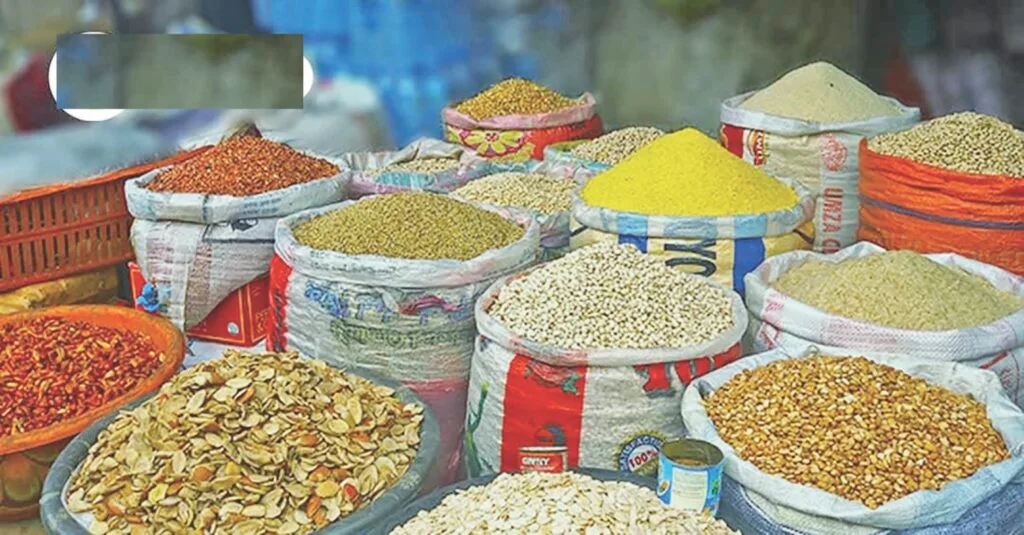
The Federal Government of Nigeria has announced that prices of some essential food commodities have fallen by as much as 50 per cent compared to their levels before 2023. This claim was made by the Minister of Agriculture and Food Security, Abubakar Kyari, during a Community of Practice Meeting in Maiduguri, Borno State. The meeting involved commissioners responsible for agriculture, health, environment, and rural development.
According to Kyari, the reported reduction in food prices is a result of increased distribution of agricultural inputs, investments in rural infrastructure, and support for smallholder farmers. He urged Nigerians to verify the government's claim by comparing current market prices with the prices of the same commodities in 2023. Kyari emphasized the need for objective examination of the figures.
The Minister of Agriculture and Food Security highlighted that the Federal Government's agricultural policies are designed to increase food production, ease pressure on consumers, and create stronger economic opportunities in rural communities. These policies aim to address the concerns of Nigerians regarding the high cost of food and household expenses.
Kyari's remarks come amid continued public concerns over the cost of food and household expenses across Nigeria. He defended the administration of President Bola Tinubu, stating that its performance should be assessed using verifiable data rather than general perceptions. The minister attributed the reported decline in prices of some commodities to measures aimed at expanding food supply and supporting farmers.
However, Kyari's statement did not provide a detailed breakdown of the current prices, the 2023 baseline prices, or the specific markets used to calculate the reported 50 per cent reduction. This lack of detailed information may make it challenging for Nigerians to verify the government's claim.
The Maiduguri meeting also reviewed Nigeria's commitments under the Kampala Comprehensive Africa Agriculture Development Programme Declaration and its 2026–2035 strategy. Kyari disclosed that Nigeria had developed and validated a 10-year National Agrifood System Strategy and Action Plan to guide implementation of the continental framework.
The Minister emphasized that stronger collaboration between the Federal Government and states would be necessary to build a food system capable of withstanding economic and climate-related pressures. He added that sustained investment in agriculture remained critical to increasing food production and making food more affordable for Nigerians.
Key points
- The Federal Government claims that food prices have dropped by 50% compared to 2023 levels.
- The government attributes the price reduction to increased distribution of agricultural inputs and support for smallholder farmers.
- Nigeria has developed a 10-year National Agrifood System Strategy and Action Plan to guide implementation of the continental framework.