A recent report by the Kenya News Agency reveals that more than 40.3 million people in six IGAD member states, including Kenya, are facing high levels of acute food insecurity in 2026. The situation has worsened in Kenya and three other countries, with 34 per cent of the population analysed in Djibouti, Kenya, Somalia, South Sudan, Sudan, and Uganda experiencing high levels of acute food insecurity. This represents a decline from 43.3 million people in 2025, but food crises have worsened in Djibouti, Kenya, Somalia, and South Sudan.
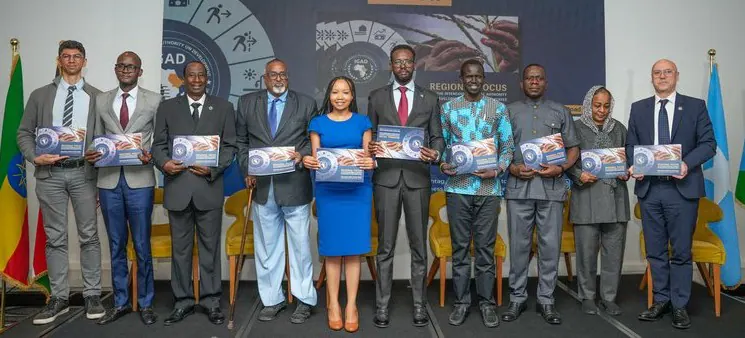
The 2026 Global Report on Food Crises: Regional Focus on the IGAD Member States, launched on September 25, 2026, attributes the food crises to multiple and overlapping shocks, including conflict and insecurity, which continue to disrupt livelihoods and food production. Poor rainfall and other weather extremes have further affected communities already grappling with high food and fuel prices, while cuts in humanitarian funding are putting additional pressure on populations with severe needs. Sudan remains the region's largest food crisis, with 19.5 million people facing high levels of acute food insecurity between February and May 2026.
South Sudan has the highest proportion of its population affected, at 55 per cent, between April and July 2026. Across the six countries, more than 10 million people faced emergency levels of acute food insecurity, classified as IPC Phase 4, while more than 208,000 people in Sudan and South Sudan were experiencing catastrophe, or IPC Phase 5, during the assessment periods. The report also warns of a risk of famine in parts of Sudan, South Sudan, and Somalia, citing conflict, displacement, and restrictions on humanitarian access as factors placing vulnerable communities at greatest risk.
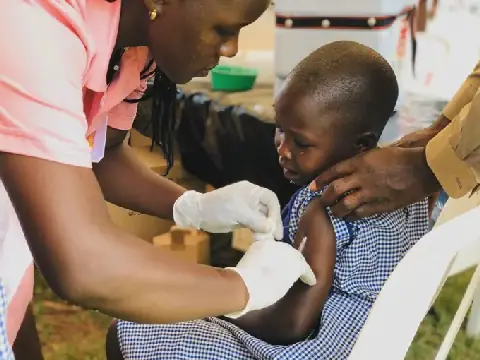
Acute malnutrition remains a major concern, with more than nine million children aged between six and 59 months requiring treatment for acute malnutrition across the six countries. Of these, about 2.3 million children are suffering from severe acute malnutrition. The region is also experiencing extensive displacement, with an estimated 19 million people living in forced displacement across the six countries by the end of July 2026.
The displaced population includes nearly 14.5 million internally displaced people and 4.5 million refugees and asylum seekers. The report notes that displacement often separates families from their livelihoods and limits their access to food and essential services, worsening their vulnerability to hunger and malnutrition. IGAD Executive Secretary Dr. Workneh Gebeyehu called for a shift from emergency response towards anticipation and investment in resilient food systems during the virtual meeting.
Dr. Gebeyehu emphasized the need for greater emphasis on anticipating crises so that forecasts can trigger financing and action before shocks escalate, investing in agri-food systems, livelihoods, and markets, and strengthening regional rather than solely national responses. He noted that hunger crosses borders with people, livestock, pests, and prices, and that the region's responses must do the same. The report, which is the eighth edition of the IGAD Regional Focus of the Global Report on Food Crises, provides analysis on the causes and consequences of acute food insecurity and malnutrition in the region.
The report is a product of the annual Global Report on Food Crises 2026, prepared through a multi-partner, consensus-based process involving various agencies and experts. The Integrated Food Security Phase Classification (IPC) uses a five-phase scale to classify the severity of food insecurity, ranging from Minimal (Phase 1), Stressed (Phase 2), Crisis (Phase 3), Emergency (Phase 4) to Catastrophe/Famine (Phase 5). The IGAD Climate Prediction and Applications Centre (ICPAC) provides climate services to IGAD member states and other countries in the Greater Horn of Africa, supporting efforts to anticipate and respond to climate-related risks.
Key points
- Over 40.3 million people in six IGAD member states face high levels of acute food insecurity in 2026.
- Sudan remains the region's largest food crisis, with 19.5 million people facing high levels of acute food insecurity.
- The report warns of a risk of famine in parts of Sudan, South Sudan, and Somalia due to conflict, displacement, and restrictions on humanitarian access.