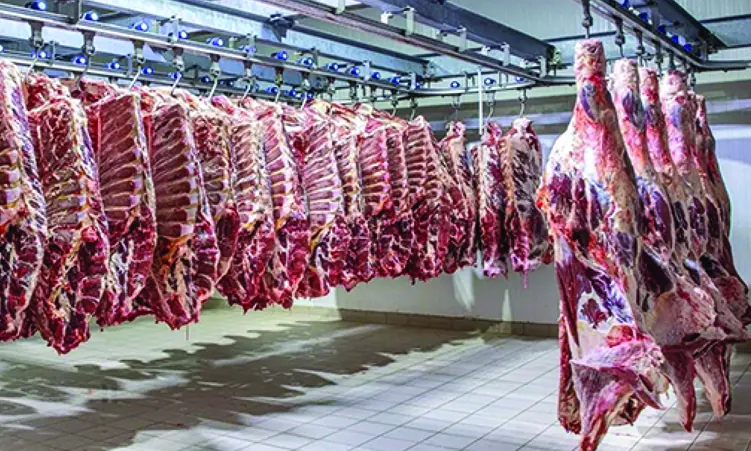
Meat from animals infected with foot-and-mouth disease can be safely consumed by people, experts say. This comes as Namibia battles an outbreak of the disease, which has spread to 15 farms since its confirmation in the ||Kharas region last month. The outbreak has led to restrictions on livestock movement and slaughtering, as well as the suspension of meat exports.
According to Romeo Muyunda, spokesperson for the agriculture ministry, people do not contract foot-and-mouth disease by eating meat or consuming animal products from infected animals. He emphasizes that FMD should not be confused with diseases that can spread from animals to humans through contaminated food. Muyunda notes that the current outbreak is an animal health emergency, not a human health emergency.
The World Organisation for Animal Health describes FMD as a severe, highly contagious viral disease affecting livestock, with a significant economic impact. The disease affects cattle, pigs, sheep, goats, and other cloven-hoofed animals. Earlier this year, the organisation highlighted the world's failure to invest in animal health despite evidence that the cost of inaction far exceeds the cost of prevention.
University of Namibia School of Veterinary Medicine associate dean Anna Marais confirms that FMD is not a zoonotic disease, meaning it does not spread from animals to humans. She assures that eating meat from infected animals, as well as products like milk and cheese, will not cause illness. However, Marais notes that the FMD virus can remain in animal products and infect other susceptible animals that come into contact with them.
Minister of agriculture, fisheries, water, and land reform Inge Zaamwani reports that laboratory testing has been conducted on 2,910 head of cattle, 22,289 sheep, 4,114 goats, and nine pigs. Clinical signs have been observed in 127 head of cattle, 50 sheep, one goat, and one pig. Zaamwani's statement provides an update on the current situation.
Veterinarian Philemon Hoon confirms that humans are not a natural host for FMD and that eating properly handled and cooked beef from an infected animal does not normally cause FMD in people. However, he cautions that humans can carry the virus passively in their nose, throat, or on their clothes and shoes to other animals. Hoon also warns against confusing FMD with hand, foot, and mouth disease in humans.
The Namibia Agricultural Union and the Namibia Livestock Union note that animals infected with FMD can spread the virus before showing symptoms, sometimes appearing healthy for two to five days while already spreading the disease. They emphasize that cattle usually show signs of the disease first and can act as an early warning that FMD may be present in a herd.
Key points
- Meat from FMD-infected animals is safe for human consumption.
- FMD is not a zoonotic disease, meaning it does not spread from animals to humans.
- The disease has spread to 15 farms in Namibia since its confirmation last month.