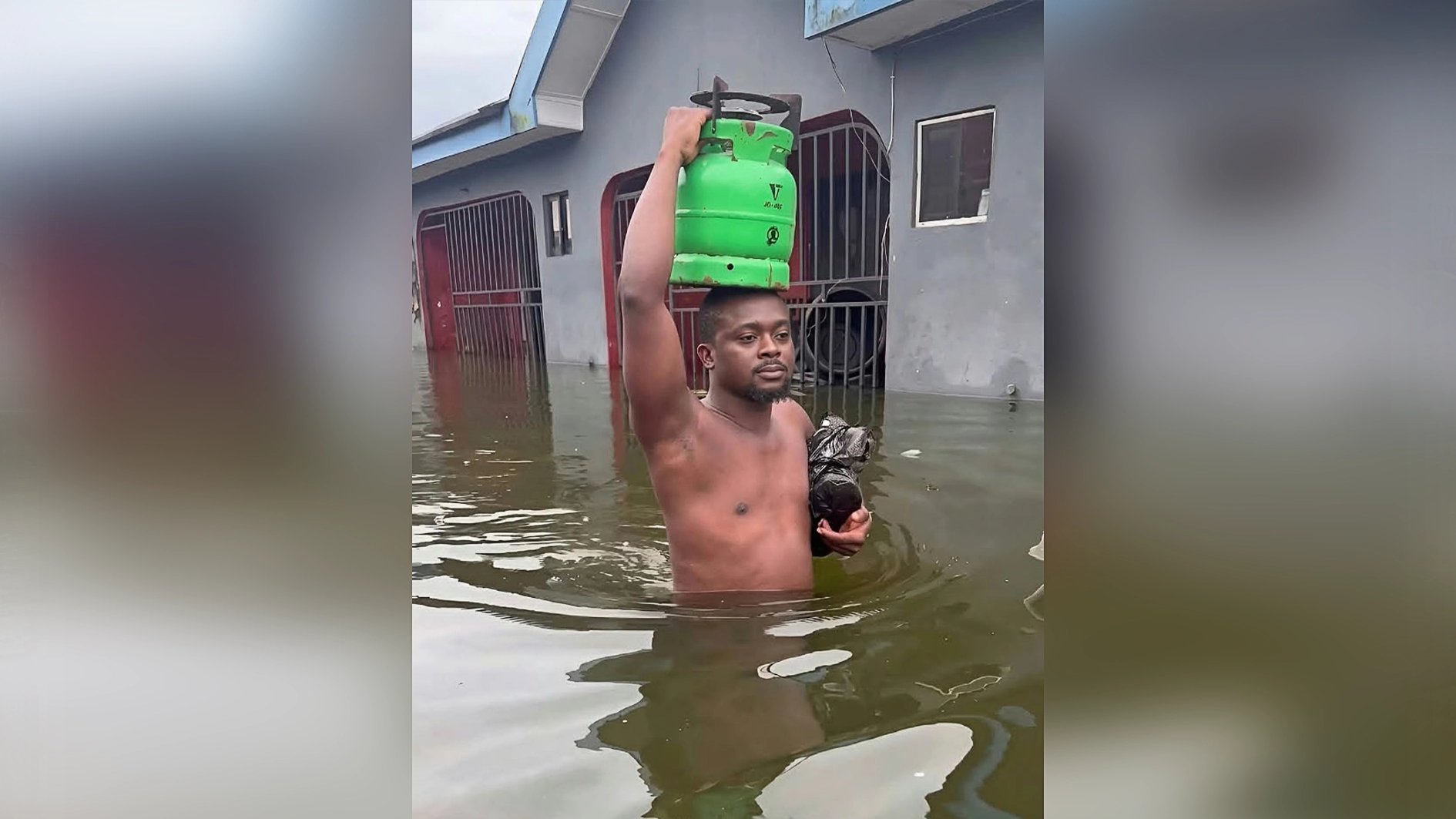
The recent floods in Rivers and Delta states have left hundreds of families without homes, as torrential rainfall continues to submerge communities, schools, and businesses. Vivian Onyeije, a mother of four, was forced to flee her home in Rumusita, Eneka, Obio/Akpor Local Council of Rivers State, and has been moving her family from one temporary shelter to another. The flooding has turned the search for shelter into a desperate journey for many residents.
The National Flood Early Warning Systems Centre had warned of heightened flood risks in both states, citing heavy rainfall, saturated soil, and rising river levels. On September 28, the centre listed Rivers and Delta among states with communities at critical risk of flooding between September 27 and October 10. Despite these warnings, residents say they were unprepared for the severity of the flooding, which has affected several communities, including Port Harcourt, Rumuekini, Choba, and Stadium Road.
The flooding has had a significant impact on education and economic activities in the affected areas. Several schools, including Rumuakoara Community Secondary School, Nkpolu, and Alero Primary School, have been forced to close due to the floodwaters. Businesses in Nkpolu and Rumuekini have also shut down, while churches and other public facilities have recorded disruptions. A wedding venue in GRA, Port Harcourt, was reportedly inundated, leaving guests stranded.
Residents blame the severity of the flooding on inadequate or blocked drainage systems, poor physical planning, and indiscriminate construction. Omenazu Jackson, Chancellor of the International Society for Social Justice and Human Rights, argues that the rapid growth of Port Harcourt has not been matched by adequate physical planning, leading to indiscriminate building along waterways. Environmental expert Daniel Briggs calls for stronger drainage planning and maintenance, enforcement of building regulations, and protection of waterways.
In Delta State, communities in Udu, Uvwie, Warri, Ughelli, Agbarho, Okpe, and Ughelli South have been affected by the flooding. The popular Udu Express Junction and stretches of the road from Ovwian to Otor-Udu have been overwhelmed by floodwater. Residents of Ubeji, Okere, and Abala Street near the Third Marine Gate of Igbudu have been forced to contend with flooded homes and business premises.
The flooding has revived questions about the adequacy of long-term flood-control measures and the use of resources allocated for ecological intervention. A 2026 investigation by the Centre for Sustainable Development Initiatives reported concerns over the implementation of ecological and drainage projects in parts of Rivers. For affected residents, however, the debate over funding and planning remains secondary to the immediate crisis.
The Federal Government’s latest flood advisory urges authorities to intensify surveillance around rivers, drains, culverts, and other vulnerable areas, while advising residents in critical-risk communities to identify evacuation routes and protect vulnerable household members. Residents, however, say warnings must translate into visible preparedness, including cleared drainage channels, restored waterways, and relief provided to families whose homes have become uninhabitable.
Key points
- Hundreds of families have been displaced by the floods in Rivers and Delta states.
- The flooding has disrupted daily life, causing schools and businesses to close.
- Residents blame inadequate drainage systems and poor physical planning for the severity of the flooding.