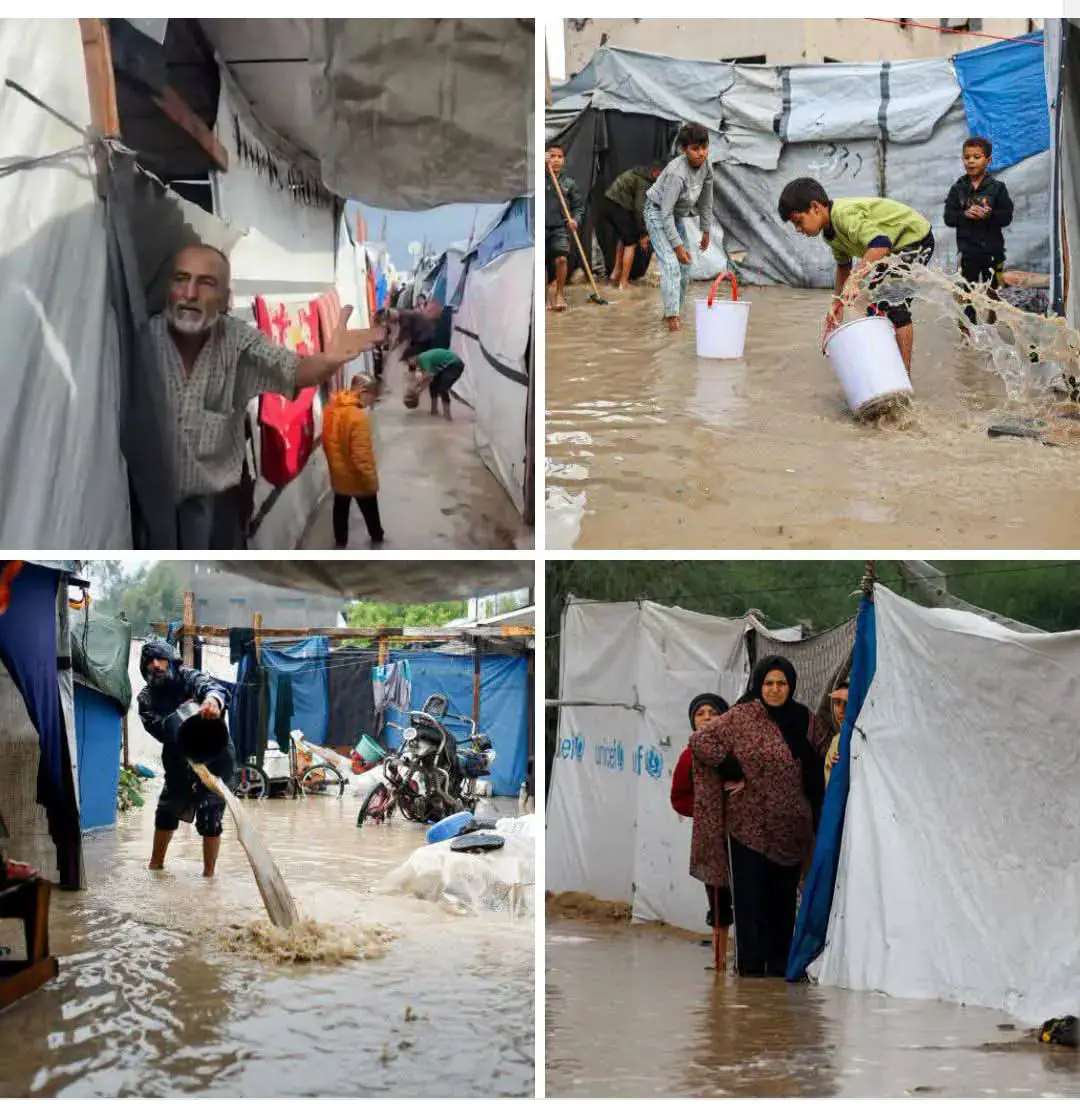
A severe winter storm hit Gaza, causing widespread flooding that has devastated displaced families, with approximately 70,000 tents flooded within 12 hours. The storm, which began on Friday night, November 6, and continued over the weekend, has exposed already vulnerable Palestinians to freezing conditions, contaminated water, and the risk of further displacement.
The flooding has resulted in the deaths of at least five Palestinians, including three children and two women, when a sand embankment collapsed onto tents in the Al-Berka Reservoir area, southwest of Deir al-Balah, on Sunday, November 8. An infant also reportedly drowned in a separate incident linked to the heavy rainfall. Rescue efforts were hampered by the scale of the flooding and the lack of adequate equipment.
Children are among those most severely affected by the flooding, with thousands facing the prospect of spending the winter in damaged tents and makeshift shelters. UNICEF reported that more than 106,000 people had been directly affected by the storm, while approximately 950,000 displaced Palestinians were living in areas exposed to flooding. About 400,000 people, nearly half of them children, faced extreme risk.
The flooding has disrupted children's education, with 55 learning spaces serving approximately 55,000 children affected, further limiting access to education and safe environments. UNICEF Executive Director Catherine Russell stated that children and their mothers were killed because they had nowhere safe to sleep, highlighting the reality in Gaza today.
The scale of the emergency is reflected in the distress calls received by Gaza's Civil Defence teams, with 2,166 distress calls from people seeking help during the storm, but only 218 responded to. By November 8, more than 26,000 households had reported storm-related damage, with at least 6,000 family shelters destroyed and another 17,400 damaged.
The situation has been compounded by damaged sanitation infrastructure, with sewage mixing with floodwaters and increasing the risk of waterborne diseases and infections. Health facilities and essential services have also been affected, while families face shortages of clean drinking water, medicines, dry clothing, and blankets.
The flooding has exposed the consequences of the severe shortage of adequate shelter for displaced Palestinians, with approximately 1.4 million people, representing about 65 per cent of Gaza's population, living in tents and makeshift shelters. Humanitarian organisations have repeatedly warned that many of these structures cannot withstand heavy rain, strong winds, or harsh winter conditions.
Key points
- At least five Palestinians killed in flooding, including three children and two women.
- Approximately 70,000 tents flooded within 12 hours.
- Thousands of families face humanitarian crisis, with shortages of clean drinking water, medicines, and shelter.