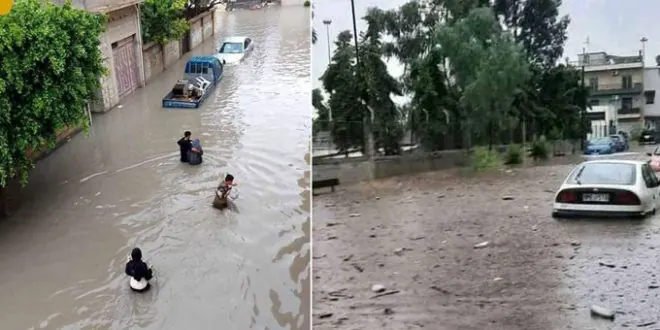
A severe weather system has brought heavy rainfall and flash flooding to western Libya, particularly in the region of the capital city, Tripoli. The flooding has caused widespread disruptions, with several areas experiencing high water levels and road closures. The Libyan authorities have taken swift action to respond to the crisis, with several municipalities declaring states of emergency.
In the municipality of Nasma, located in the western mountain region, the healthcare administration announced the complete evacuation of Nasma Hospital due to flooding. Patients, residents, medical staff, and employees were relocated to their homes to ensure their safety as floodwaters continued to flow into the hospital's facilities. The evacuation was carried out in coordination with local authorities and emergency services.
The municipality of Mizda has also declared a state of emergency in response to the flooding, which has surrounded several homes and caused damage in the area. Mizda Hospital has reported receiving several cases of individuals affected by the floods, although further details on the condition of those affected have not been disclosed. The situation remains fluid, with ongoing assessments of the damage and needs of affected communities.
The flooding has affected a wide area of western Libya, particularly in the western mountain region and areas south of Tripoli. The heavy rainfall has caused water levels to rise in several valleys and residential areas, leading to road closures and the isolation of homes and service facilities. Local authorities and civil defense agencies have warned residents to exercise caution and avoid areas prone to flooding.
The Libyan authorities have mobilized resources to respond to the crisis, with emergency services and relief teams working to support affected communities. The situation is being closely monitored, with ongoing assessments of the damage and needs of those affected. Further updates are expected as the situation develops.
The flooding has highlighted the vulnerability of Libya's infrastructure to extreme weather events. The country has experienced several episodes of severe flooding in recent years, which have caused significant damage and disruption. Efforts to strengthen the country's resilience to climate-related hazards are ongoing, with a focus on improving emergency preparedness and response.
As the situation continues to unfold, residents are advised to remain vigilant and follow the instructions of local authorities. The response efforts are expected to continue in the coming days, with a focus on supporting affected communities and restoring essential services. The international community is also providing support, with several countries and organizations offering assistance to Libya in response to the crisis.
Key points
- Western Libya faces severe flooding, prompting emergency declarations and evacuations.