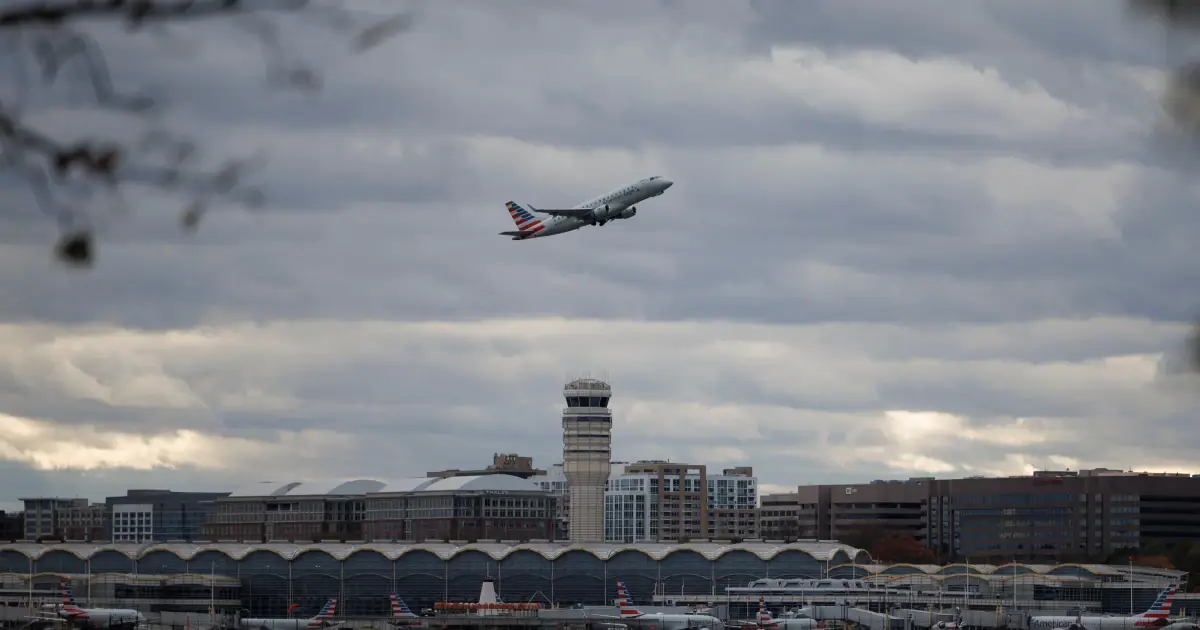
Flight disruptions caused by a nationwide ground stop on Friday continue to affect thousands of travelers, with over 2,300 flights cancelled and more than 8,000 delayed as of Sunday evening. According to FlightAware.com, airports in Dallas-Fort Worth and Atlanta are experiencing the largest number of delays, with over 250 flights each. The ground stop, attributed to faulty maintenance by L3Harris Technologies Inc., has left airlines and air crews out of position, causing a ripple effect on flight schedules.
US Transportation Secretary Sean Duffy expressed optimism that the air travel system will return to normal by the end of Monday. In an interview with NBC's Meet The Press, Duffy explained that the ground stop caused a disruption in the positioning of airplanes and air crews, requiring airlines to re-coordinate their schedules. He attributed the issue to L3Harris's replacement of old copper wire with new fiber-optic cables, which overloaded the FAA's legacy equipment and disrupted communications.
An investigation into the ground stop has identified two potential locations as the reason for the excessive data flooding the systems: a radar site in Amarillo, Texas, and a radio communications site in El Dorado, Arkansas. L3Harris has taken the incident seriously, stating that safety and reliability are their highest priorities. The company has completed over 70% of the planned airspace communications conversion from legacy copper wires to a fiber-optic system and is supporting the FAA's investigation.
President Trump called on Congress to approve more funding for air traffic control to update its aging systems, citing the need for a comprehensive upgrade. In 2025, Congress approved $12.5 billion for air traffic control safety system upgrades, but on Friday, Duffy and the White House requested $50 billion in emergency funding. Duffy emphasized the need for investments in a network that has been neglected for decades to ensure its resilience for the future.
However, some Democrats, including Rep. André Carson of Indiana and Rep. Rick Larsen of Washington state, have questioned the need for additional funding, citing the $12.5 billion appropriated in 2025 and the $1 billion spent so far. They argue that billions have been appropriated but not fully utilized, leaving $8 billion unobligated and $11 billion unspent. The lawmakers urged the administration to explain why more money is needed.
Nick Daniels, president of the National Air Traffic Controllers Association, praised the efforts of air traffic controllers in responding to the ground stop, which brought the entire national airspace system to a halt. He emphasized that the incident highlights the importance of reliable equipment and the need for policies, practices, and mitigation plans to be followed. Daniels encouraged every effort to understand what led to the ground stop and ensure that such incidents do not recur.
As the air travel system continues to recover, travelers face ongoing disruptions, with many flights still delayed or cancelled. The incident has brought attention to the need for upgrades to the aging air traffic control system and the importance of investing in its resilience. With the investigation into the ground stop ongoing, stakeholders are working together to understand the causes and prevent similar incidents in the future.
Key points
- The nationwide ground stop caused over 2,300 flight cancellations and 8,000 delays.
- US Transportation Secretary Sean Duffy attributes the issue to faulty maintenance by L3Harris Technologies Inc.
- The incident highlights the need for upgrades to the aging air traffic control system.