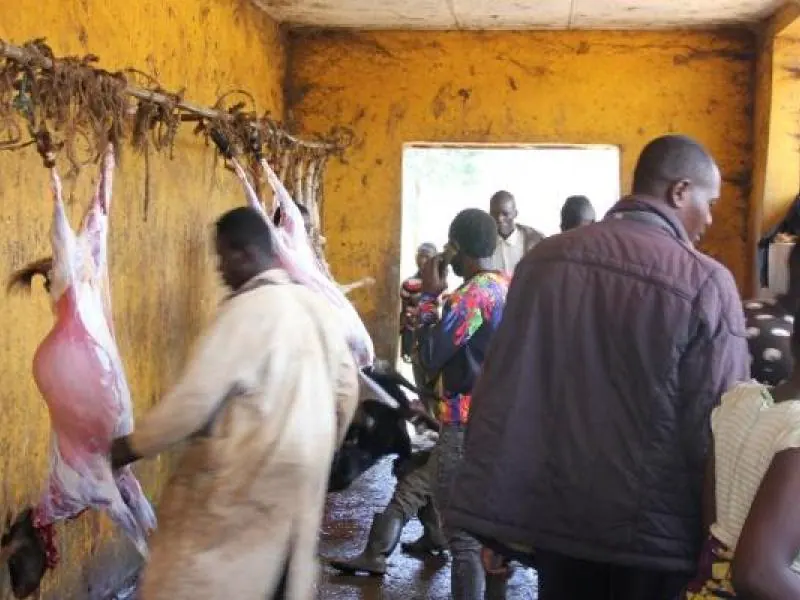
A recent report by the Food and Agriculture Organization (FAO) of the United Nations reveals that approximately five million tonnes of wild meat are consumed annually in the Congo Basin. This significant amount is nearly four times the estimated 1.3 million tonnes consumed in the Amazon Basin. The report, titled "Des forêts pour l’alimentation : nourrir les populations, préserver la planète" (Forests for Food: Feeding People, Preserving the Planet), highlights the crucial role wild meat plays in the diet and economy of rural communities in Central Africa.
In rural forest communities in Central Africa, wild meat serves as both a source of food and income. It also acts as a safety net during times of crop failure or reduced access to employment and other food sources. An analysis of 252 forest sites in Central Africa shows that rural households consume an average of 56 grams of wild meat per person per day, adjusted for household composition. This daily consumption represents about 20% of the recommended daily protein intake.
The contribution of wild meat to protein intake is lower but still significant in urban areas. In small towns, it accounts for 13% of the recommended protein intake, while in large cities, it accounts for 6%. However, the report notes that wild meat is increasingly being commercialized, with an average of 57% of hunted animals being sold, particularly in large urban centers where it is often consumed as a luxury product or for its cultural value.
The commercialization of wild meat has led to an increase in hunting with firearms, indicating a growth in the wild meat trade. Between 1991 and 2020, the proportion of hunted animals sold increased from 34% to 74%. This shift has been accompanied by a change in the ratio of rodents to ungulates in hunted animals, from 2.5 to 17.1. This ratio is used as an indicator of ecological degradation, as the decline of large animals forces hunters to rely more heavily on smaller species.
The FAO report warns that 31% of mammals, birds, reptiles, and amphibians in West and Central Africa are threatened with extinction due to unsustainable hunting. The report highlights a significant tension: while wild meat contributes to the food security of poor populations, the increasing commercialization of wild meat threatens the sustainability of this resource.
The five million tonnes of wild meat consumed annually in the Congo Basin is an estimate for the entire region and cannot be attributed solely to the Democratic Republic of Congo, although the country is home to a significant portion of the forest massif. The report emphasizes the need for sustainable management of wild meat resources to ensure food security while preserving the region's biodiversity.
The FAO report provides valuable insights into the complex relationships between food security, livelihoods, and environmental sustainability in the Congo Basin. As the region continues to face challenges related to food security, poverty, and environmental degradation, the report's findings can inform policies and strategies aimed at promoting sustainable development and conservation in the region.
Key points
- The Congo Basin consumes nearly five million tonnes of wild meat yearly, almost four times the Amazon's volume.
- Increasing commercialization of wild meat threatens the sustainability of this resource, with 31% of species in West and Central Africa threatened with extinction.
- Wild meat provides 20% of the recommended daily protein intake in rural areas, highlighting its crucial role in food security.