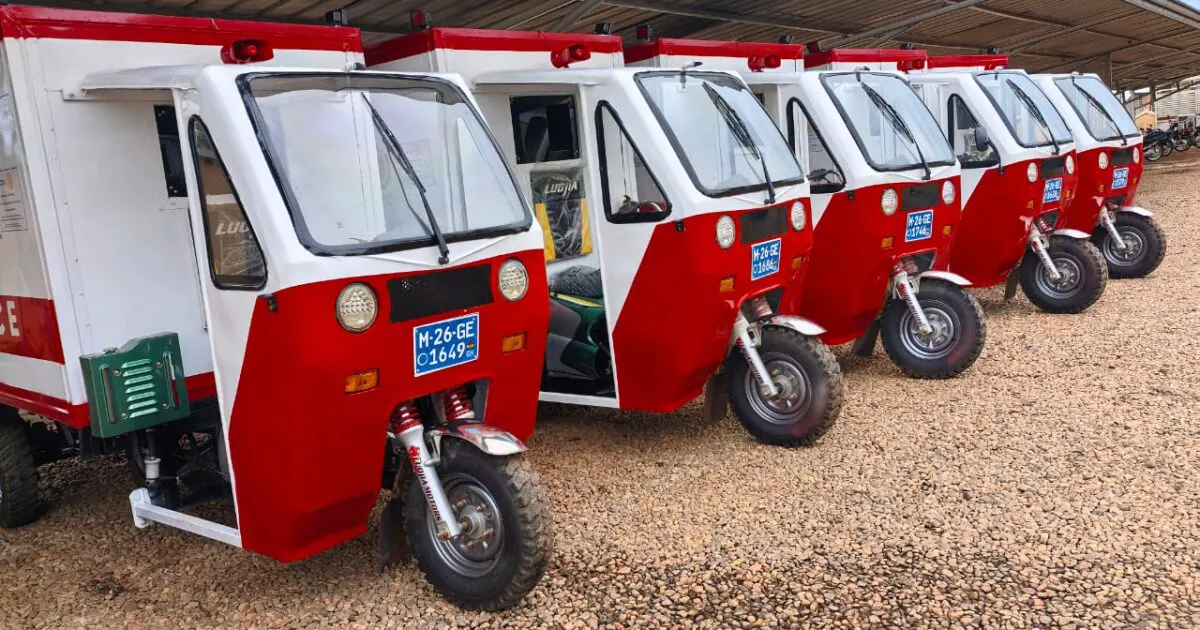
Five rural communities in Ghana's Upper West Region, including Kataah, Kulkpong, Kpaglahi, Vieri, and Egu, have received ambulances to enhance healthcare access. The region's residents have long struggled with accessing medical care due to poor road conditions and a lack of transportation. The ambulances were provided through the 'Wheels of Hope' project, aimed at bridging the healthcare gap in remote areas. This initiative is expected to significantly improve emergency response times and healthcare outcomes in these communities.
The region's healthcare challenges are well-documented. The Ghana Health Service recorded 19 maternal deaths in 2023, up from 16 in the previous year. A study found that nearly half of all maternal deaths in the region occurred within a day of reaching a hospital, with delayed transportation being a significant contributor. The region also has the second-highest rate of child deaths under five in the country. These statistics highlight the urgent need for improved healthcare infrastructure and transportation in the region.
Community health nurses, such as Bright Addae, have been struggling to refer patients to higher-level facilities due to the lack of reliable transportation. "If it's a serious emergency, we have to call for an ambulance, then we transfer the person to the regional hospital or the municipal," Addae explains. However, ambulances are not always available, and patients often rely on tricycles or motorbikes, which can be unreliable and pose significant risks.
Local residents, such as Nadogobo Suglo and Sadia Razak, have shared their experiences of losing loved ones due to delayed medical care. Suglo's son died after an accident, as there was no ambulance available to transport him to a hospital in time. Razak's aunt, who was pregnant, also lost her life due to the lack of transportation to a hospital. Their stories illustrate the human impact of the region's healthcare challenges.
The 'Wheels of Hope' project aims to address these challenges by providing ambulances to remote communities. The project recognizes that Ghana's national ambulance service, despite having grown from 9 vehicles in 2004 to 356 by 2023, still faces significant gaps in coverage. The country's ambulance-to-population ratio remains below international health experts' recommendations, particularly in rural and low-income districts.
The ambulances provided to the five communities are expected to significantly improve emergency response times and healthcare outcomes. Community members, such as Abboudi Idrisu, who has been transporting patients on his motorbike for 27 years, welcome the initiative. Idrisu's story highlights the risks and challenges faced by residents in accessing medical care. With the ambulances, residents can expect faster and more reliable transportation to hospitals, potentially saving lives.
The impact of the 'Wheels of Hope' project will be closely monitored, as it aims to set a precedent for addressing healthcare disparities in rural Ghana. The project's success could inform future initiatives to improve healthcare access and infrastructure in similar regions. Key stakeholders, including local health officials and community leaders, will likely play a crucial role in ensuring the project's sustainability and effectiveness.
Key points
- Five rural communities in Ghana's Upper West Region have received ambulances to improve healthcare access.
- The region faces significant healthcare challenges, including high maternal and child mortality rates.
- The 'Wheels of Hope' project aims to bridge the healthcare gap in remote areas by providing ambulances and improving emergency response times.