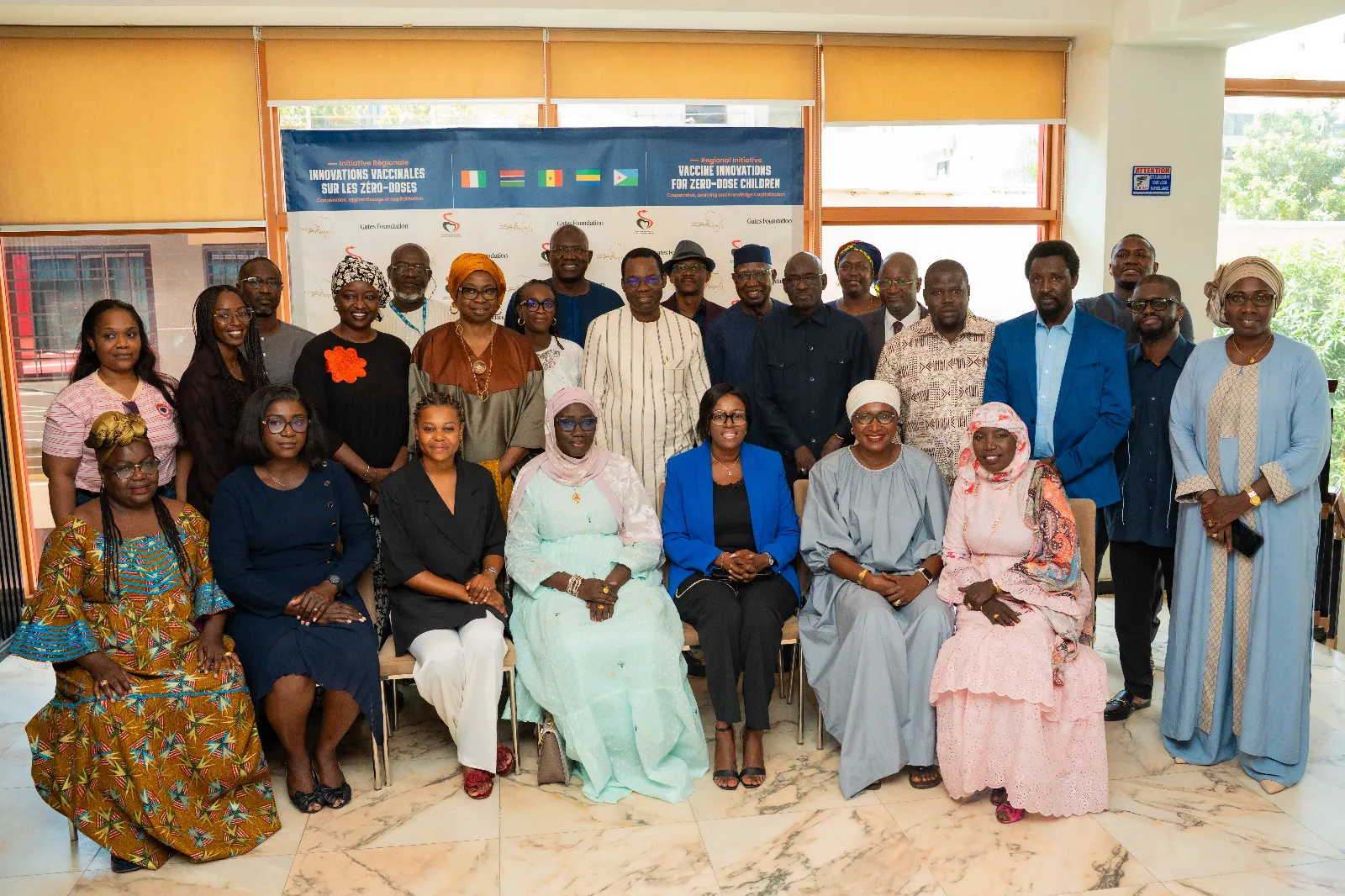
A regional benchmarking mission brought together delegations from the Ministries of Health of Senegal, Côte d'Ivoire, Gabon, Djibouti, and Gambia, along with academic, technical, and financial partners, including WHO, UNICEF, Pasteur Institute of Dakar, and Gates Foundation. The mission, initiated by Galien Africa in collaboration with the Senegalese Ministry of Health and Public Hygiene, aimed to leverage peer-to-peer learning to accelerate vaccination and reduce zero-dose children.
The four-day mission combined experience sharing, field visits, group work, and development of roadmaps. Delegations presented their challenges, innovations, and best practices in vaccination and zero-dose child care, then observed several devices in Senegal, including the Prevention Directorate's Immunization Division and Dakar Centre district. Field visits examined the combined use of stock management tools, cold chain monitoring, equipment, and vaccine distribution.
The visits demonstrated the importance of human accompaniment in digital transformation. After proximity coaching, the active user rate of the Tracker increased from 50% to over 90%. In Dakar Centre, mobile interventions between 4 pm and 8 pm illustrated the value of adapting vaccination offers to family realities. Community approaches, such as the "Young Girls' Round", based on peer and trust, were also highlighted to strengthen adherence to HPV vaccination.
Beyond observation, participants analyzed the conditions for scaling up and adapting practices to national contexts. Discussions focused on domestic and territorial financing, innovative resource mobilization mechanisms, active community participation, access to mobile and border populations, and the professionalization, motivation, and financing of community health actors. These discussions informed the development of national roadmaps.
Group work identified four key levers: more sustainable and innovative domestic financing, including local authorities, private sector, corporate social responsibility, and public-private partnerships; multisectoral governance involving health, education, and local authorities; digitalization, data interoperability, and individual child monitoring; and more active community participation, supported by training, professionalization, motivation, and better working conditions for community actors.
The mission's outcome will contribute to a regional dynamic initiated during a ministerial dinner organized on the sidelines of the Galien Africa 2025 Forum. The goal is to make peer-to-peer learning a lever for accelerating vaccination and sustainably reducing zero-dose children. The participating countries will implement the agreed-upon strategies to improve vaccination coverage.
The regional benchmarking mission demonstrated the commitment of the participating countries to addressing the challenge of zero-dose children. By sharing experiences and best practices, they can accelerate progress toward universal vaccination coverage. The collaboration and knowledge sharing will help to develop effective strategies to reach the most vulnerable populations.
Key points
- The mission focused on four key areas: domestic financing, multisectoral governance, digitalization, and community participation.
- The participating countries will develop and implement national roadmaps to reduce zero-dose children.
- The regional dynamic aims to leverage peer-to-peer learning to accelerate vaccination and reduce zero-dose children.