The presence of offshore oil and gas platforms in Cameroon's waters is having a devastating impact on the country's marine ecosystem and the communities that depend on it. Residents of Grand-Batanga 2, a village in southern Cameroon, are struggling to access fish, a staple food source, due to restrictions imposed by the military units guarding the platforms. Fishermen like Dede Sluk, a 35-year-old father of three, are finding it increasingly difficult to make a living.
The oil and gas industry is a significant contributor to Cameroon's economy, with oil and gas contributing FCFA 774.51 billion (USD 1.3 million) to the country's budget in 2023, according to the Extractive Industries Transparency Initiative's (EITI) report. However, this economic benefit comes at a great cost to the environment and local communities. The construction and operation of offshore platforms require the laying of pipes, which can damage marine habitats and disrupt the natural migration patterns of fish and other marine species.
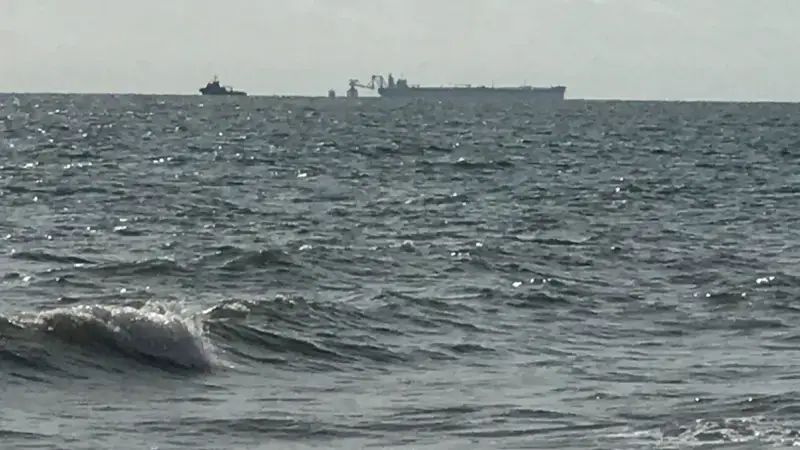
The Ebome Marine Terminal, a petroleum rig operated by Perenco and SNH, is one of the platforms causing concern. Located west of Grand Batanga, the terminal's yellow flames and smoke are visible from the Kribi coastline, a distance of 6.5 kilometers (4.04 miles). Other platforms, such as the Sanaga 2 offshore facility and the Kome-Kribi 1 Terminal, are also having a negative impact on the marine ecosystem. These platforms are operated by companies such as Perenco, a Franco-British company accused of oil spills, wastewater discharges, and gas flaring.
The environmental impact of offshore oil and gas platforms in Cameroon is evident in the tar balls found in marine protected areas, the stranding of dolphins and whales, and the scarcity of fish. Laure Ndingue, a 50-year-old mother of five who worked as a fish roaster along Grand Batanga beach for over 10 years, has seen the changes firsthand. She notes that the price of fish has increased significantly over the years, making it difficult for local communities to afford this staple food.
The effects of offshore oil and gas platforms on Cameroon's marine ecosystem are also being felt by local communities. The country's progress towards the 30×30 marine target under the Kunming-Montreal Global Biodiversity Framework is being stalled by the environmental damage caused by these platforms. The framework aims to protect 30% of the world's oceans by 2030, but Cameroon's efforts are being hindered by the impact of offshore oil and gas exploitation.
Perenco, one of the companies operating offshore platforms in Cameroon, has been accused of environmental hazards and opaque practices. An investigation by Info Congo indicted the company for flaring and environmental hazards, which are endangering the coastal ecosystem and the health of local communities. The company's activities have also been criticized by Friends of the Earth, which has tagged Perenco as an opaque multinational.
The Cameroonian government must balance the economic benefits of the oil and gas industry with the need to protect the country's marine ecosystem and the communities that depend on it. The government must take steps to mitigate the environmental impact of offshore oil and gas platforms and ensure that the industry operates in a sustainable and responsible manner.
Key points
- Offshore oil platforms in Cameroon threaten biodiversity and compromise the well-being of coastal and Indigenous communities.
- Fish scarcity, tar balls, and stranded dolphins are some of the hidden costs of offshore oil and gas exploitation in Cameroon.
- The country's progress towards the 30×30 marine target under the Kunming-Montreal Global Biodiversity Framework is being stalled by the environmental damage caused by these platforms.