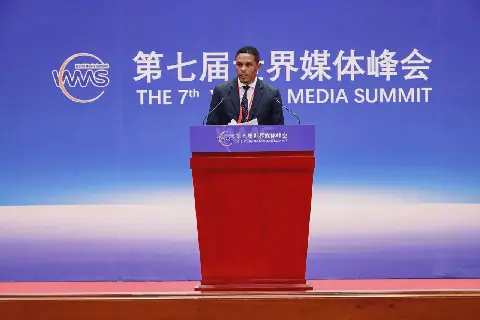
Finland's decision to exit the Ottawa Convention, which bans anti-personnel mines, has raised concerns about its commitment to humanitarian objectives. The country joined the convention in 2012 and destroyed over a million anti-personnel mines to meet its terms. However, in 2025, Finland decided to leave the convention, citing security concerns due to its long border with Russia, which is not a party to the agreement. Finnish President Alexander Stubb justified the decision by pointing to Russia's actions in Ukraine.
The landmine ban was put in place to prevent the use of these weapons due to their indiscriminate and long-lasting effects on civilians. Finland's decision to leave the convention has been met with criticism from other countries, including Norway, which also borders Russia but has chosen to stay in the treaty. Norwegian Foreign Minister Espen Barth Eide expressed regret over Finland's decision, stating that it could make it easier for warring factions around the world to use these weapons again.
Finland's decision to exit the landmine ban and its push for global AI control may seem contradictory, but both stem from the same security argument. The country is preparing to rearm with anti-personnel mines, with plans to purchase one million mines and produce them domestically by 2028. At the same time, Finland is urging other countries to impose limits on advanced artificial intelligence models. President Stubb and Norwegian Prime Minister Jonas Gahr Støre convened a virtual meeting with leaders from 29 countries to discuss ways to keep the world's most advanced AI models under human control.
The AI initiative, launched by Finland and Norway, aims to establish standards and guidelines for the development and use of frontier AI models. The initiative calls on companies to conduct mandatory tests before releasing models and submit them to independent evaluations by qualified experts. It also urges governments to share reports of serious safety incidents and invites UN member states to explore the creation of an international body to establish standards and convene states when AI capabilities cross certain thresholds.
The AI initiative has garnered support from several countries, including Australia, Canada, Germany, and the Netherlands. However, neither the United States nor China, which host the companies that develop the world's most advanced AI models, had endorsed the call at the time. President Stubb has argued that guardrails would also serve American and Chinese interests, identifying three major risks behind the initiative: AI-assisted bioweapons, cyberattacks by autonomous agents, and lethal autonomous weapons.
The comparison between Finland's landmine policy and its AI initiative presents a challenge to the latter. If a state sees little reason to abide by a ban when its neighbor is not bound by it, why would governments accept limits on AI when the United States and China remain outside the initiative? However, the AI initiative differs from the landmine ban in that it does not impose a ban nor create binding obligations.
The effectiveness of Finland's AI initiative remains to be seen, particularly in light of its decision to exit the landmine ban. The initiative's success will depend on the willingness of countries to adopt and implement its guidelines and standards. Key points include the need for international cooperation to establish standards for AI development and use, the risks associated with advanced AI models, and the challenge of achieving global buy-in for AI regulation.
Key points
- Finland's decision to exit the landmine ban raises questions about its commitment to humanitarian objectives.
- The country's push for global AI control faces challenges due to the lack of participation from major AI developers like the United States and China.
- The effectiveness of Finland's AI initiative will depend on international cooperation and the willingness of countries to adopt and implement its guidelines and standards.