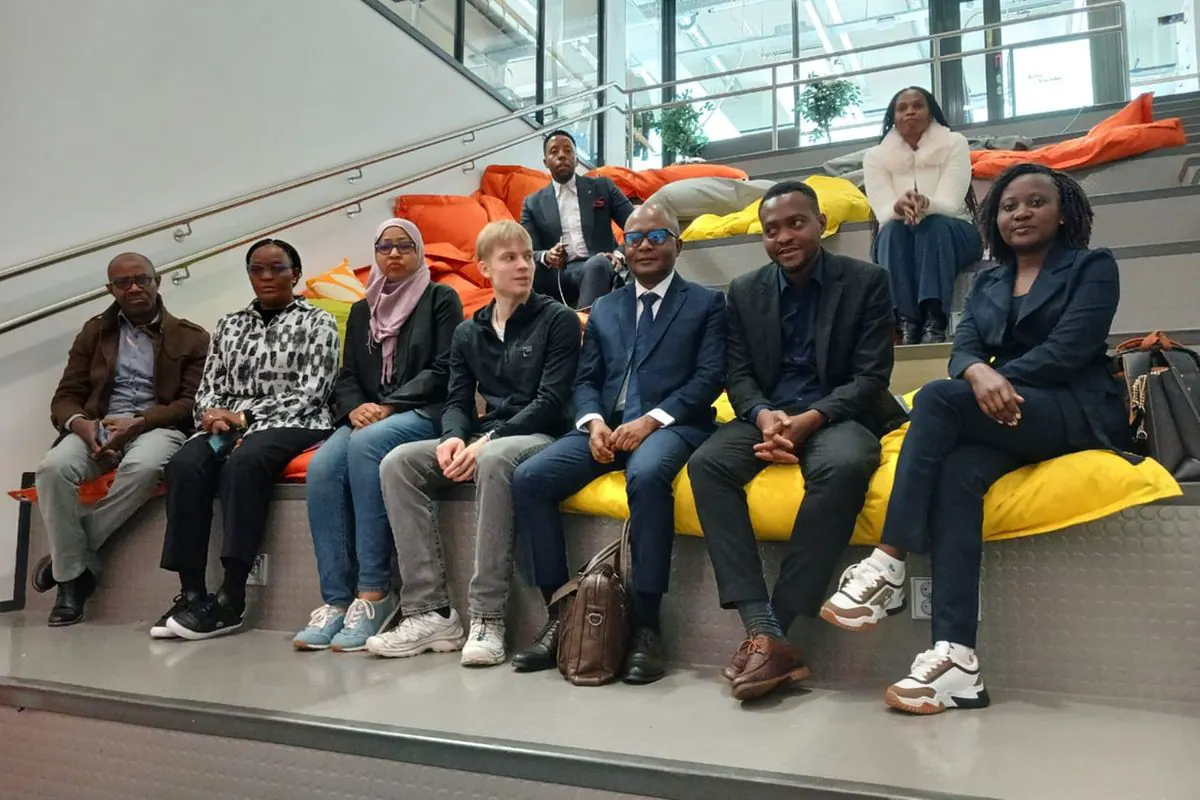
A recent study visit to Finland has provided valuable insights for Tanzania's digital transformation ambitions. The seven-day trip, organised by the Tanzania Information and Communication Technologies Commission (ICTC) and the European Union-funded Digital for Tanzania (D4T) Twinning Project, exposed Tanzanian officials, ICT professionals, and startups to Finland's innovation ecosystem. This included policies, research institutions, artificial intelligence (AI), universities, startups, innovation hubs, and businesses. The visit aimed to support Tanzania's digital transformation through government cooperation.
The Tanzanian delegation learned that stronger links between policy, research, universities, startups, funding, and industry are crucial for digital transformation to translate into jobs, businesses, and economic growth. ICTC head of ICT development, Dr Ally Simba, highlighted the importance of data in guiding decisions. He noted that reliable data on innovation and AI adoption is essential for Tanzania to make informed decisions. The delegation also identified funding and collaboration as critical areas for improvement.
The Finnish innovation ecosystem was found to have strong connections between different parts, with individuals working in universities, startups, and AI/data often knowing each other. In contrast, Tanzanian professionals tend to work in silos. Dr Simba emphasised the need for stronger domestic investment in startups and innovation. He also noted that Tanzania should not view itself as starting from zero, as it already has a foundation in place, including infrastructure.
The study visit challenged perceptions about the role of ICT in various fields. ICTC planning officer, Ms Martha Maro, learned that being in ICT does not necessarily mean studying ICT. She noted that ICT can be applied to make work easier in various fields. Maro also highlighted the need for stronger innovation centres to help young people turn ideas into businesses.
Startup founder, Ms Janeth Bagera, drew inspiration from Finland's experience, where innovation ecosystems began with people before formal structures were built. She noted that a small setup, such as two people with a desk and Wi-Fi, can grow into something much bigger. Bagera's experience reflects the potential for Tanzanian startups to grow with the right support.
The lessons learned from Finland come as Tanzania implements its digital economy agenda and seeks to translate Dira 2050 into a knowledge- and technology-driven economy. The strategy identifies science and technology, research and development, and digital transformation as key drivers of economic transformation. Tanzania aims to leverage these drivers to achieve economic growth.
The study visit has provided valuable insights for Tanzania's digital transformation agenda. Key takeaways include the importance of data, funding, collaboration, and stronger innovation centres. With these lessons, Tanzania can work towards creating a robust innovation ecosystem that fosters economic growth and job creation.
Key points
- Tanzania needs stronger links between policy, research, universities, startups, funding, and industry to achieve digital transformation.
- Reliable data on innovation and AI adoption is essential for Tanzania to make informed decisions.
- Stronger domestic investment in startups and innovation is critical for Tanzania's digital transformation.