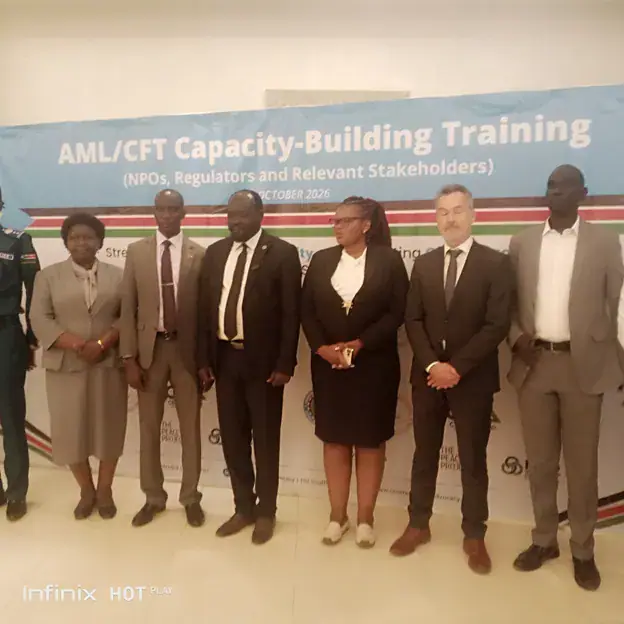
The Financial Intelligence Unit of South Sudan is intensifying its efforts to combat money laundering, terrorist financing, and other financial crimes. Commissioner Bona Gong Ngeny stated that the institution is working to strengthen national coordination and cooperation among relevant stakeholders to address these financial crimes. This move aims to mitigate the risks associated with money laundering and terrorist financing in the country. The Commissioner made these remarks during the opening of a five-day workshop on financial intelligence.
The five-day training workshop, held at the Imperial Hotel, brought together representatives from the government of South Sudan, the Financial Intelligence Unit, financial regulators, the banking sector, and civil society. The workshop aims to enhance the capacity of participants to address money laundering and terrorist financing risks. Commissioner Ngeny emphasized the importance of national coordination and cooperation in addressing these financial crimes. He expressed his appreciation for the participants' contribution and engagement, which will strengthen the country's capacity to tackle these risks.
The caretaker Minister of Humanitarian Affairs and Disaster Management, Peter Mayen Majongdit, has affirmed his ministry's commitment to transparently utilizing humanitarian funds. He assured his support for working with the Financial Intelligence Unit to achieve transparency in the flow and use of funding. The Minister understands the critical role of the Financial Intelligence Unit in monitoring, informing, and safeguarding practices to ensure that allocated funds are used for their intended purpose.
Fulco Ven Devender, Deputy Director of the Human Security Collective (HSC), highlighted his organization's global work in fighting financial crimes, particularly in collaboration with non-governmental organizations involved in peacebuilding. The HSC works closely with the Financial Intelligence Unit to combat financial crimes. Devender emphasized the importance of becoming experts in compliance, especially in areas of security and crime fighting.
Deng Athuai, a financial crimes analyst for the FIU, urged relevant stakeholders to sustain constructive dialogue and build confidence, particularly among the banking sector and non-governmental organizations. Athuai emphasized that measures must be taken to address identified risks, focusing on relationships between banks and NGOs. He highlighted the importance of financial integrity in preventing financial crimes.
Bruna Sivicio Izo, Chairperson of the South Sudan Bankers Association, stressed the critical importance of combating financial crimes and illicit flows in South Sudan. She noted that money laundering and terrorist financing are not only conducted through banks but also through other institutions. Izo emphasized the need for training and awareness among clients and banks to comply with anti-money laundering and financing terrorism regulations.
The Financial Intelligence Unit's efforts to combat money laundering and terrorist financing have received support from various stakeholders. The Unit's commitment to working collectively with all relevant stakeholders to strengthen the fight against these financial crimes has been affirmed. The collaboration aims to ensure that funds allocated for humanitarian purposes are used transparently and for their intended purpose.
Key points
- The Financial Intelligence Unit of South Sudan is working to strengthen national coordination and cooperation to combat money laundering and terrorist financing.
- A five-day workshop on financial intelligence was held to enhance the capacity of participants to address money laundering and terrorist financing risks.
- Various stakeholders, including government officials, financial regulators, and civil society organizations, are working together to prevent financial crimes in South Sudan.