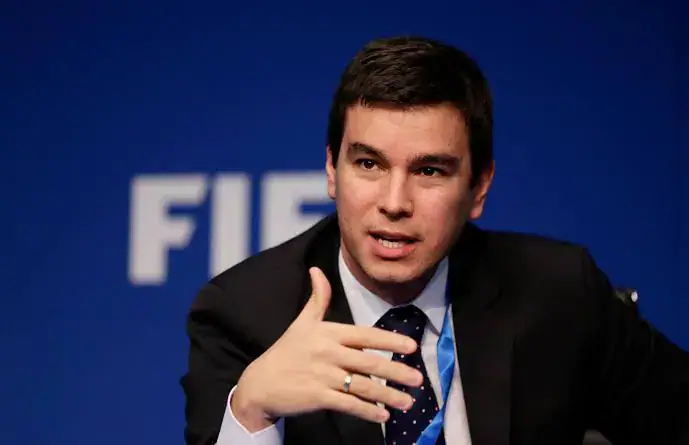
FIFA's chief legal and compliance officer, Emilio García Silvero, has stepped down from his position after an eight-year tenure. The world governing body confirmed his departure on Friday, stating that he will be leaving Zurich and Miami to return to Madrid for a new professional venture. García Silvero's exit marks a significant change in FIFA's upper administration during a turbulent period for the organization. His departure follows that of former chief operating officer Kevin Lamour, who resigned in August.
García Silvero's resignation has implications for Spanish sports governance, particularly with Spain set to co-host the 2030 World Cup alongside Portugal and Morocco. As a key representative within FIFA's executive leadership, his departure could alter administrative dynamics surrounding the decision on the tournament's final match venue. The three host nations have yet to select the venue for the final match. García Silvero's exit leaves a gap in FIFA's leadership, which may impact the organization's ability to navigate complex governance issues.
During his tenure, García Silvero oversaw major shifts in global football governance. He established an international payment clearinghouse, restructured rules governing football agents, and launched a modernized international transfer tracking system. García Silvero also worked to align rule enforcement across all six continental confederations. His efforts aimed to strengthen transparency, legal certainty, and access to information regarding football's rules and regulations.
García Silvero's departure follows intense friction over commercial strategy within FIFA. President Gianni Infantino's proposed commercial venture, FIFA Forward Enterprise, collapsed in August after three continental confederations rejected the proposal and UEFA threatened a full boycott of FIFA competitions. The executive shakeup coincides with several major administrative events, including the organization's efforts to address growing concerns over commercialization and governance.
García Silvero's contributions to international football governance have been recognized by FIFA. In a statement, the organization acknowledged his role in developing and modernizing the regulatory framework governing international football. During his time at FIFA, he also served on panels for the International Olympic Committee, the World Anti-Doping Agency, and the Court of Arbitration for Sport.
The leadership turnover at FIFA has raised questions about the organization's future direction. Former Arsenal manager Arsene Wenger is not expected to renew his contract as chief of global football development when his current deal expires. Further leadership shifts loom on the horizon, adding to the uncertainty surrounding FIFA's governance.
García Silvero's exit marks the end of an era for FIFA, which has faced significant challenges in recent years. As the organization looks to the future, it must navigate complex issues surrounding governance, commercialization, and transparency. The departure of high-ranking officials like García Silvero and Lamour has raised concerns about the organization's ability to effectively manage these challenges.
Key points
- García Silvero's departure marks a significant change in FIFA's upper administration during a turbulent period for the organization.
- His exit has implications for Spanish sports governance, particularly with Spain set to co-host the 2030 World Cup.
- García Silvero oversaw major shifts in global football governance during his eight-year tenure at FIFA.
Reporting sources
- FIFA’s chief legal officer steps down in second high-profile exit · Ghana Broadcasting Corporation