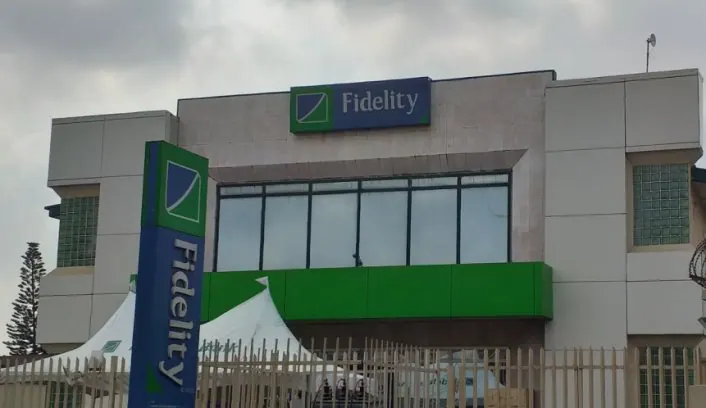
Fidelity Bank's financial performance over the past five years has been remarkable, with return on equity (ROE) spiking from 13.3% in 2021 to a peak of 41.7% in 2024, before settling at 24.4% in 2025. Operating margins followed a similar trend. The bank's management has been credited with opportunistic and prudent execution, including squeezing high yields out of cheap deposits and moving early to recapitalise. This left the bank with a fortress capital adequacy ratio of 30.94%.
In 2021, the bank experienced a year of recovery, with operating margin jumping nearly nine percentage points to push net margin to 27.8%. This was aided by an effective tax take of just 6% on pretax earnings. However, 2022 saw cost friction, with net interest income surging 60.9% to N152.7 billion and pushing ROE to 15.2%. Despite this, operating margin slipped to 27.9% as cost-to-income hit 67.1% and the tax take doubled to 13%.
The year 2023 marked a turning point for the bank, with ROE leaping to 26.5%. Net interest income jumped 82% to N277.4 billion, while FX revaluation gains jumped to N44.1 billion from N2.7 billion. Cost-to-income plunged to 46.8% in the first half, buffering credit loss expenses that had leaped to N67.4 billion. Net margin held steady at 25% under a 20% tax hit.
In 2024, the bank achieved an outlier year, with operating margin peaking at 49.3% and net margin hitting 35.6%. Net interest income soared 127.1% to N629.8 billion as net interest margin widened to 12.0%, anchored by a low-cost deposit ratio of 92.6%. Because FX gains dropped 73%, earnings reflected pure spread expansion rather than paper gains.
However, the bank's performance was impacted by recapitalisation, with shareholders' funds doubling to N897.9 billion. This meant average equity lagged profit growth, flattering ROE. In 2025, post-recapitalisation dilution hit home, with implied average equity swelling to N990 billion and dragging ROE down by two-fifths to 24.4%. Net profit dropped to N242.4 billion from N278.1 billion in 2024.
The bank's performance in 2025 was also impacted by derivatives that swung to a N59.8 billion loss in the first half, a 2.4% contraction in net loans to N4.28 trillion, and a 30% tax bite driven by Nigeria's windfall tax. Despite this, the bank's management has earned credit for its prudent execution.
Experts have reserved judgement on the bank's performance, noting that a 24% ROE in a high-yield economy is only respectable and not exceptional. They will be watching to see if the bank's margins can survive falling interest rates.
Key points
- Fidelity Bank's financial performance has been impressive, but experts question how much of it is due to genuine management skill and how much to macroeconomic factors.
- The bank's management has earned credit for opportunistic and prudent execution, including squeezing high yields out of cheap deposits and moving early to recapitalise.
- The bank's performance in 2025 was impacted by post-recapitalisation dilution, derivatives losses, and a tax bite driven by Nigeria's windfall tax.