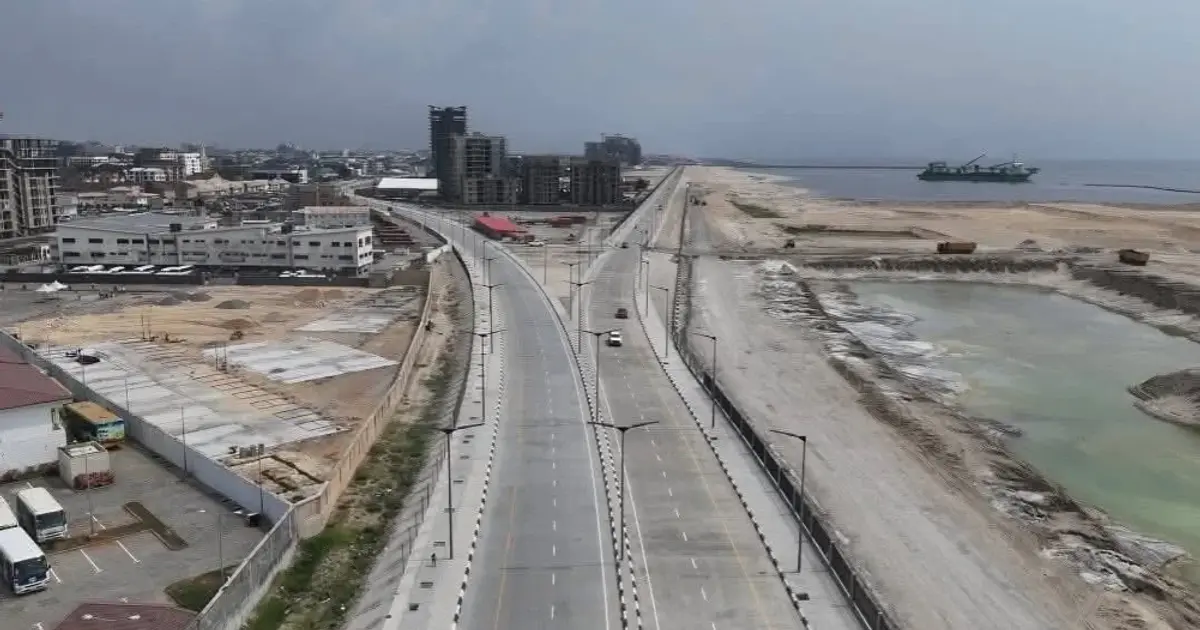
The Federal Government of Nigeria has issued a two-week ultimatum to motorists and road users on the Lagos section of the Lagos-Calabar Coastal Highway, warning that the road will be shut down if safety conditions do not improve. According to the Federal Controller of Works in Lagos State, Olufemi Dare, the government is concerned about the high rate of speeding, fatalities, and other security problems on the highway. Despite a posted 30km/h speed limit, motorists have been clocked driving at speeds of up to 120km/h.
The Lagos section of the coastal highway has been plagued by a range of safety and security issues, including speeding, illegal parking, U-turns, vandalism, and the presence of motorcycles and tricycles. Dare said that fatalities are now occurring "almost every other day" due to the reckless behavior of motorists. The government has also expressed concern about the vandalism of infrastructure, including the theft of clear-view fencing and drainage covers. To address these issues, the government has announced plans to tow away trucks and articulated vehicles that are illegally parked on the highway.
In addition to the safety concerns, the government is also tackling the issue of illegal activities on the highway, including the presence of motorcycles and tricycles. Dare disclosed that over 100 Okada riders were arrested on the highway in the past week alone. The government has also banned motorcycles and tricycles from the route entirely. To enhance security, the government has approved the recruitment of 40 community-nominated coastal guards to work alongside police on the highway's first section.
The Federal Government has attributed the safety crisis on the highway to the failure of motorists to comply with safety directives. The Minister of Works, David Umahi, has directed the ministry to return and close the road if conditions do not improve within two weeks. The government had previously considered shutting the highway in December over similar concerns but was directed by President Bola Tinubu to keep it open to ease traffic flow.
The Lagos-Calabar Coastal Highway is a critical infrastructure project that spans approximately 103km within Lagos and is still under active construction. The project includes 20 bridges that are yet to be completed across its two sections. Despite the challenges, Dare said that the road itself is fully completed in its first section, with bridge work ongoing but still within the project's three-year contract timeline.
To address the security concerns on the highway, the Lagos Police Commissioner, Fatai Tijani, has increased police deployment along the corridor. The government also plans to deploy a joint task force to clear trucks that have been using the Gypsy Port area as an informal, long-term parking spot. The government is considering replacing the vandalized clear-view fencing with block walls in the worst-hit areas.
The government has urged motorists and road users to comply with safety directives on the highway to avoid a shutdown. The two-week ultimatum is a warning to users to adhere to the 30km/h speed limit and other safety regulations. If the conditions do not improve, the government will shut down the highway to ensure the safety of road users.
Key points
- The Nigerian government has given a two-week ultimatum to motorists and road users to comply with safety directives on the Lagos-Calabar Coastal Highway.
- The highway has been plagued by safety concerns, including speeding, fatalities, and vandalism.
- The government has announced plans to enhance security on the highway, including the recruitment of coastal guards and increased police deployment.