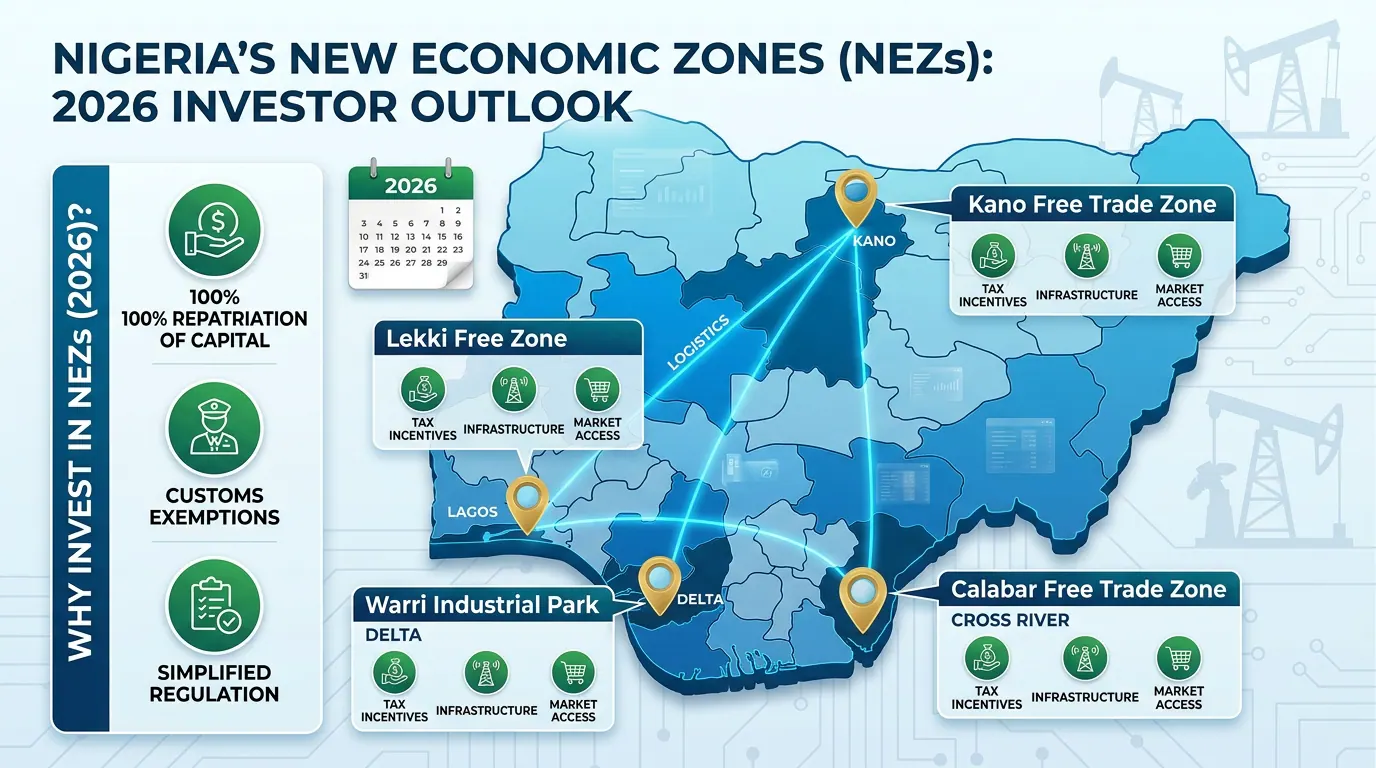
The Federal Government and stakeholders in Nigeria's Special Economic Zones (SEZs) are intensifying efforts to strengthen the investment environment, boost non-oil exports, and create more jobs. This was disclosed by Minister of Industry, Trade and Investment, Dr. Jumoke Oduwole, at a stakeholder engagement meeting on Special Economic Zones. The meeting reviewed the impact of ongoing reforms on the sector, with government officials, operators, investors, and private-sector representatives in attendance.
According to Oduwole, the engagement is part of the Federal Government's efforts to ensure Nigeria's free zones remain globally competitive while strengthening fiscal accountability and protecting legitimate investments. The government has engaged the legislative and executive arms of government, as well as private-sector stakeholders, to ensure the impact of new tax laws on the SEZ scheme aligns with the country's economic diversification and non-oil export objectives.
Oduwole made a commitment at the Third Special Economic Zones Annual Meeting in February 2025 to work towards aligning fiscal, monetary, and trade policy so that Nigeria's zones remain globally competitive. The regulatory reforms aim to provide greater certainty for investors, restore the export orientation of the free-zone regime, and clarify the responsibilities of government agencies operating within the scheme.
The reforms include a clearer 75% export and 25% domestic-sales framework, improved clarity on customs and domestic-market treatment, and clearer institutional mandates for the Nigeria Export Processing Zones Authority (NEPZA), Oil and Gas Free Zone Authority (OGFZA), Nigeria Revenue Service, and Nigeria Customs Service. The revised framework is being modernized to accommodate emerging sectors, particularly digital businesses, with the creation of Digital Free Zones and Digital Special Economic Zones.
Oduwole noted that the reforms are not intended to undermine the contribution of enterprises operating within the zones, which have become an important contributor to investment, employment, and economic activity. Many enterprises have produced and exported goods worldwide, and she urged stakeholders to view the free-zone scheme beyond the ongoing taxation debate.
The SEZ scheme has attracted over $200 billion in foreign investment and over N900 billion in domestic investment, creating more than 100,000 direct jobs. When including supply chains, logistics networks, and host communities, the figure rises to over 500,000 jobs. Examples of investment and employment opportunities include Health Textiles Nigeria FZE in the Lagos Free Zone, which has begun production of insecticide-treated mosquito nets, and investments in the Dangote Industries Free Zone and Lagos Free Zone.
Oduwole urged operators to comply with the new regulatory framework, warning against practices that could undermine the integrity of the scheme. She called on stakeholders to continue providing input into the ongoing legislative and regulatory reform process, with the Special Economic Zones Legislative and Regulatory Reform Committee remaining open to submissions from operators, investors, and other participants.
Key points
- The Nigerian government is strengthening the investment environment and boosting non-oil exports through regulatory and fiscal reforms in Special Economic Zones.
- The SEZ scheme has attracted over $200 billion in foreign investment and created more than 100,000 direct jobs.
- The government aims to ensure Nigeria's free zones remain globally competitive while strengthening fiscal accountability and protecting legitimate investments.